Cantar Alla Viola - Corkine: Each Lovely Grace (2012)
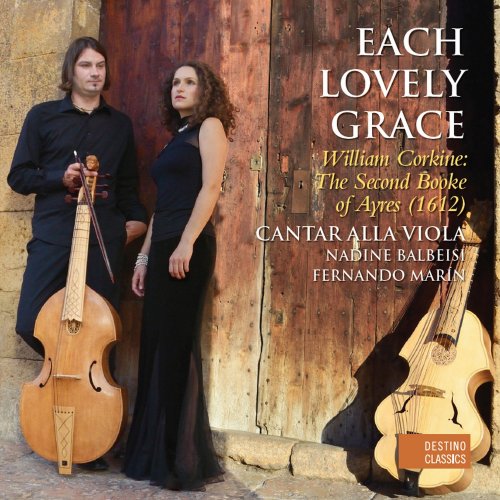
Artist: Cantar Alla Viola
Title: Corkine: Each Lovely Grace
Year Of Release: 2012
Label: Nimbus Alliance
Genre: Classical
Quality: flac lossless (tracks) +Booklet
Total Time: 01:06:39
Total Size: 294 mb
WebSite: Album Preview
TracklistTitle: Corkine: Each Lovely Grace
Year Of Release: 2012
Label: Nimbus Alliance
Genre: Classical
Quality: flac lossless (tracks) +Booklet
Total Time: 01:06:39
Total Size: 294 mb
WebSite: Album Preview
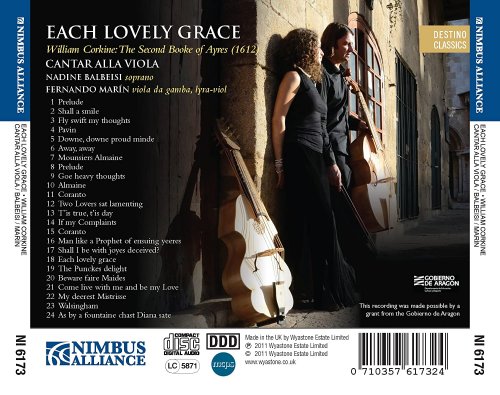
01. The Second Booke of Ayres: Prelude I
02. The Second Booke of Ayres: Shall a Smile
03. The Second Booke of Ayres: Fly Swift My Thoughts
04. The Second Booke of Ayres: Pavin
05. The Second Booke of Ayres: Downe, Downe Proud Minde
06. The Second Booke of Ayres: Away, Away
07. The Second Booke of Ayres: Mounsiers Almaine
08. The Second Booke of Ayres: Prelude II
09. The Second Booke of Ayres: Goe Heavy Thoughts
10. The Second Booke of Ayres: Almaine
11. The Second Booke of Ayres: Coranto II
12. The Second Booke of Ayres: Two Lovers Sat Lamenting
13. The Second Booke of Ayres: T'is True T'is Day
14. The Second Booke of Ayres: If My Complains
15. The Second Booke of Ayres: Coranto I
16. The Second Booke of Ayres: Man Like a Prophet of Ensuing Yeeres
17. The Second Booke of Ayres: Shall I Be with Joyes Deceived?
18. The Second Booke of Ayres: Each Lovely Grace
19. The Second Booke of Ayres: The Punckes Delight
20. The Second Booke of Ayres: Beware Faire Maides
21. The Second Booke of Ayres: Come live with me and be my Love
22. The Second Booke of Ayres: My Deerest Mistrisse
23. The Second Booke of Ayres: Walsingham
24. The Second Booke of Ayres: As By a Fountaine Chast Diana Sate
CANTAR ALLA VIOLA, the art of accompanying the voice with the viola da gamba, is the largely-forgotten technique of using a bowed instrument to play polyphony and harmony as an accompaniment to the voice. The rediscovery of these methods inspired Nadine Balbeisi, soprano, and Fernando Marín, viola da gamba, to create their duo of the same name.
Detailed descriptions of the practice of this delicate manner of accompanying the voice are found in sources such as “Regola Rubertina” by Sylvestro Ganassi (1542) and in “Il libro del cortegliano” by Baldassare Castiglione, Venezia (1528). As suggested by Ganassi’s instructions, Fernando Marín adapts madrigals and songs from the Renaissance and early Baroque for the voice and viol.
The duo researches and makes use of the different kinds of violas da gamba used to accompany the voice, such as the Spanish Vihuela de arco, the bowed version of the Vihuela de mano (plucked), and the English Lyra-viol. Both have been reproduced following the shapes and dimensions as well as building techniques of original instruments. Historical bows and strings are just as carefully researched and selected. The harmonies of the instruments are sustained by using a special bowing technique which creates a sound that mixes well with the human voice.

![Margaret Singana - Stand by Your Man (2026) [Hi-Res]](https://www.dibpic.com/uploads/posts/2026-09/1789799529_tk03d9sjgj985_600.jpg "Margaret Singana - Stand by Your Man (2026) [Hi-Res]")
![Nujakasha - NUJA (2026) [Hi-Res]](https://www.dibpic.com/uploads/posts/2026-09/1789753808_cover.jpg "Nujakasha - NUJA (2026) [Hi-Res]")
![Christos Barbas, Nabil Naïr - Fam (2026) [Hi-Res]](https://img.israbox.com/img/2026-09/17/x4xf24y0f2ujen7i6goxkoek6.jpg "Christos Barbas, Nabil Naïr - Fam (2026) [Hi-Res]")
![Kid Thomas Band - At Preservation Hall (Live) (2026) [Hi-Res]](https://img.israbox.com/img/2026-09/19/bfarorliytjhtrf59pgye451o.jpg "Kid Thomas Band - At Preservation Hall (Live) (2026) [Hi-Res]")
![Masala Quartet - Stalking for Impressions (2026) [Hi-Res]](https://www.dibpic.com/uploads/posts/2026-09/1789813650_ft9el0ot7qsy0_600.jpg "Masala Quartet - Stalking for Impressions (2026) [Hi-Res]")