Leonard Bernstein - Sibelius: Complete Recordings On Deutsche Grammophon (2004)
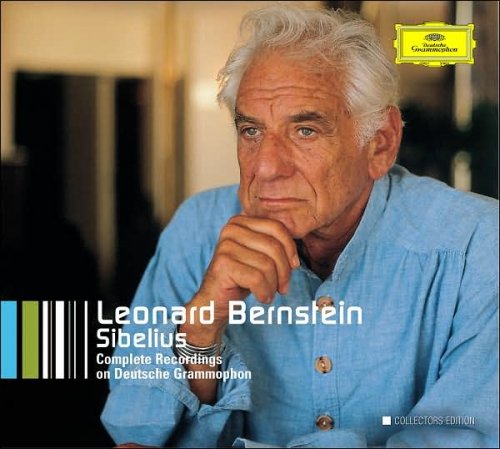
Artist: Leonard Bernstein
Title: Sibelius: Complete Recordings On Deutsche Grammophon
Year Of Release: 2004
Label: Deutsche Grammophon
Genre: Classical
Quality: FLAC (image+.cue,log)
Total Time: 79:22+69:48+60:45
Total Size: 878 MB
WebSite: Album Preview
Tracklist:Title: Sibelius: Complete Recordings On Deutsche Grammophon
Year Of Release: 2004
Label: Deutsche Grammophon
Genre: Classical
Quality: FLAC (image+.cue,log)
Total Time: 79:22+69:48+60:45
Total Size: 878 MB
WebSite: Album Preview
CD1
Jean SIBELIUS
Symphony No. 1 in E minor, Op. 39
1. Andante, ma non troppo - Allegro energico - Tranquillo
2. Andante - molto tranquillo - Tempo I
3. Scherzo. Allegro - Lento - Tempo I
4. Finale. Quasi una Fantasia
Wiener Philharmoniker
Edward ELGAR
Variations on an Original Theme, Op. 36 Enigma
5. Andante
6. L'istesso tempo
7. Allegro
8. Allegretto
9. Allegro di molto
10. Moderato
11. Andantino
12. Presto
13. Allegretto
14. Adagio
15. Intermezzo (Dorabella) Allegretto
16. Allegro di molto
17. Andante
18. Romanza Moderato
19. Finale Allegro - Presto
BBC Symphony Orchestra
CD 2
Jean SIBELIUS
Symphony No. 2 in D, Op. 43
1. Allegretto
2. Tempo Andante, ma rubato
3. Vivacissimo
4. Finale. Allegro moderato
Wiener Philharmoniker
Benjamin BRITTEN
Four Sea Interludes from "Peter Grimes", Op. 33a
5. Dawn. Lento e tranquillo
6. Sunday Morning. Allegro spiritoso
7. Moonlight. Andante comodo e rubato
8. Storm. Presto con fuoco
Boston Symphony Orchestra
CD 3
Jean SIBELIUS
Symphony No. 5 in E flat, Op. 82
1. Tempo molto moderato - Largamente
2. Allegro Moderato - Presto
3. Andante mosso, quasi allegretto
4. Allegro molto - Misterioso - Un poch
Symphony No. 7 in C, Op. 105
5. Adagio
6. Un pochettino meno adagio - poco a poco affre
7. Poco rallentando all'Adagio - Poco a poco men
8. Allegro molto moderato - Poco a poco meno mod
9. Vivace - Presto - Poco a poco rallentando all
Wiener Philharmoniker
There’s some weird stuff going on here. Symphony No. 1, though dryly recorded (the horns buzz like they are using stopped tones almost throughout), is a big, broad, grand conception that has held up well. Bernstein adds a few extra bass drum thuds at the climax of the slow movement but otherwise remains faithful to the spirit and intent of the music. The Second Symphony features one of Bernstein’s famous “let’s see how slow we can take it” events in the shape of an expressionistically distended second movement. There’s a certain horrid fascination in listening to hear if the Vienna Philharmonic brass section has the lung power to get through it. They do, but just barely. Actually, the rest of the Second is a fun performance, stately, for sure, but with plenty of power and rising to a glorious conclusion. I prefer Bernstein’s more normal Sony recording, but this one’s a keeper just for its special qualities (if such they are).
Alas, the same cannot be said for these extremely heavy-handed versions of the Fifth and Seventh, particularly when Bernstein’s first versions remain among the best available. The transitions in the Seventh and the first movement of the Fifth are handled surprisingly clumsily, nor is the playing committed in the way that characterizes Bernstein’s best work in Vienna (the Mahler Fifth or Schumann symphonies, for example).
The Elgar and Britten items make odd fillers. Bernstein, it should be remembered, conducted the U.S. premiere of Peter Grimes in 1946 and admired the work greatly (the opera was, in fact, a Koussevitsky Foundation commission–as the English like to forget–and was performed first in Britten’s own country only because the great conductor ceded his rights to the world premiere). This sloppy live performance comes from Bernstein’s last concert, just before his death. It was recorded live at Tanglewood, originally coupled with an equally sad Beethoven Seventh. In comparison to his Sony recording, this does Bernstein no credit at all, and never should have been issued.
The Elgar is the notorious performance that the English love to hate, principally on account of its very slow Nimrod (which, if you didn’t know better, sounds pretty marvelous). The sessions, it was reported, were tense, with Bernstein behaving snappishly because (depending on your national bias) he was miffed at the orchestra’s slovenly rehearsal habits and refusal to cooperate, or was put off by its loyal defense of the one and only idiomatic way of playing Elgar’s masterpiece.
Take away the irrelevant inside story, not to mention the self-righteous indignation of the English press at the time, and what remains is a really exciting and moving performance, sensitively conducted, admirably played, very well recorded, and with a positively thrilling conclusion. I have no doubt that Elgar himself would have loved a rendition that dares to be different (but remains respectful of his intentions), and I also have no doubt that if this had been a crappy-sounding BBC broadcast aircheck featuring Barbirolli and some amateurish English provincial orchestra of the late 1950s or early ’60s, the press surrounding this performance would have been very different. That’s for sure. So all’s well that ends well, but this box is one hell of a mixed bag.
Alas, the same cannot be said for these extremely heavy-handed versions of the Fifth and Seventh, particularly when Bernstein’s first versions remain among the best available. The transitions in the Seventh and the first movement of the Fifth are handled surprisingly clumsily, nor is the playing committed in the way that characterizes Bernstein’s best work in Vienna (the Mahler Fifth or Schumann symphonies, for example).
The Elgar and Britten items make odd fillers. Bernstein, it should be remembered, conducted the U.S. premiere of Peter Grimes in 1946 and admired the work greatly (the opera was, in fact, a Koussevitsky Foundation commission–as the English like to forget–and was performed first in Britten’s own country only because the great conductor ceded his rights to the world premiere). This sloppy live performance comes from Bernstein’s last concert, just before his death. It was recorded live at Tanglewood, originally coupled with an equally sad Beethoven Seventh. In comparison to his Sony recording, this does Bernstein no credit at all, and never should have been issued.
The Elgar is the notorious performance that the English love to hate, principally on account of its very slow Nimrod (which, if you didn’t know better, sounds pretty marvelous). The sessions, it was reported, were tense, with Bernstein behaving snappishly because (depending on your national bias) he was miffed at the orchestra’s slovenly rehearsal habits and refusal to cooperate, or was put off by its loyal defense of the one and only idiomatic way of playing Elgar’s masterpiece.
Take away the irrelevant inside story, not to mention the self-righteous indignation of the English press at the time, and what remains is a really exciting and moving performance, sensitively conducted, admirably played, very well recorded, and with a positively thrilling conclusion. I have no doubt that Elgar himself would have loved a rendition that dares to be different (but remains respectful of his intentions), and I also have no doubt that if this had been a crappy-sounding BBC broadcast aircheck featuring Barbirolli and some amateurish English provincial orchestra of the late 1950s or early ’60s, the press surrounding this performance would have been very different. That’s for sure. So all’s well that ends well, but this box is one hell of a mixed bag.
Download Link Isra.Cloud
Leonard Bernstein - Sibelius: Complete Recordings On Deutsche Grammophon (2004)
My blog
Leonard Bernstein - Sibelius: Complete Recordings On Deutsche Grammophon (2004)
My blog


![The Man With The Horn and Lo Greco Bros - The Electric Sessions Part 2 (2026) [Hi-Res]](https://www.dibpic.com/uploads/posts/2026-10/1791629693_folder.jpg "The Man With The Horn and Lo Greco Bros - The Electric Sessions Part 2 (2026) [Hi-Res]")
![Daisy DeVell - UNDERWORLD (2026) [Hi-Res]](https://www.dibpic.com/uploads/posts/2026-10/1791891459_folder.jpg "Daisy DeVell - UNDERWORLD (2026) [Hi-Res]")
![Warne Marsh Quartet - Music For Prancing (1957) [2009] Hi-Res](https://www.dibpic.com/uploads/posts/2026-10/1791823835_cover.jpg "Warne Marsh Quartet - Music For Prancing (1957) [2009] Hi-Res")