Clarence "Bluesman" Davis - Shake It for Me (2023)
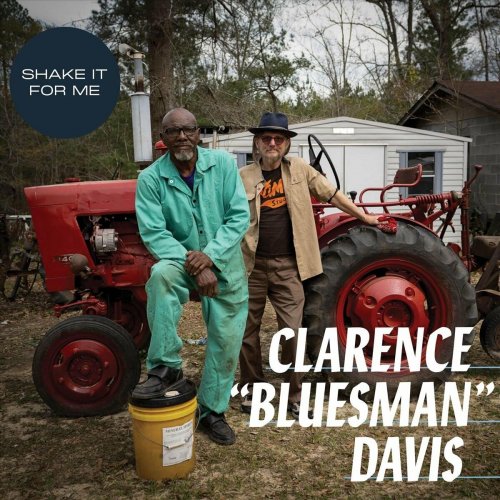
Artist: Clarence "Bluesman" Davis
Title: Shake It for Me
Year Of Release: 2023
Label: Music Maker Recordings
Genre: Blues
Quality: FLAC (tracks)
Total Time: 36:36 min
Total Size: 204 MB
WebSite: Album Preview
Tracklist:Title: Shake It for Me
Year Of Release: 2023
Label: Music Maker Recordings
Genre: Blues
Quality: FLAC (tracks)
Total Time: 36:36 min
Total Size: 204 MB
WebSite: Album Preview
01. Not Your Fool
02. Gotta Rock It
03. Goosa Farm
04. Hoochie Mama
05. Shake It for Me
06. Born in the Country
07. Facebook Blues
08. Shame Shame Shame
09. Good Morning Little Schoolgirl
10. Mojo Hand
11. Just Gettin' Good
12. Shake 'em on Down (Live)
Born and raised in the Black Belt of Alabama, Clarence “Bluesman” Davis summons the sounds of his ancestors in his music. A lyricist and one-man band, Davis weaves rhythmic electric guitarwork with a thumping bass pedal and rugged voice.
In the half-century span of Clarence “Bluesman” Davis’ career, he’s been on the same bills as T-Model Ford, Sam Lay, Bobby Rush, and many other talents. Clarence is loyal to his home and was part of the team that founded the Black Belt Roots Blues Festival, which has celebrated the bearers of the folkways, traditions, and culture of the West Alabama region for over 35 years.
Now, at age 78, Clarence “Bluesman” Davis is releasing his electric blues album Shake It for Me on May 4, 2023. Shake It for Me will be available on April 1 to members of the Music Maker Listeners Circle and May 4 to the general public via digital platforms and CD. Originals such as Goosa Farm, Facebook Blues and Gotta Rock It showcase Davis’ rockabilly, upbeat take on the country blues.
King Cotton built the city of Eutaw, Alabama. In the aftermath of the Civil War, the prominent Gosa Plantation became a sharecropping farm, called the Gosa Quarter. Here, in 1945, Clarence Davis was born into a family with nine brothers and three sisters.
His family spent their days in the fields under the sun, working for $2.50 a day. “There was always something to do,” says Clarence. “If you were old enough to work, you did something.”
In the heat of the afternoons, the children escaped to the porch for a nap. Clarence would tune into WRAG Carrollton’s Rhythm & Blues program on their battery-operated radio. For 15 minutes, he was transported by the sounds of Jimmy Reed, Lightnin’ Hopkins, and Muddy Waters.
His Uncle James had gifted his cousin an acoustic guitar that sat neglected, so he offered the instrument to Clarence. Elated, the 10-year-old brought it home and worked in the fields to buy a set of strings. From then on, Clarence wouldn’t put it down. “My fingers would be so sore I couldn’t pick cotton,” he recollects. He’d sit on the porch, or when his Dad shooed him away for the racket, on a swing under a sweetgum tree and practice for hours, until he taught himself how to improvise.
The Bluesman’s style has evolved over time. On a trip to New Orleans many years ago, he encountered a musician on Bourbon street playing with a bass pedal and tried his hand (or rather, foot) at it. He acquired his own and masterfully plays the 13-note instrument as he simultaneously strums and sings.
Davis’ songs start with a feeling, he explains. “Those words come in, you just put them in place. It never fills up; there’s always a space for some more. You always want to learn more or do more all the time, that’s the way it goes.”
Clarence lives with his family about three miles down the road from his childhood home, in a house built in 1879. Eutaw’s slogan is “The Gateway to the Black Belt.” Sixty-seven percent of its population of 2,859 is Black, however, the median income for a Black household is 79% lower than that of a white household*. Limited financial resources have not diminished this community’s rich cultural heritage.
His music evokes his lineage. “I think about when they was out there on that farm like we were. They were down in the bottom of those fields, they were hollering and whistling and singing, having a good time, singing and getting their work done. It made their life better. So I say, ‘Well, I keep singing the blues, I’ll do better.”
In the half-century span of Clarence “Bluesman” Davis’ career, he’s been on the same bills as T-Model Ford, Sam Lay, Bobby Rush, and many other talents. Clarence is loyal to his home and was part of the team that founded the Black Belt Roots Blues Festival, which has celebrated the bearers of the folkways, traditions, and culture of the West Alabama region for over 35 years.
Now, at age 78, Clarence “Bluesman” Davis is releasing his electric blues album Shake It for Me on May 4, 2023. Shake It for Me will be available on April 1 to members of the Music Maker Listeners Circle and May 4 to the general public via digital platforms and CD. Originals such as Goosa Farm, Facebook Blues and Gotta Rock It showcase Davis’ rockabilly, upbeat take on the country blues.
King Cotton built the city of Eutaw, Alabama. In the aftermath of the Civil War, the prominent Gosa Plantation became a sharecropping farm, called the Gosa Quarter. Here, in 1945, Clarence Davis was born into a family with nine brothers and three sisters.
His family spent their days in the fields under the sun, working for $2.50 a day. “There was always something to do,” says Clarence. “If you were old enough to work, you did something.”
In the heat of the afternoons, the children escaped to the porch for a nap. Clarence would tune into WRAG Carrollton’s Rhythm & Blues program on their battery-operated radio. For 15 minutes, he was transported by the sounds of Jimmy Reed, Lightnin’ Hopkins, and Muddy Waters.
His Uncle James had gifted his cousin an acoustic guitar that sat neglected, so he offered the instrument to Clarence. Elated, the 10-year-old brought it home and worked in the fields to buy a set of strings. From then on, Clarence wouldn’t put it down. “My fingers would be so sore I couldn’t pick cotton,” he recollects. He’d sit on the porch, or when his Dad shooed him away for the racket, on a swing under a sweetgum tree and practice for hours, until he taught himself how to improvise.
The Bluesman’s style has evolved over time. On a trip to New Orleans many years ago, he encountered a musician on Bourbon street playing with a bass pedal and tried his hand (or rather, foot) at it. He acquired his own and masterfully plays the 13-note instrument as he simultaneously strums and sings.
Davis’ songs start with a feeling, he explains. “Those words come in, you just put them in place. It never fills up; there’s always a space for some more. You always want to learn more or do more all the time, that’s the way it goes.”
Clarence lives with his family about three miles down the road from his childhood home, in a house built in 1879. Eutaw’s slogan is “The Gateway to the Black Belt.” Sixty-seven percent of its population of 2,859 is Black, however, the median income for a Black household is 79% lower than that of a white household*. Limited financial resources have not diminished this community’s rich cultural heritage.
His music evokes his lineage. “I think about when they was out there on that farm like we were. They were down in the bottom of those fields, they were hollering and whistling and singing, having a good time, singing and getting their work done. It made their life better. So I say, ‘Well, I keep singing the blues, I’ll do better.”



![Teemu Kekkonen - Dance of the Introverts (2026) [Hi-Res]](https://www.dibpic.com/uploads/posts/2026-08/1787064644_folder.jpg "Teemu Kekkonen - Dance of the Introverts (2026) [Hi-Res]")