Bernd Lhotzky, Émile Parisien, Frédéric Couderc, Henning Sieverts, Eric Schaefer - Jazz at Berlin Philharmonic XVIII: Jazz Goes Baroque (2026) [Hi-Res]
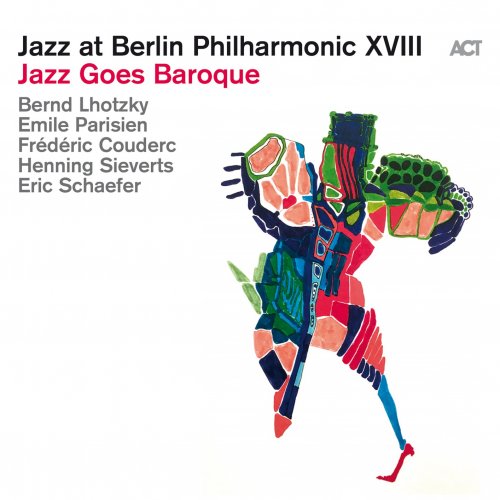
Artist: Bernd Lhotzky, Émile Parisien, Frédéric Couderc, Henning Sieverts, Eric Schaefer
Title: Jazz at Berlin Philharmonic XVIII: Jazz Goes Baroque
Year Of Release: 2026
Label: ACT Music
Genre: Jazz
Quality: FLAC (tracks) / 24bit-48kHz FLAC (tracks)
Total Time: 40:36
Total Size: 258 / 500 MB
WebSite: Album Preview
Tracklist:Title: Jazz at Berlin Philharmonic XVIII: Jazz Goes Baroque
Year Of Release: 2026
Label: ACT Music
Genre: Jazz
Quality: FLAC (tracks) / 24bit-48kHz FLAC (tracks)
Total Time: 40:36
Total Size: 258 / 500 MB
WebSite: Album Preview
1. Monsieur Charpentier Raises the Curtain (1:47)
2. Ciacona - La Roue Du Hamster (4:25)
3. Alma's Gavotte (4:27)
4. Pasquini's Slow Drag (2:58)
5. Double Talk (A Fugue) (4:37)
6. Croc-En-Jambe, Chute Fatale (3:30)
7. Gavotte en Rondeau (Rondeau No. 24) (4:39)
8. Affetuoso (4:03)
9. Vivaldi 156 (4:51)
10. Fuge, Flucht Und Bedrängnis (2:32)
11. Canarie (2:50)
The new recording from the ‘Jazz at Berlin Philharmonic’ series captures a moment rich in both history and renewal, marking the series’ fiftieth concert while paying tribute to Siggi Loch’s early triumph as a producer with George Gruntz’s pioneering ‘Jazz Meets Baroque’ in 1964.
Six decades later, pianist Bernd Lhotzky revisits and reimagines this groundbreaking dialogue between eras, drawing a compelling parallel between Esperanto’s vision of universal communication and the shared expressive language of baroque music and jazz. The two traditions meet not as contrasts but as kindred forms: jazz infuses baroque with rhythmic vitality and improvisational freedom, while baroque lends jazz its structural depth and ornate richness. The stage opens up to reveal a German-French ensemble: two wind players of French origin and the three members of a German rhythm section, all of them happy to be united through music.
Six decades later, pianist Bernd Lhotzky revisits and reimagines this groundbreaking dialogue between eras, drawing a compelling parallel between Esperanto’s vision of universal communication and the shared expressive language of baroque music and jazz. The two traditions meet not as contrasts but as kindred forms: jazz infuses baroque with rhythmic vitality and improvisational freedom, while baroque lends jazz its structural depth and ornate richness. The stage opens up to reveal a German-French ensemble: two wind players of French origin and the three members of a German rhythm section, all of them happy to be united through music.
![Stephan Crump - Passerine (2026) [Hi-Res]](https://img.israbox.com/img/2026-10/22/d4f9pejwr1smael5kpo01pf96.jpg "Stephan Crump - Passerine (2026) [Hi-Res]")