Peter Katin - D. Scarlatti: Keyboard Sonatas (2001) [Hi-Res]
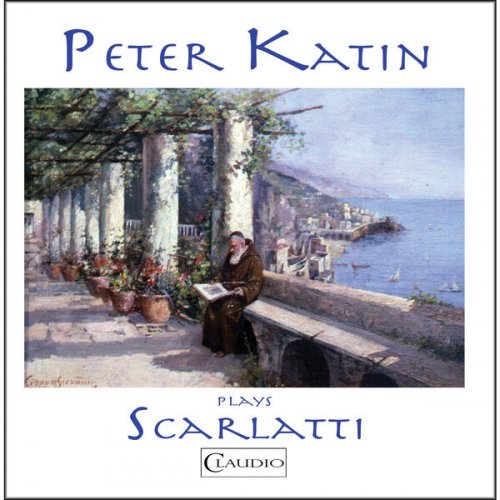
Artist: Peter Katin
Title: D. Scarlatti: Keyboard Sonatas
Year Of Release: 2001
Label: Claudio Records
Genre: Classical Piano
Quality: flac lossless (tracks) / flac 24bits - 192.0kHz +Booklet
Total Time: 01:01:57
Total Size: 246 mb / 2.09 gb
WebSite: Album Preview
TracklistTitle: D. Scarlatti: Keyboard Sonatas
Year Of Release: 2001
Label: Claudio Records
Genre: Classical Piano
Quality: flac lossless (tracks) / flac 24bits - 192.0kHz +Booklet
Total Time: 01:01:57
Total Size: 246 mb / 2.09 gb
WebSite: Album Preview
01. Keyboard Sonata in D Major, Kk. 96
02. Keyboard Sonata in D Major, Kk. 490
03. Keyboard Sonata in D Minor, Kk. 517
04. Keyboard Sonata in A Major, Kk. 208
05. Keyboard Sonata in A Minor, Kk. 3
06. Keyboard Sonata in F Minor, Kk. 238
07. Keyboard Sonata in F Minor, Kk. 239
08. Keyboard Sonata in E-Flat Major, Kk. 193
09. Keyboard Sonata in C Minor, Kk. 84
10. Keyboard Sonata in G Major, Kk. 471
11. Keyboard Sonata in G Major, Kk. 539
12. Keyboard Sonata in C Major, Kk. 356
13. Keyboard Sonata in C Major, Kk. 159
14. Keyboard Sonata in C Major, Kk. 420
My decision to write some notes for this recording was partly made after reflection on two comments, one made, alas, by a colleague at a dinner party, and the other made by Ralph Kirkpatrick in his superb study of Scarlatti. Let me deal with the first comment – that all Scarlatti sonatas tend to sound alike. I would have thought that the days were long past when a pianist started a recital with a group of sonatas more out of a sense of duty or a need to “warm up” rather than from a burning wish to present some of the most inventive keyboard writing of all times. It is true, of course, that an examination of the complete sonatas – over 550 – will show many similarities, which would prevent the performer from choosing a group at random, but even so I found such variety while putting together the fourteen sonatas recorded here that the resulting embarrassment of riches made my task far from easy and I can only say that I had to resort to a process of ruthless elimination in order to meet the timing requirements (which means that I have another fourteen sonatas at the ready). I do not feel that the space available here, and the awareness of Kirkpatrick’s masterly book, would warrant a potted biographical account, but I do want to point out as well as I can the array of moods, contrasts, and the enormously varied technical demands that have made this recording one of the most fascinating and rewarding things I have done.
This collection starts with a fanfare in 3/8 time, and to me there is a sense of occasion throughout this sonata, which alternates between the trumpet-like passages and longer, less imperious phrases; at times the music becomes more like a dance in which the left hand constantly crosses the right – probably a link between the two moods. The next, like the first in D major, takes an amazingly economical “slow march” figure and expands into a seven-minute procession, grand and solemn, pausing now and then for a question-and-answer motif between the two hands; Scarlatti’s famous crunching discords in the left hand at the forte passages have, I think, to be interpreted in a different way to what is effective in a harpsichord performance, and I think I have solved this by spreading them abruptly. The third sonata is in D minor, a fiery and almost relentless surge of sound, stopping nowhere, throwing off strands of contrapuntal writing in its headlong rush, then it is all over almost before the listener can adjust to the onslaught. After that there could be nothing more calming than the serene architecture of the A major sonata, long and soothing phrases progressing unhurriedly over a simple bass line; yet another contrast comes with the sonata in A minor, which I see as a mysterious tip-toeing up and down through chromaticisms and off-beats, each section concluding abruptly like the slamming of a door. The F minor is slow and intense, the two hands sometimes copying each other, sometimes producing two intertwining melodies; I am reminded of the Bach E flat minor prelude from the “48”. The other sonata in F minor bears a starkly rhythmic figure throughout – energetic yet cheerless, this has the storminess of Winter, from Vivaldi’s “Four Seasons”. From there we go to a scherzo-like piece in E flat, light, buoyant, charming, contrasting with the C minor sonata in which clashes between right and left hands give way to inspired downward chromatic progressions hardly associated with the “prettiness” with which Scarlatti’s music has been too often labelled. The G major that follows is a calm and dignified minuet, simple and courteous with an almost total absence of chords, while the next sonata in the same key is composed largely of phrases in thirds and sixths that surely resemble peals of bells, chiming or clanging according to the mood. The last three sonatas are in C major, and to start with we have the longest one of this recording – approximately eight minutes – which must have posed a problem for the performer as it is marked “per Cembalo espresso” and is, I believe, one of the most ambitious works for the instrument. It has the charming quality of a musical box, but it is much more expansive than that and the writing extends to the limits of the keyboard of the time. Perhaps almost hypnotic in character, I found that the best contrast was a better-known sonata in the same key, reminiscent of the fanfare which opens the first sonata on this recording, but much more distant in feeling, with greater emphasis on the dance-like quality; a further contrast is in the length, as this is the shortest piece here. For the finale I have chosen another fanfare, in a different time and with a very positive initial statement, followed by passages of sheer energy, mostly in the left hand accompanied by staccato “jabs” in the right, each section concluding with a prolonged acrobatic figuration which very effectively brings this selection to an end in a web of jubilant sound.
So much for my personal view of these sonatas, and I must turn to the second comment alluded to earlier: On the piano, gradations of piano and forte tend to take on a subjective quality. This very valid statement was made by Kirkpatrick himself in the paragraph dealing with the performance of Scarlatti sonatas. I would say that there is no right and wrong way of playing Scarlatti on an instrument for which he did not write, but if one is going to use a piano, then it is essential to think very carefully about the effects obtainable on a modern instrument which must necessarily replace (and not imitate) those available on a harpsichord. The ability to produce a crescendo is virtually denied to the harpsichord player, but different levels of sound can be obtained from a harpsichord in a way that defies the pianist. Also, the “length” of a note played on a piano is far greater than the same note played on a harpsichord, which doubtless leads to slower tempi in the more relaxed sonatas than the harpsichord could sustain, but also results in greater clarity when playing the faster pieces on a harpsichord. And, of course, the very way in which the sound is produced in each instrument is surely bound to discourage comparison. The harpsichord will give a far cleaner-cut attack at all dynamic levels than the piano, where the attack virtually disappears at anything like a pianissimo – with the soft pedal in use the most delicious veiled effects can be achieved. But then the harpsichord is capable of other sounds equally telling, one of the most interesting being that of the lute stop, giving a muted staccato that the piano could never imitate. And so on! I feel that with this music the piano’s own range of tonal effects should be brought into use without comparison with the harpsichord, and having decided on that, the kaleidoscopic patterns of tone colours have to be examined in considerable detail if a Scarlatti sonata is going to sound natural in what is after all a far cry from the original instrument. So I have found that a certain staccato touch, an unusual pedalling, or an individual interpretation of trills and passing notes very necessary to attain the character of this or that sonata as I see it; in fact I think that were I to play the ornamentation according to the rules prevailing at the time I could not have realised my own interpretation. But then, if I understand what Kirkpatrick said, interpretation has to have an element of subjectivity otherwise one is in danger of thwarting imagination. I would rather say that, with so many effects at one’s disposal, one must choose the range to express the character of each piece, not precluding freedom but regarding the utmost discipline. The preparation of this recording has opened up a whole world for me and I have not found a single dull moment in discovering and learning the sonatas.
![Aleksis Liukko Trio - Wicket Valley (2026) [Hi-Res]](https://www.dibpic.com/uploads/posts/2026-09/1790435763_cover.jpg "Aleksis Liukko Trio - Wicket Valley (2026) [Hi-Res]")
![Pier Piras - Nautilus (2026) [Hi-Res]](https://www.dibpic.com/uploads/posts/2026-09/1790408596_cover.jpg "Pier Piras - Nautilus (2026) [Hi-Res]")
![Benny Sings - 22 Durnham Dew (2026) [Hi-Res]](https://img.israbox.com/img/2026-09/24/xn1s8glnmdzs5crjew0iblu3o.jpg "Benny Sings - 22 Durnham Dew (2026) [Hi-Res]")