Marleen Dahms - ALLOY Running And Belonging (2025) [Hi-Res]
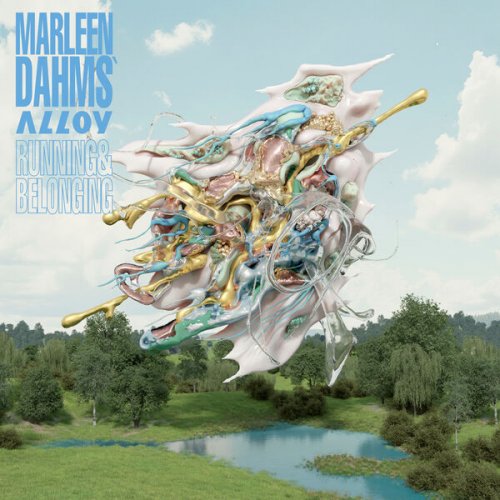
Artist: Marleen Dahms
Title: ALLOY Running And Belonging
Year Of Release: 2025
Label: XJAZZ! Music
Genre: Jazz, Contemporary Jazz
Quality: FLAC (tracks) [96kHz/24bit]
Total Time: 58:18
Total Size: 1.23 GB / 358 MB
WebSite: Album Preview
Tracklist:Title: ALLOY Running And Belonging
Year Of Release: 2025
Label: XJAZZ! Music
Genre: Jazz, Contemporary Jazz
Quality: FLAC (tracks) [96kHz/24bit]
Total Time: 58:18
Total Size: 1.23 GB / 358 MB
WebSite: Album Preview
1. Marleen Dahms – Running And Belonging (feat. Afrogame & Vincent Bababoutilabo) (07:25)
2. Marleen Dahms – Aribau (feat. Afrogame & Vincent Bababoutilabo) (07:55)
3. Marleen Dahms – Opening My Eyes (feat. Afrogame) (06:26)
4. Marleen Dahms – Zuflucht (05:05)
5. Marleen Dahms – Keep Going (feat. Afrogame) (06:30)
6. Marleen Dahms – Ivory Tower (05:34)
7. Marleen Dahms – Paralelo (06:44)
8. Marleen Dahms – Intro (Present Spirits) (02:35)
9. Marleen Dahms – Present Spirits (05:47)
10. Marleen Dahms – Shifting Responsibilities (04:13)
ALLOY – the English word for "alloy" – symbolizes connection: the interweaving of people, stories, and experiences. Everything is interconnected. The band's mission is to make these connections audible, to trace their origins, to uncover cross-connections – and to create new ones.
The five-member band, led by trombonist Marleen Dahms, creates music that floats, flies – and yet remains grounded. Running and Belonging, their debut album, explores the question of belonging in a world full of fractures. It asks about responsibility. About identity. About one's place in the bigger picture.
"If music is an expression of personality – shaped by identity – why do I make music so strongly influenced by, or even based on, Black American musical traditions and improvisation, as well as South American rhythms, when my own cultural background is completely different?" asks Marleen Dahms.
“How authentically can I express myself through this music? What is my own cultural identity, and what does identity even mean?”
Running and Belonging is an intense process of self-examination, of grappling with one's own family history, with European history, with inherited patterns of thought and behavior. “Many beliefs are emotionally anchored within us—and cannot be dissolved through rational thinking alone,” says Marleen Dahms. “If you want to change something, you also have to understand the feelings behind it, where they come from, and above all, process them emotionally, not just rationally.” The album is an attempt to do precisely that: to process social and personal themes and questions emotionally through music, to make inner movements audible. Not to provide answers, but to feel what is.
The music on “Running and Belonging” is often melodic and catchy—but never pleasing. It pauses and allows space. The sound is warm, melancholic, sometimes fleeting, then again raw and unvarnished. Traditional song forms meet improvisation, stately melodies meet light-footed, Afro-Latin American-sounding rhythms, flute meets brass, lightness meets depth.
At its heart is a powerful duo: Marleen Dahms on trombone and Lisa Buchholz on trumpet – two women who together create a sonic unity and force that captivates. ALLOY is rounded out by Johannes Mann (guitar), Luca Curcio (bass), and Steven Moser (drums). Guests Vincent Bababoutilabo, a flautist from Berlin, and Afrogame, a percussionist from Salvador de Bahia, expand the sonic spectrum – their colors blend organically with the ALLOY sound without being overpowering.
Some pieces directly reference places, memories, and movements. “Opening My Eyes,” for example, was written after a trip through Latin America—a piece about privilege, colonial history, and humanity. “Aribau” revels in the feeling of community and the memories of a safe home.
Others are more abstract, but no less clear. “Refuge,” for instance, is an attempt to process guilt and shame in a melody. “Ivory Tower” offers a look at Western self-evidence—at the expense of others. In “Intro / Present Spirits,” the personal becomes political. The memory of Betty Cohn, who lived in Marleen Dahms’ Berlin apartment until 1942 before being deported to Riga and murdered, coalesces into a quiet musical memorial.
And then there’s “Shifting Responsibilities”—a piece about German bureaucracy, responsibility, and turning a blind eye.
“Running and Belonging” isn’t a loud debut—but it is a powerful one. It's not about grand gestures, but about honest, musically profound exploration.
Marleen Dahms' ALLOY succeeds in translating complex themes into sound with musical depth and emotional resonance. They create musical spaces that invite you to pause—to feel, reflect, and connect.
An album that speaks through its questions—and that's precisely where its power lies.
Marleen Dahms, trombone
Lisa Buchholz, trumpet
Johannes Mann, guitar
Luca Curcio, double bass
Steven Moser, drums
Vincent Bababoutilabo, flute
Afrogame, percussion
The five-member band, led by trombonist Marleen Dahms, creates music that floats, flies – and yet remains grounded. Running and Belonging, their debut album, explores the question of belonging in a world full of fractures. It asks about responsibility. About identity. About one's place in the bigger picture.
"If music is an expression of personality – shaped by identity – why do I make music so strongly influenced by, or even based on, Black American musical traditions and improvisation, as well as South American rhythms, when my own cultural background is completely different?" asks Marleen Dahms.
“How authentically can I express myself through this music? What is my own cultural identity, and what does identity even mean?”
Running and Belonging is an intense process of self-examination, of grappling with one's own family history, with European history, with inherited patterns of thought and behavior. “Many beliefs are emotionally anchored within us—and cannot be dissolved through rational thinking alone,” says Marleen Dahms. “If you want to change something, you also have to understand the feelings behind it, where they come from, and above all, process them emotionally, not just rationally.” The album is an attempt to do precisely that: to process social and personal themes and questions emotionally through music, to make inner movements audible. Not to provide answers, but to feel what is.
The music on “Running and Belonging” is often melodic and catchy—but never pleasing. It pauses and allows space. The sound is warm, melancholic, sometimes fleeting, then again raw and unvarnished. Traditional song forms meet improvisation, stately melodies meet light-footed, Afro-Latin American-sounding rhythms, flute meets brass, lightness meets depth.
At its heart is a powerful duo: Marleen Dahms on trombone and Lisa Buchholz on trumpet – two women who together create a sonic unity and force that captivates. ALLOY is rounded out by Johannes Mann (guitar), Luca Curcio (bass), and Steven Moser (drums). Guests Vincent Bababoutilabo, a flautist from Berlin, and Afrogame, a percussionist from Salvador de Bahia, expand the sonic spectrum – their colors blend organically with the ALLOY sound without being overpowering.
Some pieces directly reference places, memories, and movements. “Opening My Eyes,” for example, was written after a trip through Latin America—a piece about privilege, colonial history, and humanity. “Aribau” revels in the feeling of community and the memories of a safe home.
Others are more abstract, but no less clear. “Refuge,” for instance, is an attempt to process guilt and shame in a melody. “Ivory Tower” offers a look at Western self-evidence—at the expense of others. In “Intro / Present Spirits,” the personal becomes political. The memory of Betty Cohn, who lived in Marleen Dahms’ Berlin apartment until 1942 before being deported to Riga and murdered, coalesces into a quiet musical memorial.
And then there’s “Shifting Responsibilities”—a piece about German bureaucracy, responsibility, and turning a blind eye.
“Running and Belonging” isn’t a loud debut—but it is a powerful one. It's not about grand gestures, but about honest, musically profound exploration.
Marleen Dahms' ALLOY succeeds in translating complex themes into sound with musical depth and emotional resonance. They create musical spaces that invite you to pause—to feel, reflect, and connect.
An album that speaks through its questions—and that's precisely where its power lies.
Marleen Dahms, trombone
Lisa Buchholz, trumpet
Johannes Mann, guitar
Luca Curcio, double bass
Steven Moser, drums
Vincent Bababoutilabo, flute
Afrogame, percussion



![The Man With The Horn and Lo Greco Bros - The Electric Sessions Part 2 (2026) [Hi-Res]](https://www.dibpic.com/uploads/posts/2026-10/1791629693_folder.jpg "The Man With The Horn and Lo Greco Bros - The Electric Sessions Part 2 (2026) [Hi-Res]")

![Daisy DeVell - UNDERWORLD (2026) [Hi-Res]](https://www.dibpic.com/uploads/posts/2026-10/1791891459_folder.jpg "Daisy DeVell - UNDERWORLD (2026) [Hi-Res]")
![Warne Marsh Quartet - Music For Prancing (1957) [2009] Hi-Res](https://www.dibpic.com/uploads/posts/2026-10/1791823835_cover.jpg "Warne Marsh Quartet - Music For Prancing (1957) [2009] Hi-Res")