VA - Q The Blues: The Story Of The Blues (1992)
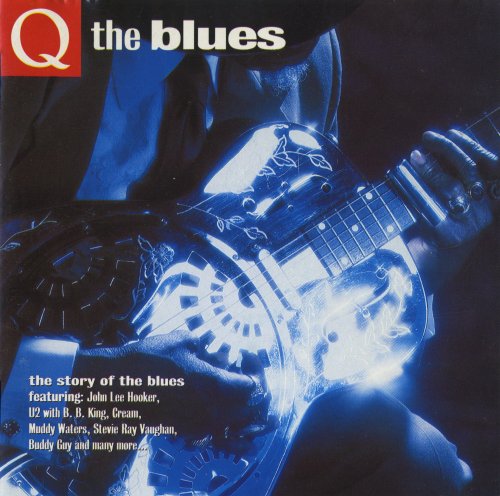
Artist: VA
Title: Q The Blues: The Story Of The Blues
Year Of Release: 1992
Label: Q Magazine: AHLCD 1
Genre: Chicago Blues
Quality: FLAC (tracks+.cue,log,scans) / 320 kbps
Total Time: 01:07:47
Total Size: 421 / 172 MB
WebSite: Album Preview
Title: Q The Blues: The Story Of The Blues
Year Of Release: 1992
Label: Q Magazine: AHLCD 1
Genre: Chicago Blues
Quality: FLAC (tracks+.cue,log,scans) / 320 kbps
Total Time: 01:07:47
Total Size: 421 / 172 MB
WebSite: Album Preview
Q is a British monthly music magazine founded in 1986 by Mark Ellen and David Hepworth, which was popular in the UK and was published until July 2020, when the last issue was published. The magazine featured high-quality photography and print, as well as offering extensive content about music and pop culture. Most of the magazine was devoted to interviews with popular music artists. Promotional gifts such as CDs, 5-6 CDs per year, or books were distributed along with the magazine. Distinguished by both extensive knowledge and an informal approach. At the beginning of its existence, the magazine was positioned as a "modern guide to music and beyond." The issue dated July 28, 2020 (Q415) was the last to be published. The end of the print version of Q was attributed both to the lower circulation and advertising revenue caused by the COVID-19 pandemic, and to the fact that it is "a symptom of the era of the internet free of experts." In 2023, Q was revived as an online publication, but was shut down again in May 2024.
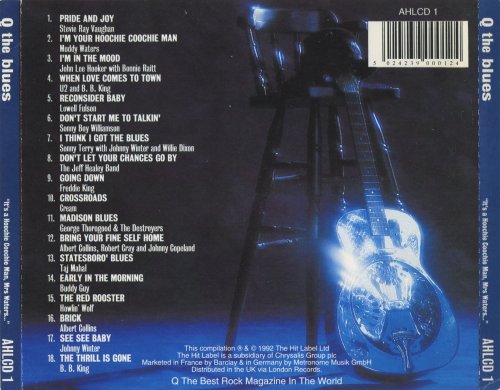
Tracklist:
01. Stevie Ray Vaughan - Pride And Joy (3:43)
02. Muddy Waters - I'm Your Hoochie Coochie Man (4:00)
03. John Lee Hooker - I'm In The Mood (4:32)
04. U2 & B.B. King - When Love Comes To Town (4:21)
05. Lowell Fulson - Reconsider Baby (3:13)
06. Sonny Boy Williamson II - Don't Start Me To Talkin' (2:37)
07. Sonny Terry, Johnny Winter & Willie Dixon - I Think I Got The Blues (3:41)
08. The Jeff Healey Band - Don't Let Your Chances Go By (3:23)
09. Freddie King - Going Down (3:25)
10. Cream - Crossroads (4:18)
11. George Thorogood & The Destroyers - Madison Blues (4:34)
12. Albert Collins, Robert Cray & Johnny Copeland - Bring Your Fine Self Home (4:36)
13. Taj Mahal - Statesboro' Blues (2:56)
14. Buddy Guy - Early In The Morning (3:12)
15. Howlin' Wolf - The Red Rooster (2:27)
16. Albert Collins - Brick (4:41)
17. Johnny Winter - See See Baby (3:11)
18. B.B. King - The Thrill Is Gone (4:58)
There are many ways to waste your time and energy, but arguing about what belongs to the blues and what doesn't is one of the most useless. There is some agreement in music circles about the theory of 12 bars with three strings of four bars each, but even this does not apply to musicians like John Lee Hooker, who can play anything from 12 to 20 bars depending on how he feels. Meanwhile, we guardians of public taste spend our leisure hours going over the comparative advantages of rural blues, delta blues, swamp blues, urban blues and many other varieties of this genre, as if we could say that everything as multifaceted and flexible as this has one authentic source. Initially, the form was developed because its foundation was as simple as its possibilities were limitless. The rhythms and accents of the blues, its characteristic images and textures underlie a huge amount of rock music.; The music of ZZ Top is impossible to imagine without the blues, but equally it is the music of Bob Dylan, R.E.M. or The Clash. There's not a single famous rock band that hasn't been into the blues at one time or another. This collection provides an excellent example in the form of "When Love Comes To Town", in which four young Irish millionaires (U2) sing the blues in the company of an elderly gentleman of moderate views (B.B. King), whose work schedule for 1956 included 342 one-night stands and only 15 car trips. Blues regularly overcame such cultural divides, and this collection is designed to emphasize that it survived not only because it has a direct relationship to both the heart and the feet of man, but also because its best performers were too busy playing to participate in discussions about what came first - the egg or The chicken.
Now that John Lee Hooker has turned seventy, he remembers his third "blues boom" with sadness but gratitude. He remembers Charlie Patton and Blind Lemon Jefferson visiting the family home as kids in Clarksdale, Mississippi. In the song "I'm In The Mood," which he first recorded in 1951, he was joined by Bonnie Raitt, the daughter of a Broadway actor and one of the many baby boomers who became interested in the blues in the early 60s. But while Raitt learned her craft by sitting at the feet of acoustic performers like Mississippi Fred McDowell at East Coast folk festivals, British contemporaries like Eric Clapton turned to the blues through rock and roll and soul music.
Cream's incendiary live performance of the Crossroads song differs from Robert Johnson's original in its technique and arrangement, but completely coincides with it in spirit. Most musicians couldn't even imagine a second guitar break, let alone playing it. As a leading member of John Mayall's Bluesbreakers band in 1966, Clapton based his style on Freddie King's flexible, crafty guitar style. King is represented here by the album Going Down, a prime example of how a mainstream bluesman takes his cue from rock, produced by Leon Russell in 1970 at Chicago's Chess studios. Phil and Leonard Chess were Jewish brothers who ran clubs in the 1940s when they noticed an interest in blues records among former villagers who had recently moved to the cities. Among the factory workers were musicians such as Muddy Waters from Rolling Fork, Mississippi. These people signed up on those rare occasions when they had the opportunity, and upon arrival in the city switched to electric instruments. For many of these artists, the opportunity to gain full-fledged professional status was inevitable. Lowell Fulson worked as a field handyman and a tap dancer. The amazing, obsessed Howlin' Wolf was a farmer. Lustful but strange Sonny Boy Williamson appropriated his stage name as soon as the real Sonny Boy was killed during a robbery.
The man who made a musical contribution to Chess was Willie Dixon; producer, bassist, arranger, talent scout, organizer and recognized author of the lion's share of the Chess catalog, he died earlier this year at the age of 78 and recorded until the very end. Like Muddy Waters, who recorded perhaps his best and most stormy recordings in the late 70s with the help of an albino Texan named Johnny Winter.
If Chess musicians were the fathers of urban blues, and their influence on rock music of the 60s and 70s is certainly incalculable, then the next generation had a harder time. As the black audience switched to soul and funk, musicians such as Albert Collins and Buddy Guy (born in the mid-30s) increasingly made a living from rock. Both of them have worked long and hard to earn the reputation they currently enjoy. Collins recently performed with Gary Moore while Guy was on tour with Clapton and Stevie Ray Vaughan when the Texan guitarist was killed in a helicopter crash last year. Clapton and Jeff Beck join Buddy Guy in recording the album Early In The Morning, which was featured here from his album Damn Right I've Got The Blues.
But although blues is no longer part of the commercial mainstream of black American music, there are still black musicians who have chosen blues as a career. The Taj Mahal is one of them. The son of a jazz musician from the West Indies, he found his way to this music in the company of a young Ry Cooder on his first album in 1967, from which the Statesboro blues was taken. Even more significant is Robert Cray, the leader of the current generation of musicians, whom Eric Clapton considers to have the best fretboard playing technique in the world.
On the more noisy wing of the party are George Thorogood And The Destroyers from Delaware, as well as The Jeff Healey Band from Toronto, who present blues as transcendent music for a pleasant Saturday night. Representing the more conservative side of the organization, but no less passionate in his desire to attract attention and entertain, B.B. Kipdg, whose "Thrill Is Gone" is the ultimate example of form flexibility. Light and comfortable, like a cashmere coat, it nevertheless has a piquancy and intimacy that guarantee its durability. Like much else in this collection, it will remain unchanged.
Now that John Lee Hooker has turned seventy, he remembers his third "blues boom" with sadness but gratitude. He remembers Charlie Patton and Blind Lemon Jefferson visiting the family home as kids in Clarksdale, Mississippi. In the song "I'm In The Mood," which he first recorded in 1951, he was joined by Bonnie Raitt, the daughter of a Broadway actor and one of the many baby boomers who became interested in the blues in the early 60s. But while Raitt learned her craft by sitting at the feet of acoustic performers like Mississippi Fred McDowell at East Coast folk festivals, British contemporaries like Eric Clapton turned to the blues through rock and roll and soul music.
Cream's incendiary live performance of the Crossroads song differs from Robert Johnson's original in its technique and arrangement, but completely coincides with it in spirit. Most musicians couldn't even imagine a second guitar break, let alone playing it. As a leading member of John Mayall's Bluesbreakers band in 1966, Clapton based his style on Freddie King's flexible, crafty guitar style. King is represented here by the album Going Down, a prime example of how a mainstream bluesman takes his cue from rock, produced by Leon Russell in 1970 at Chicago's Chess studios. Phil and Leonard Chess were Jewish brothers who ran clubs in the 1940s when they noticed an interest in blues records among former villagers who had recently moved to the cities. Among the factory workers were musicians such as Muddy Waters from Rolling Fork, Mississippi. These people signed up on those rare occasions when they had the opportunity, and upon arrival in the city switched to electric instruments. For many of these artists, the opportunity to gain full-fledged professional status was inevitable. Lowell Fulson worked as a field handyman and a tap dancer. The amazing, obsessed Howlin' Wolf was a farmer. Lustful but strange Sonny Boy Williamson appropriated his stage name as soon as the real Sonny Boy was killed during a robbery.
The man who made a musical contribution to Chess was Willie Dixon; producer, bassist, arranger, talent scout, organizer and recognized author of the lion's share of the Chess catalog, he died earlier this year at the age of 78 and recorded until the very end. Like Muddy Waters, who recorded perhaps his best and most stormy recordings in the late 70s with the help of an albino Texan named Johnny Winter.
If Chess musicians were the fathers of urban blues, and their influence on rock music of the 60s and 70s is certainly incalculable, then the next generation had a harder time. As the black audience switched to soul and funk, musicians such as Albert Collins and Buddy Guy (born in the mid-30s) increasingly made a living from rock. Both of them have worked long and hard to earn the reputation they currently enjoy. Collins recently performed with Gary Moore while Guy was on tour with Clapton and Stevie Ray Vaughan when the Texan guitarist was killed in a helicopter crash last year. Clapton and Jeff Beck join Buddy Guy in recording the album Early In The Morning, which was featured here from his album Damn Right I've Got The Blues.
But although blues is no longer part of the commercial mainstream of black American music, there are still black musicians who have chosen blues as a career. The Taj Mahal is one of them. The son of a jazz musician from the West Indies, he found his way to this music in the company of a young Ry Cooder on his first album in 1967, from which the Statesboro blues was taken. Even more significant is Robert Cray, the leader of the current generation of musicians, whom Eric Clapton considers to have the best fretboard playing technique in the world.
On the more noisy wing of the party are George Thorogood And The Destroyers from Delaware, as well as The Jeff Healey Band from Toronto, who present blues as transcendent music for a pleasant Saturday night. Representing the more conservative side of the organization, but no less passionate in his desire to attract attention and entertain, B.B. Kipdg, whose "Thrill Is Gone" is the ultimate example of form flexibility. Light and comfortable, like a cashmere coat, it nevertheless has a piquancy and intimacy that guarantee its durability. Like much else in this collection, it will remain unchanged.
![Liz Cracchiolo - I'm a Woman (2026) [Hi-Res]](https://www.dibpic.com/uploads/posts/2026-09/1789752087_cover.jpg "Liz Cracchiolo - I'm a Woman (2026) [Hi-Res]")
![Dick De Graaf - Con Alma (In memory of Rob van Kreeveld) (2026) [Hi-Res]](https://www.dibpic.com/uploads/posts/2026-09/1789489285_folder.jpg "Dick De Graaf - Con Alma (In memory of Rob van Kreeveld) (2026) [Hi-Res]")
![Pablo Ziegler & Roberta Gambarini - Blues Porteño (Love Letters From Buenos Aires) (2026) [Hi-Res]](https://www.dibpic.com/uploads/posts/2026-09/1789484702_folder.jpg "Pablo Ziegler & Roberta Gambarini - Blues Porteño (Love Letters From Buenos Aires) (2026) [Hi-Res]")