Johnny Pacheco, Celia Cruz & Pete "El Conde" Rodríguez - Celia, Johnny, And Pete (1980)
- 21 Dec, 23:25
- change text size:
Facebook
Twitter
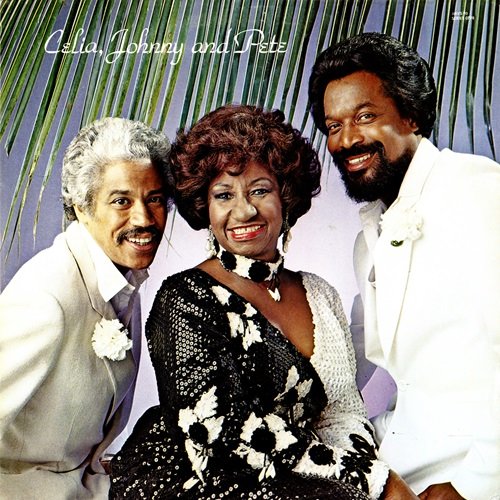
Artist: Johnny Pacheco, Celia Cruz, Pete "El Conde" Rodríguez
Title: Celia, Johnny, And Pete
Year Of Release: 1980
Label: Fania
Genre: Latin Jazz, Salsa
Quality: Mp3 320 / Flac (tracks)
Total Time: 43:22
Total Size: 109/278 Mb
WebSite: Album Preview
Tracklist:Title: Celia, Johnny, And Pete
Year Of Release: 1980
Label: Fania
Genre: Latin Jazz, Salsa
Quality: Mp3 320 / Flac (tracks)
Total Time: 43:22
Total Size: 109/278 Mb
WebSite: Album Preview
01. Así Cantaba Papá 4:36
02. Distintos Caminos 3:54
03. Me Voy Contigo 5:59
04. Un Toque De Bembe 3:52
05. Una Rosa Roja 3:13
06. La Dicha Mía 5:51
07. La Madre Rumba 4:01
08. Pueblo Negro 5:48
09. Vida 6:08

Johnny Pacheco was a renaissance man and giant of Latin music. The Dominican-born and New York-bred bandleader, arranger, composer, and producer co-founded the legendary Fania Records in the early 1960s with lawyer Jerry Masucci. Together they created a home for groundbreaking Latin artists in the U.S., including Celia Cruz, Hector Lavoe, Ray Barretto, Willie Colón, and Larry Harlow. First in New York, then across the United States, the Caribbean, and South America, Fania propelled the explosion of the Latin big-band, Afro-Cuban jazz, bugalu, and salsa movements (Pacheco coined and popularized the term "salsa"). Before Fania, Pacheco, a fine sax, flute, accordion player, and world-class percussionist, was already a Latin music star: His 1960 debut album, Pacheco y Su Charanga on Alegre, sold more than 100,000 copies. His conjunto band, Pacheco y Su Nuevo Tumbao released Fania's first album, Cañonazo, which introduced the iconic, gravelly voice of Pete "El Conde" Rodriguez. In the late 1960s, Pacheco formed the Fania All-Stars, a revue-style group that showcased his label's best talent. Between 1971 and 1990, Pacheco y su Nuevo Tumbao cut more than a dozen albums while Pacheco recorded many solo and collaborative outings, including the best-sellers Celia & Johnny in 1974, Llegó Melón in 1977, and Champ in 1980. He issued ¡Sima!, his final album for Fania, in 1993. The Latin Academy of Recording Arts & Sciences awarded Pacheco a Lifetime Achievement Award at that year's Latin Grammy ceremony.
Juan Azarías Pacheco Knipping was born in the Dominican Republic in 1935. His father, Rafael Azarías Pacheco, was a well-known bandleader and recording artist. As a child Pacheco began playing percussion instruments, but by the time his family emigrated to New York in 1946, he was already acquainted with accordion, violin, flute, saxophone, and clarinet; he excelled on the latter three in the years to come. He played in the orchestra and school band while attending Brooklyn Technical High School, where he studied electrical engineering. After graduation he tried to make a go of it in the field, but was discouraged by low wages. Pacheco never got the music bug out of his system, though, and attended Julliard for a time to study percussion while already playing in several bands. In 1954, he formed the Chuchulucos Boys with Eddie Palmieri and other future figures of renown in the New York salsa scene, but Pacheco was also gigging with Tito Puente and Xavier Cugat.
In 1958, Pacheco met Charlie Palmieri and joined his band as a percussionist for the seminal album Easy Does It. The pair formed a new charanga band called La Duboney, with Pacheco featured up front on the flute. But it was short-lived; after issuing the album Let's Dance the Charanga in 1959, Pacheco left to form Pacheco y Su Charanga. The new group issued its own independent single, "El Güiro de Macorina"/"Óyeme Mulata" in 1960, which got airplay in New York City. They signed to Alegre and released their self-titled debut that year; it sold more than 100,000 copies. All told, there would be five numbered volumes by Pacheco y Su Charanga and a pair of reunion outings with Palmieri, including the hit Las Charangas. Pacheco left Alegre in 1963.
Late that year he met lawyer and former New York police officer Jerry Masucci. Both were Latin music aficionados and enthusiasts with an ear for New York talent. They formed Fania in 1964. Pacheco's role was multi-dimensional: He served as VP, A&R, creative director, and record producer. He assembled the conjunto group Pacheco y Su Nuevo Tumbao, substituting the Cuban format of trumpets, rhythm section, and voices for charanga violins. He hired Pete "El Conde" Rodriguez for his rough, soulful voice and they cut Fania's first album, Cañonazo. Though Pacheco and Rodriguez remained close, he hired singer Monguito el Único for two of his next three albums including the well-known Pacheco Te Invita a Bailar. In 1965, he cut Pacheco, His Flute and Latin Jam, a steamy, all-instrumental set modeled after the Cuban descarga jam sessions of the previous decade. The set took off and Pacheco's band toured the Americas, Europe, and Africa. In 1966, he and vocalist Monguito cut Viva Africa in homage to the tour. Pacheco moved back and forth between the two singers. He released Sabor Típico with Rodriguez, followed immediately with Pacheco Presents Monguito, the singer's leader debut. In 1968, Pacheco recorded Latin Piper, an instrumental meld of bugalu, conjunto, and proto-salsa and followed it with Volando Bajito featuring Rodriguez. During the '60s, Pacheco also found work as a sideman with jazz and pop musicians. He started with McCoy Tyner on Tyner Plays Ellington in 1964 and eventually worked alongside Johnny Lytle, George Benson, Les McCann, and Kenny Burrell during the late '60s.
While at Alegre, Pacheco took part in the label's live jam recording sessions and in 1966, he added the Tico All-Stars to his sessions. He was deeply enamored with the live album super-session concept and decided to record a Fania showcase outing modeled on the same format. Live at the Red Garter (1968), with pianist Larry Harlow, bassist Bobby Valentín, and conguero Ray Barretto marked the debut release by the ever-evolving Fania All-Stars. A chart success, it was followed by a second volume from the same gig in 1969. Together they became models for label showcases of the emerging New York salsa scene.
Between 1970 and 1973, Pacheco y Su Nuevo Tumbao cut three co-billed collaborative outings with Rodriguez: Los Compadres, Perfecta Combinación, and Tres de Café y Dos de Azúcar. They all charted. Pacheco's greatest concentration, however, was on the Fania All-Stars. The issued their second gig as Live at the Cheetah in two volumes in 1972, and in collaboration with director Leon Gast, Fania made a documentary film of the gig entitled Our Latin Thing, celebrating the emergent scene. Special appearances for the evening included Symphony Sid as MC and an expanded lineup featuring Cheo Feliciano, Yomo Toro, and Willie Colon, among others.
In 1974, Pacheco finally replaced El Conde (who was quite busy with a solo career) with Héctor Casanova and renamed his band Pacheco y Su Tumbao Añejo. But the Fania All-Stars remained his primary concern. They issued Latin-Soul-Rock in 1974, and two volumes of Live at Yankee Stadium in 1975. The latter was taken from a gig at the baseball venue that played host to some 45,000 attendees a few years earlier and featured the label's biggest lineup ever with the vocal talents of Cruz, Rodriguez, Ismael Miranda, and many others. While Harlow produced and recorded the sound, Pacheco directed the Fania All-Stars on-stage. That same year, Pacheco y Su Tumbao Añejo issued El Artiste. He continued into the '80s, issuing a series of collaborative albums featuring himself with some of the label's biggest stars, (1974's Celia & Johnny), while still concentrating on his own band and the Fania All-Stars. With Pacheco y Su Tumbao Añejo he released El Maestro in 1978 and Los Amigos with Casanova in 1979. In 1980, three of his star-studded collaborations were released including Celia/Johnny/Pete (with Cruz and Rodriguez), the Grammy-nominated Sabrosura with Monguito, and Las Tres Flautas with Jose Fajardo, and Pupi Legarreta. Between 1980 and 1989, he issued no less than ten of these collaborations including three with Rodriguez: Jicamo in 1985, the Latin Grammy-nominated Salsobita in 1987, and Celebracion in 1989. The Fania All-Stars continued gigging across the globe in various incarnations as well. In 1993, Pacheco released ¡Sima!, his final album for Fania. It featured Casanova and Cheo Quiñones on vocals and Charlie Sepulveda on trumpet. In 1994, Fania All-Stars released their final out, too, with Live in Puerto Rico.
In 1996, Pacheco received the Presidential Medal of Honor from the Dominican Republic, and in 1998 was among the first group of artists inducted into the International Latin Music Hall of Fame (ILMHF). In 2005, Bronco issued Entre Amigos with Dave and Bobby Valentin, trumpeter Arturo Sandoval, and vocalists Casanova, Feliciano, Gilberto Santa Rosa, Tito Rojas, and Adalberto Santiago. That year the Latin Academy of Recording Arts & Sciences presented Pacheco with a Lifetime Achievement Award at the Latin Grammy ceremony.
For the remainder of his life, Pacheco continued to perform while remaining a tireless global ambassador for Latin music. He passed in 2021 due to complications from pneumonia at the age of 85. Upon his death, singer and songwriter Ruben Blades, a life-long Pacheco disciple who made some of his most important recordings for Fania, claimed that the late musician had literally influenced "millions of salseros." ~ Thom Jurek
Pete "El Conde" Rodríguez:
Born January 31, 1933, in Ponce, Puerto Rico, Pedro Juan Rodríguez Ferrer first began playing percussion as a young boy. However, his skills with his voice, and not with his hands, would propel him into the ranks as one of salsa's finest singers. Rodríguez was just a young man when he moved to New York City and bandleader Johnny Pacheco saw him performing in a Bronx bar; the latter soon recruited him for his orchestra. Rodríguez also sang on Swing con el Conjunto Sensacíon, but he returned to Pacheco to record with him for Tres de Cafe y Dos de Azucar and the first-ever release for the fledgling Fania label, Cañonazo (he was also a founding member of the Latin supergroup Fania All-Stars, and performed on a number of their releases). In 1974, under the management of his wife Francis, the singer (who by this time was going by Pete "El Conde" Rodríguez, the royal moniker given to him because of his majestic stage presence) decided to start work as a solo artist. Keeping the Cuban conjunto format he had used with Pacheco, Rodríguez's debut solo album, El Conde, came out that same year to much success. In the next few years he released four more albums, including 1976's Este Negro Si Es Sabroso and 1982's Fiesta con "El Conde". In 1983 he and Pacheco reunited for four more albums, among them was the 1987 Grammy-nominated Salsobita. In the '90s, Rodríguez decided to make the switch to using a full orchestra behind him and released Generaciones in 1993 and Pete y Papo with pianist Papo Lucca in 1996. Four years later, on December 1, 2000, after a career highlighted by performances with some of salsa music's greatest stars, El Conde died of a heart attack in his home in the Bronx. ~ Marisa Brown
Celia de la Caridad Cruz Alfonso:
Cuban singer.
Born: 21 October 1925 in Havana, Cuba.
Died: 16 July 2003 in Fort Lee, New Jersey, USA (aged 77).
Cruz is recognised by many as the "Queen Of Salsa", and being known for her shout of "¡Azúcar!" (en: "Sugar") during performances. The voice, charisma, and talent of Cruz has created one of the most impressive music careers. Listing her accomplishments would require a book. Her more than 70 albums have yielded many gold and platinum records, and she has received more than a hundred awards from prestigious institutions around the world. She also appeared in 10 movies, including "The Mambo Kings" (1992) and "The Perez Family" (1995).
Of Afro-Cuban decent, Cruz began singing in amateur contests at the age of 14 in her home city of Havana, Cuba, where she studied music theory, piano and voice at the National Music Conservatory. In 1950 she began singing with the conjunto La Sonora Matancera, and with that group she was a central figure in some of the most glorious chapters of Afro-Cuban music, recording a number of legendary songs, including "Yembe Laroco", "Yerbero Moderno", "Burundanga", and "Caramelo", among many. By the end of the 1950s La Sonora Matancera was the most popular group in Cuba and Celia's alliance with them took her beyond the coast of Cuba; firstly to Mexico for two years, then moving to the US, and performing internationally. While in the group she met Pedro Knight, at the time one of the band's two trumpeters, whom she married on July 14 1962 (Cruz died just 2 days after celebrating her 41st wedding anniversary).
Though Cruz repeatedly tried to return to Cuba, the Castro regime forbade her to return to her native country. Regularly performing in Mexico and elsewhere in the world, she settled in the USA by buying a house in New York. In 1966 she started the first of several collaborations with Tito Puente and his orchestra. She also recorded with others, signing first for Seeco and in the mid-sixties for Tico Records. In 1974 Fania Records acquired Tico and signed Cruz to the Vaya imprint, where she remained until 1992. Later in life, she would turn to acting, debuting in 1992's The Mambo Kings. She made her last musical appearance in March 2003 at the ¡Celia Cruz: Azúcar! event organised in tribute of her. On the afternoon of 16 July 2003, Cruz died at her home in New Jersey. At her express wish, her remains were transferred to Miami for two days to receive the homage of her Cuban exile admirers, after which she was buried in the Woodlawn Cemetery in The Bronx, New York.
She received the first of her 5 Grammy Awards in 1989, and also won 2 Latin Grammy Awards. She received 3 doctorates Honoris Causa from Yale, Florida International University and Miami University.
Juan Azarías Pacheco Knipping was born in the Dominican Republic in 1935. His father, Rafael Azarías Pacheco, was a well-known bandleader and recording artist. As a child Pacheco began playing percussion instruments, but by the time his family emigrated to New York in 1946, he was already acquainted with accordion, violin, flute, saxophone, and clarinet; he excelled on the latter three in the years to come. He played in the orchestra and school band while attending Brooklyn Technical High School, where he studied electrical engineering. After graduation he tried to make a go of it in the field, but was discouraged by low wages. Pacheco never got the music bug out of his system, though, and attended Julliard for a time to study percussion while already playing in several bands. In 1954, he formed the Chuchulucos Boys with Eddie Palmieri and other future figures of renown in the New York salsa scene, but Pacheco was also gigging with Tito Puente and Xavier Cugat.
In 1958, Pacheco met Charlie Palmieri and joined his band as a percussionist for the seminal album Easy Does It. The pair formed a new charanga band called La Duboney, with Pacheco featured up front on the flute. But it was short-lived; after issuing the album Let's Dance the Charanga in 1959, Pacheco left to form Pacheco y Su Charanga. The new group issued its own independent single, "El Güiro de Macorina"/"Óyeme Mulata" in 1960, which got airplay in New York City. They signed to Alegre and released their self-titled debut that year; it sold more than 100,000 copies. All told, there would be five numbered volumes by Pacheco y Su Charanga and a pair of reunion outings with Palmieri, including the hit Las Charangas. Pacheco left Alegre in 1963.
Late that year he met lawyer and former New York police officer Jerry Masucci. Both were Latin music aficionados and enthusiasts with an ear for New York talent. They formed Fania in 1964. Pacheco's role was multi-dimensional: He served as VP, A&R, creative director, and record producer. He assembled the conjunto group Pacheco y Su Nuevo Tumbao, substituting the Cuban format of trumpets, rhythm section, and voices for charanga violins. He hired Pete "El Conde" Rodriguez for his rough, soulful voice and they cut Fania's first album, Cañonazo. Though Pacheco and Rodriguez remained close, he hired singer Monguito el Único for two of his next three albums including the well-known Pacheco Te Invita a Bailar. In 1965, he cut Pacheco, His Flute and Latin Jam, a steamy, all-instrumental set modeled after the Cuban descarga jam sessions of the previous decade. The set took off and Pacheco's band toured the Americas, Europe, and Africa. In 1966, he and vocalist Monguito cut Viva Africa in homage to the tour. Pacheco moved back and forth between the two singers. He released Sabor Típico with Rodriguez, followed immediately with Pacheco Presents Monguito, the singer's leader debut. In 1968, Pacheco recorded Latin Piper, an instrumental meld of bugalu, conjunto, and proto-salsa and followed it with Volando Bajito featuring Rodriguez. During the '60s, Pacheco also found work as a sideman with jazz and pop musicians. He started with McCoy Tyner on Tyner Plays Ellington in 1964 and eventually worked alongside Johnny Lytle, George Benson, Les McCann, and Kenny Burrell during the late '60s.
While at Alegre, Pacheco took part in the label's live jam recording sessions and in 1966, he added the Tico All-Stars to his sessions. He was deeply enamored with the live album super-session concept and decided to record a Fania showcase outing modeled on the same format. Live at the Red Garter (1968), with pianist Larry Harlow, bassist Bobby Valentín, and conguero Ray Barretto marked the debut release by the ever-evolving Fania All-Stars. A chart success, it was followed by a second volume from the same gig in 1969. Together they became models for label showcases of the emerging New York salsa scene.
Between 1970 and 1973, Pacheco y Su Nuevo Tumbao cut three co-billed collaborative outings with Rodriguez: Los Compadres, Perfecta Combinación, and Tres de Café y Dos de Azúcar. They all charted. Pacheco's greatest concentration, however, was on the Fania All-Stars. The issued their second gig as Live at the Cheetah in two volumes in 1972, and in collaboration with director Leon Gast, Fania made a documentary film of the gig entitled Our Latin Thing, celebrating the emergent scene. Special appearances for the evening included Symphony Sid as MC and an expanded lineup featuring Cheo Feliciano, Yomo Toro, and Willie Colon, among others.
In 1974, Pacheco finally replaced El Conde (who was quite busy with a solo career) with Héctor Casanova and renamed his band Pacheco y Su Tumbao Añejo. But the Fania All-Stars remained his primary concern. They issued Latin-Soul-Rock in 1974, and two volumes of Live at Yankee Stadium in 1975. The latter was taken from a gig at the baseball venue that played host to some 45,000 attendees a few years earlier and featured the label's biggest lineup ever with the vocal talents of Cruz, Rodriguez, Ismael Miranda, and many others. While Harlow produced and recorded the sound, Pacheco directed the Fania All-Stars on-stage. That same year, Pacheco y Su Tumbao Añejo issued El Artiste. He continued into the '80s, issuing a series of collaborative albums featuring himself with some of the label's biggest stars, (1974's Celia & Johnny), while still concentrating on his own band and the Fania All-Stars. With Pacheco y Su Tumbao Añejo he released El Maestro in 1978 and Los Amigos with Casanova in 1979. In 1980, three of his star-studded collaborations were released including Celia/Johnny/Pete (with Cruz and Rodriguez), the Grammy-nominated Sabrosura with Monguito, and Las Tres Flautas with Jose Fajardo, and Pupi Legarreta. Between 1980 and 1989, he issued no less than ten of these collaborations including three with Rodriguez: Jicamo in 1985, the Latin Grammy-nominated Salsobita in 1987, and Celebracion in 1989. The Fania All-Stars continued gigging across the globe in various incarnations as well. In 1993, Pacheco released ¡Sima!, his final album for Fania. It featured Casanova and Cheo Quiñones on vocals and Charlie Sepulveda on trumpet. In 1994, Fania All-Stars released their final out, too, with Live in Puerto Rico.
In 1996, Pacheco received the Presidential Medal of Honor from the Dominican Republic, and in 1998 was among the first group of artists inducted into the International Latin Music Hall of Fame (ILMHF). In 2005, Bronco issued Entre Amigos with Dave and Bobby Valentin, trumpeter Arturo Sandoval, and vocalists Casanova, Feliciano, Gilberto Santa Rosa, Tito Rojas, and Adalberto Santiago. That year the Latin Academy of Recording Arts & Sciences presented Pacheco with a Lifetime Achievement Award at the Latin Grammy ceremony.
For the remainder of his life, Pacheco continued to perform while remaining a tireless global ambassador for Latin music. He passed in 2021 due to complications from pneumonia at the age of 85. Upon his death, singer and songwriter Ruben Blades, a life-long Pacheco disciple who made some of his most important recordings for Fania, claimed that the late musician had literally influenced "millions of salseros." ~ Thom Jurek
Pete "El Conde" Rodríguez:
Born January 31, 1933, in Ponce, Puerto Rico, Pedro Juan Rodríguez Ferrer first began playing percussion as a young boy. However, his skills with his voice, and not with his hands, would propel him into the ranks as one of salsa's finest singers. Rodríguez was just a young man when he moved to New York City and bandleader Johnny Pacheco saw him performing in a Bronx bar; the latter soon recruited him for his orchestra. Rodríguez also sang on Swing con el Conjunto Sensacíon, but he returned to Pacheco to record with him for Tres de Cafe y Dos de Azucar and the first-ever release for the fledgling Fania label, Cañonazo (he was also a founding member of the Latin supergroup Fania All-Stars, and performed on a number of their releases). In 1974, under the management of his wife Francis, the singer (who by this time was going by Pete "El Conde" Rodríguez, the royal moniker given to him because of his majestic stage presence) decided to start work as a solo artist. Keeping the Cuban conjunto format he had used with Pacheco, Rodríguez's debut solo album, El Conde, came out that same year to much success. In the next few years he released four more albums, including 1976's Este Negro Si Es Sabroso and 1982's Fiesta con "El Conde". In 1983 he and Pacheco reunited for four more albums, among them was the 1987 Grammy-nominated Salsobita. In the '90s, Rodríguez decided to make the switch to using a full orchestra behind him and released Generaciones in 1993 and Pete y Papo with pianist Papo Lucca in 1996. Four years later, on December 1, 2000, after a career highlighted by performances with some of salsa music's greatest stars, El Conde died of a heart attack in his home in the Bronx. ~ Marisa Brown
Celia de la Caridad Cruz Alfonso:
Cuban singer.
Born: 21 October 1925 in Havana, Cuba.
Died: 16 July 2003 in Fort Lee, New Jersey, USA (aged 77).
Cruz is recognised by many as the "Queen Of Salsa", and being known for her shout of "¡Azúcar!" (en: "Sugar") during performances. The voice, charisma, and talent of Cruz has created one of the most impressive music careers. Listing her accomplishments would require a book. Her more than 70 albums have yielded many gold and platinum records, and she has received more than a hundred awards from prestigious institutions around the world. She also appeared in 10 movies, including "The Mambo Kings" (1992) and "The Perez Family" (1995).
Of Afro-Cuban decent, Cruz began singing in amateur contests at the age of 14 in her home city of Havana, Cuba, where she studied music theory, piano and voice at the National Music Conservatory. In 1950 she began singing with the conjunto La Sonora Matancera, and with that group she was a central figure in some of the most glorious chapters of Afro-Cuban music, recording a number of legendary songs, including "Yembe Laroco", "Yerbero Moderno", "Burundanga", and "Caramelo", among many. By the end of the 1950s La Sonora Matancera was the most popular group in Cuba and Celia's alliance with them took her beyond the coast of Cuba; firstly to Mexico for two years, then moving to the US, and performing internationally. While in the group she met Pedro Knight, at the time one of the band's two trumpeters, whom she married on July 14 1962 (Cruz died just 2 days after celebrating her 41st wedding anniversary).
Though Cruz repeatedly tried to return to Cuba, the Castro regime forbade her to return to her native country. Regularly performing in Mexico and elsewhere in the world, she settled in the USA by buying a house in New York. In 1966 she started the first of several collaborations with Tito Puente and his orchestra. She also recorded with others, signing first for Seeco and in the mid-sixties for Tico Records. In 1974 Fania Records acquired Tico and signed Cruz to the Vaya imprint, where she remained until 1992. Later in life, she would turn to acting, debuting in 1992's The Mambo Kings. She made her last musical appearance in March 2003 at the ¡Celia Cruz: Azúcar! event organised in tribute of her. On the afternoon of 16 July 2003, Cruz died at her home in New Jersey. At her express wish, her remains were transferred to Miami for two days to receive the homage of her Cuban exile admirers, after which she was buried in the Woodlawn Cemetery in The Bronx, New York.
She received the first of her 5 Grammy Awards in 1989, and also won 2 Latin Grammy Awards. She received 3 doctorates Honoris Causa from Yale, Florida International University and Miami University.
![FROTAE, Liberté Anne - Volume 2 (2026) [Hi-Res]](https://img.israbox.com/img/2026-10/02/gwe458ze0ugmsvd2fwv15n5fh.jpg "FROTAE, Liberté Anne - Volume 2 (2026) [Hi-Res]")
![Armando Lopez - Sisu (2026) [Hi-Res]](https://www.dibpic.com/uploads/posts/2026-10/1791023442_ocmq72xdwzqsi_600.jpg "Armando Lopez - Sisu (2026) [Hi-Res]")
![Nanaco Sato - LUST (2026) [Hi-Res]](https://img.israbox.com/img/2026-09/30/o5b4ckgj9rezizc7dxzyt5bl0.jpg "Nanaco Sato - LUST (2026) [Hi-Res]")