Kris Davis - The Solastalgia Suite (2026)
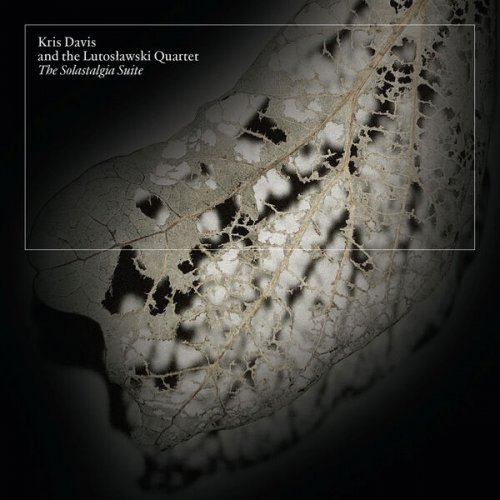
Artist: Kris Davis, Lutosławski Quartet
Title: The Solastalgia Suite
Year Of Release: 2026
Label: Pyroclastic Records
Genre: Jazz
Quality: Mp3 320 kbps / FLAC (tracks)
Total Time: 44:43
Total Size: 104 / 204 MB
WebSite: Album Preview
Tracklist:Title: The Solastalgia Suite
Year Of Release: 2026
Label: Pyroclastic Records
Genre: Jazz
Quality: Mp3 320 kbps / FLAC (tracks)
Total Time: 44:43
Total Size: 104 / 204 MB
WebSite: Album Preview
1. Interlude (5:02)
2. An Invitation to Disappear (5:46)
3. Towards No Earthly Pole (4:07)
4. The Known End (7:17)
5. Ghost Reefs (2:40)
6. Pressure & Yield (4:04)
7. Life on Venus (4:52)
8. Degrees of Separation (10:59)
Kris Davis and the Sound of a World in Flux
Marketed as jazz, Kris Davis’s latest work ultimately belongs to a different tradition altogether, one that sits at the crossroads of chamber music, contemporary composition, and avant-garde improvisation. It is only right that the Canadian-born, New York, based composer and pianist has long received recognition from DownBeat and the jazz press at large. Yet this album signals something more radical: a decisive step beyond genre, beyond expectation, and beyond the comfortable boundaries that often define even the most adventurous jazz recordings.
This is chamber jazz in the deepest sense, if not outright contemporary classical music. The writing is dense, deliberate, and uncompromising, unfolding far from well-trodden paths or neatly drawn formal lines. It is music of the present moment, music that confronts complexity head-on and stages it with a clarity that feels both rigorous and emotionally charged. In its command of large-scale structure and dramatic tension, the work places Davis among a lineage of composers more often associated with the concert hall than the jazz club. One hears echoes of Ravel’s harmonic ambiguity and Bartók’s structural intensity, not as imitation, but as distant gravitational forces orbiting her own singular voice.
Within the New York avant-garde ecosystem, few artists have pursued such a consistently personal and intellectually demanding path. Davis’s music does not ask to be decoded quickly; it asks for attention, patience, and return visits. The listener is gradually drawn in, sometimes unsettled, sometimes suspended, by a musical language that is both forceful and narrative. Themes emerge, fracture, reassemble. Time feels elastic. What results is not abstraction for abstraction’s sake, but a deeply human form of storytelling told without words.
For Kris Davis, art is a matter of creative urgency. With 24 albums as a leader or co-leader, and collaborations with artists such as Terri Lyne Carrington, Dave Holland, John Zorn, Craig Taborn, Ingrid Laubrock, Tyshawn Sorey, and Esperanza Spalding, her career reflects an unwavering commitment to artistic risk. These are not casual partnerships. They are alliances formed among musicians who, even when they speak different musical languages, recognize a shared terrain: art with a capital “A.” The most intellectually expansive artists tend to find one another, not out of strategy, but out of necessity.
The Solastalgia Suite was commissioned by the Jazztopad Festival in Wrocław, Poland, and it draws its conceptual core from the ecological crisis. “I see changes when I go back to Canada,” Davis has said. The environments have shifted, the climate has altered, and with it the relationship between humans, nature, and technology. This is not protesting music in the conventional sense, nor is it alarmist. Instead, it is observational, quietly devastating in its restraint. Davis’s gift lies in articulating these realizations through sound rather than rhetoric, allowing music to carry what language often cannot.
She elaborates: “The environments are different, the climate’s different, the whole connection with nature is different, from climate change and from our relationship to technology. I was looking for a word to describe this feeling of loss and mourning for my home and came across Glenn Albrecht’s term ‘solastalgia,’ which described it perfectly.”
Art becomes most compelling when it intersects with the urgencies of its time, when it engages history, collective anxiety, and the unresolved questions of the present. Kris Davis’s work exists precisely in that space, where the personal and the political, the ecological and the poetic, quietly converge. As listeners, we feel this convergence viscerally. We listen, we absorb, we admire, and we are reminded of our own smallness in the face of an artistic vision that refuses simplification.
This album also stands as a testament to transnational collaboration. Artists from different continents come together not to erase difference, but to sharpen it. Humanity has no race, only shared emotions, ideas, and contradictions. In that sense, The Solastalgia Suite functions much like powerful theater: it unsettles its audience, pushes reflection further, and leaves traces that linger well after the final note has faded.
This is music one returns to. One listens, re-listens, digests, and listens again. Each encounter reveals new contours, new tensions. Every action has consequences; this work insists on that truth. Here, aesthetics is not the end goal; they are the vehicle.
How rare it is, today, to be genuinely overwhelmed by a work of art. Kris Davis is to music what Paul Auster was to literature: a lucid witness to her time, attentive to its fractures, its anxieties, and its quiet transformations. At a moment when art is often asked to comfort or distract, Davis reminds us that its most enduring role may be to confront, to question, and to endure. In doing so, she asserts herself, not loudly, but unmistakably, as one of the most important artists working today.
Kris Davis, piano and composition
Lutosławski Quartet:
Roksana Kwaśnikowska, first violin
Marcin Markowicz, second violin
Arur Rozmysłowicz, viola
Maciej Młodawski, cello
Marketed as jazz, Kris Davis’s latest work ultimately belongs to a different tradition altogether, one that sits at the crossroads of chamber music, contemporary composition, and avant-garde improvisation. It is only right that the Canadian-born, New York, based composer and pianist has long received recognition from DownBeat and the jazz press at large. Yet this album signals something more radical: a decisive step beyond genre, beyond expectation, and beyond the comfortable boundaries that often define even the most adventurous jazz recordings.
This is chamber jazz in the deepest sense, if not outright contemporary classical music. The writing is dense, deliberate, and uncompromising, unfolding far from well-trodden paths or neatly drawn formal lines. It is music of the present moment, music that confronts complexity head-on and stages it with a clarity that feels both rigorous and emotionally charged. In its command of large-scale structure and dramatic tension, the work places Davis among a lineage of composers more often associated with the concert hall than the jazz club. One hears echoes of Ravel’s harmonic ambiguity and Bartók’s structural intensity, not as imitation, but as distant gravitational forces orbiting her own singular voice.
Within the New York avant-garde ecosystem, few artists have pursued such a consistently personal and intellectually demanding path. Davis’s music does not ask to be decoded quickly; it asks for attention, patience, and return visits. The listener is gradually drawn in, sometimes unsettled, sometimes suspended, by a musical language that is both forceful and narrative. Themes emerge, fracture, reassemble. Time feels elastic. What results is not abstraction for abstraction’s sake, but a deeply human form of storytelling told without words.
For Kris Davis, art is a matter of creative urgency. With 24 albums as a leader or co-leader, and collaborations with artists such as Terri Lyne Carrington, Dave Holland, John Zorn, Craig Taborn, Ingrid Laubrock, Tyshawn Sorey, and Esperanza Spalding, her career reflects an unwavering commitment to artistic risk. These are not casual partnerships. They are alliances formed among musicians who, even when they speak different musical languages, recognize a shared terrain: art with a capital “A.” The most intellectually expansive artists tend to find one another, not out of strategy, but out of necessity.
The Solastalgia Suite was commissioned by the Jazztopad Festival in Wrocław, Poland, and it draws its conceptual core from the ecological crisis. “I see changes when I go back to Canada,” Davis has said. The environments have shifted, the climate has altered, and with it the relationship between humans, nature, and technology. This is not protesting music in the conventional sense, nor is it alarmist. Instead, it is observational, quietly devastating in its restraint. Davis’s gift lies in articulating these realizations through sound rather than rhetoric, allowing music to carry what language often cannot.
She elaborates: “The environments are different, the climate’s different, the whole connection with nature is different, from climate change and from our relationship to technology. I was looking for a word to describe this feeling of loss and mourning for my home and came across Glenn Albrecht’s term ‘solastalgia,’ which described it perfectly.”
Art becomes most compelling when it intersects with the urgencies of its time, when it engages history, collective anxiety, and the unresolved questions of the present. Kris Davis’s work exists precisely in that space, where the personal and the political, the ecological and the poetic, quietly converge. As listeners, we feel this convergence viscerally. We listen, we absorb, we admire, and we are reminded of our own smallness in the face of an artistic vision that refuses simplification.
This album also stands as a testament to transnational collaboration. Artists from different continents come together not to erase difference, but to sharpen it. Humanity has no race, only shared emotions, ideas, and contradictions. In that sense, The Solastalgia Suite functions much like powerful theater: it unsettles its audience, pushes reflection further, and leaves traces that linger well after the final note has faded.
This is music one returns to. One listens, re-listens, digests, and listens again. Each encounter reveals new contours, new tensions. Every action has consequences; this work insists on that truth. Here, aesthetics is not the end goal; they are the vehicle.
How rare it is, today, to be genuinely overwhelmed by a work of art. Kris Davis is to music what Paul Auster was to literature: a lucid witness to her time, attentive to its fractures, its anxieties, and its quiet transformations. At a moment when art is often asked to comfort or distract, Davis reminds us that its most enduring role may be to confront, to question, and to endure. In doing so, she asserts herself, not loudly, but unmistakably, as one of the most important artists working today.
Kris Davis, piano and composition
Lutosławski Quartet:
Roksana Kwaśnikowska, first violin
Marcin Markowicz, second violin
Arur Rozmysłowicz, viola
Maciej Młodawski, cello


![George Otsuka Quintet - In Concert! (1973) [1992]](https://www.dibpic.com/uploads/posts/2026-01/1767548435_insert-front.jpg "George Otsuka Quintet - In Concert! (1973) [1992]")
![Zu - Ferrum Sidereum (2026) [Hi-Res]](https://img.israbox.com/img/2026-01/08/9fie276n2467v8wvkhk61d6fz.jpg "Zu - Ferrum Sidereum (2026) [Hi-Res]")