Paul Jarret - Tilia (2026)
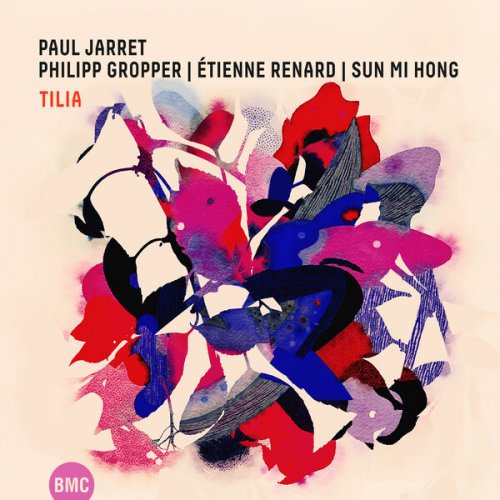
Artist: Paul Jarret
Title: Tilia
Year Of Release: 2026
Label: BMC Records
Genre: Jazz
Quality: FLAC (tracks)
Total Time: 48:06 min
Total Size: 306 MB
WebSite: Album Preview
Tracklist:Title: Tilia
Year Of Release: 2026
Label: BMC Records
Genre: Jazz
Quality: FLAC (tracks)
Total Time: 48:06 min
Total Size: 306 MB
WebSite: Album Preview
01. From the Roots
02. Bark
03. Buds
04. Baucis
05. Basswood
06. Sap
07. Laima
08. Ramificatio
09. Branches
10. Basswood (Reprise)
Since coming to light in the mid-2010s as leader of the group Pj5 (winner of the Jazz Migration programme in 2016), guitarist and composer Paul Jarret has continued to broaden the scope of his idiomatic territories, collaborating with musicians in different styles and genres but above all re-articulating, each time in a different manner, the constituent elements of his naturally syncretic, amalgamating universe in the service of increasingly personal and ambitious artistic projects. Whether in the highly acoustic and orchestrated context of his group EMMA, which revisits the liturgical and elegiac dimension of Scandinavian folk traditions through the prism of free improvisation; or through the totally improvised configuration of the Sweet Dog trio, for ultra-contemporary and determinedly electric music venturing both on the side of noise and ambient and that of pop or metal; in a spirit more directly referential with Ghost Song, taking advantage of the contribution of the American drummer Jim Black to pay tribute to the rock energy of the downtown New York scene of the 2000s; or more recently at the head of his improbable Acoustic Large Ensemble, taking on board fourteen musicians from jazz and improvised music in moving compositions with forms, textures and dynamics that toy affectionately with contemporary and repetitive music — Paul Jarret all these past years, at each new turn in his rich, serpentine career, has created multiple perspectives generated by the augmented hybrid forms of his music, which functions as both a receptacle for and a beacon of the key formal concerns of contemporary post-jazz.
With his new quartet TILIA, which at first glance might, with its instrumentation, give the impression of returning to codes and formats that adhere to standards more in line with traditional jazz, Paul Jarret continues to enrich and elaborate his language, in a gesture that, less than transgression, is rather a renewed synthesis, playing to the limits by reshaping the contours with a formal plasticity of a stimulating diversity. Surrounded by talented musicians particularly representative of the richness, variety and open-mindedness of jazz generated today in Europe (German saxophonist Philipp Gropper, a figurehead of the tumultuous Berlin scene ; the Korean-born drummer Sun-Mi Hong, hyperactive in Germany and the Netherlands where she settled over 10 years ago ; and the bassist Étienne Renard, rising star of the instrument, ubiquitous on all fronts in new French jazz), the guitarist, more than ever at the crossroads of these multiple worlds, here contemplates, with a new and undeniably more mature perception, the totality of his references and influences, stimulating new additions by redistributing once again the fundamentals of its grammar in new combinatorials, opening up fresh perspectives.
Although the image of the tree emerged only after the fact, offering a conceptual and imaginary framework for the ensemble (Tilia is the botanical name of the linden tree), it nevertheless constitutes a genuine ethical and aesthetic model in which the powerfully organic and relational music of Paul Jarret here finds as much its motif as a particularly convincing framework for a metaphorical reading.
Because if the guitarist immersed in the evolutionary energy dynamics and abstract sound textures of an astonishing formation of collective cohesion, embraces and reprises in his compositions all the registers that are usual to him (from the elegiac and acoustic pop-folk ballad of Buds to the industrial post-punk riffs of Sap through the abrasive and noisy sounds of Bark, the more specifically jazz interactions of Branches or Baucis or the long and exciting formal wandering of Ramificatio), his compositions go beyond the borrowed styles to lend the whole a coherence through the way it metabolizes all this living matter to utilize it as the sap of a new organism, both intimately connected to its environment and perfectly autonomous. In each of the constituent themes in this beautifully written CD there is a way of articulating a simplicity and clarity of manner in the overall scheme with a movement towards ever more sophistication and complexity in development – whether based on the radical gesture of individual and collective improvisation (Ramificatio) or on precisely organized compositional devices, articulating solo writing and expression in hybrid forms (Laima). Whatever the case, the line-up offers the listener the paradoxical exhilaration of a kind of hallucinatory journey to the most intimate realms of sound material in continuous metamorphosis and abounding in a thousand and one secret connections — ranging from external forms and qualities clearly identified as lyricism, melodic clarity, or rhythmic energy, to somehow deconstruct expectations and enlist the music in spontaneous and interactive abstraction processes that are truly fascinating.
By turns serene, elegiacal, melancholy, epic, tense, dark, ambiguous — Paul Jarret’s powerfully organic music ultimately passes through all these contradictory moods without ever giving the impression of drifting, thanks to the coherence of an immediately personal and identifiable group sound, grounded on an underlying pulse which is yet fluid, structured, and constantly digressive, and also on a sound and expressive alliance between the unbound and allusive guitar of the leader and the tortuous phrasing of the saxophone of Philipp Gropper, excelling as he does in complementarity and lyrical intensity. Nourished by tradition, linked to the most contemporary energies and pulsations, open (like the quartet) to all trends in globalized creative jazz — Paul Jarret’s music is, more than ever, at the heart of the challenges of our postmodern culture.
With his new quartet TILIA, which at first glance might, with its instrumentation, give the impression of returning to codes and formats that adhere to standards more in line with traditional jazz, Paul Jarret continues to enrich and elaborate his language, in a gesture that, less than transgression, is rather a renewed synthesis, playing to the limits by reshaping the contours with a formal plasticity of a stimulating diversity. Surrounded by talented musicians particularly representative of the richness, variety and open-mindedness of jazz generated today in Europe (German saxophonist Philipp Gropper, a figurehead of the tumultuous Berlin scene ; the Korean-born drummer Sun-Mi Hong, hyperactive in Germany and the Netherlands where she settled over 10 years ago ; and the bassist Étienne Renard, rising star of the instrument, ubiquitous on all fronts in new French jazz), the guitarist, more than ever at the crossroads of these multiple worlds, here contemplates, with a new and undeniably more mature perception, the totality of his references and influences, stimulating new additions by redistributing once again the fundamentals of its grammar in new combinatorials, opening up fresh perspectives.
Although the image of the tree emerged only after the fact, offering a conceptual and imaginary framework for the ensemble (Tilia is the botanical name of the linden tree), it nevertheless constitutes a genuine ethical and aesthetic model in which the powerfully organic and relational music of Paul Jarret here finds as much its motif as a particularly convincing framework for a metaphorical reading.
Because if the guitarist immersed in the evolutionary energy dynamics and abstract sound textures of an astonishing formation of collective cohesion, embraces and reprises in his compositions all the registers that are usual to him (from the elegiac and acoustic pop-folk ballad of Buds to the industrial post-punk riffs of Sap through the abrasive and noisy sounds of Bark, the more specifically jazz interactions of Branches or Baucis or the long and exciting formal wandering of Ramificatio), his compositions go beyond the borrowed styles to lend the whole a coherence through the way it metabolizes all this living matter to utilize it as the sap of a new organism, both intimately connected to its environment and perfectly autonomous. In each of the constituent themes in this beautifully written CD there is a way of articulating a simplicity and clarity of manner in the overall scheme with a movement towards ever more sophistication and complexity in development – whether based on the radical gesture of individual and collective improvisation (Ramificatio) or on precisely organized compositional devices, articulating solo writing and expression in hybrid forms (Laima). Whatever the case, the line-up offers the listener the paradoxical exhilaration of a kind of hallucinatory journey to the most intimate realms of sound material in continuous metamorphosis and abounding in a thousand and one secret connections — ranging from external forms and qualities clearly identified as lyricism, melodic clarity, or rhythmic energy, to somehow deconstruct expectations and enlist the music in spontaneous and interactive abstraction processes that are truly fascinating.
By turns serene, elegiacal, melancholy, epic, tense, dark, ambiguous — Paul Jarret’s powerfully organic music ultimately passes through all these contradictory moods without ever giving the impression of drifting, thanks to the coherence of an immediately personal and identifiable group sound, grounded on an underlying pulse which is yet fluid, structured, and constantly digressive, and also on a sound and expressive alliance between the unbound and allusive guitar of the leader and the tortuous phrasing of the saxophone of Philipp Gropper, excelling as he does in complementarity and lyrical intensity. Nourished by tradition, linked to the most contemporary energies and pulsations, open (like the quartet) to all trends in globalized creative jazz — Paul Jarret’s music is, more than ever, at the heart of the challenges of our postmodern culture.

![Ella Fitzgerald - Ella Wishes You a Swinging Christmas (1960) [1993]](https://www.dibpic.com/uploads/posts/2022-04/1650112977_folder.jpg "Ella Fitzgerald - Ella Wishes You a Swinging Christmas (1960) [1993]")
![Dimitri Naïditch & Polina de Carlo - French Kiss (2026) [Hi-Res]](https://www.dibpic.com/uploads/posts/2026-10/1791891903_folder.jpg "Dimitri Naïditch & Polina de Carlo - French Kiss (2026) [Hi-Res]")