Nat King Cole - Nat King Cole Greatest Hits (2026)
- 27 Feb, 10:59
- change text size:
Facebook
Twitter
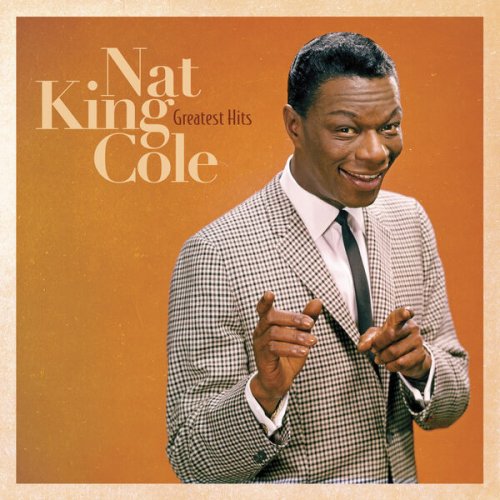
Artist: Nat King Cole
Title: Nat King Cole Greatest Hits
Year Of Release: 2026
Label: Wagram Music
Genre: Jazz, Vocal Jazz, Pop, Easy Listening
Quality: FLAC (tracks)
Total Time: 1:11:53
Total Size: 357 MB
WebSite: Album Preview
Tracklist:Title: Nat King Cole Greatest Hits
Year Of Release: 2026
Label: Wagram Music
Genre: Jazz, Vocal Jazz, Pop, Easy Listening
Quality: FLAC (tracks)
Total Time: 1:11:53
Total Size: 357 MB
WebSite: Album Preview
1. Nat King Cole – Unforgettable (03:11)
2. Nat King Cole – (I Love You) For Sentimental Reasons (02:51)
3. Nat King Cole – Nature Boy (02:37)
4. Nat King Cole – (Get Your Kicks On) Route 66! (02:59)
5. Nat King Cole – Silent Night (02:08)
6. Nat King Cole – At Last (02:58)
7. Nat King Cole – When I Fall in Love (03:09)
8. Nat King Cole – Stardust (03:14)
9. Nat King Cole – Mood Indigo (03:21)
10. Nat King Cole – Don't Get Around Much Anymore (03:11)
11. Nat King Cole – When You're Smiling (02:43)
12. Nat King Cole – Straighten Up and Fly Right (02:24)
13. Nat King Cole – Smile (02:51)
14. Nat King Cole – Let There Be Love (02:38)
15. Nat King Cole – Calypso Blues (03:15)
16. Nat King Cole – Answer Me, My Love (02:54)
17. Nat King Cole – Pretend (02:46)
18. Nat King Cole – The More I See You (03:26)
19. Nat King Cole – Fly Me to the Moon (03:30)
20. Nat King Cole – Mona Lisa (03:14)
21. Nat King Cole – Ramblin' Rose (02:47)
22. Nat King Cole – Too Young (03:22)
23. Nat King Cole – Orange Colored Sky (02:32)
24. Térez Montcalm – L-O-V-E (03:42)
For a mild-mannered man whose music was always easy on the ear, Nat King Cole managed to be a figure of considerable controversy during his 30 years as a professional musician. From the late '40s to the mid-'60s, he was a massively successful pop singer who ranked with such contemporaries as Frank Sinatra, Perry Como, and Dean Martin. He shared with those peers a career that encompassed hit records, international touring, radio and television shows, and appearances in films. But unlike them, he had not emerged from a background as a band singer in the swing era. Instead, he had spent a decade as a celebrated jazz pianist, leading his own small group. Oddly, that was one source of controversy. For some reason, there seem to be more jazz critics than fans of traditional pop among music journalists, and Cole's transition from jazz to pop during a period when jazz itself was becoming less popular was seen as a betrayal. At the same time, as a prominent Black entertainer during an era of tumultuous change in racial relations in the U.S., he sometimes found himself out of favor with different, warring sides. His efforts at integration, which included suing hotels that refused to admit him and moving into a previously all-white neighborhood in Los Angeles, earned the enmity of racists; once, he was even physically attacked on-stage in Alabama. But Civil Rights activists sometimes criticized him for not doing enough for the cause.

Such controversies do not obscure his real talent as a performer, however. The dismay of jazz fans at his abandonment of the genre must be measured against his accomplishments as a jazz musician. An heir of Earl Hines, whom he studied closely as a child in Chicago, Cole was an influence on such followers as Oscar Peterson, and his trio, emerging in the dying days of the swing era, helped lead the way in small-band jazz. The rage felt by jazz fans as he moved primarily to pop singing is not unlike the anger folk music fans felt when Bob Dylan turned to rock in the mid-'60s; in both cases, it was all the more acute because fans felt that one of their leaders -- not just another musician -- was joining the enemy. Less well-remembered, however, are Cole's accomplishments during and after that transition. His rich, husky voice and careful enunciation, and the warmth, intimacy, and good humor of his approach to singing, allowed him to succeed with both ballads and novelties -- so much so that he scored over 100 pop chart singles and more than two-dozen chart albums over a period of 20 years, enough to rank him behind only Sinatra as the most successful pop singer of his generation.
Nat King Cole was born Nathaniel Adams Coles in Montgomery, Alabama, on March 17, 1919. (In his early years of music-making, he dispensed with the "s" at the end of his name.) As a Black child born to a poor family in the American South at the time, he did not have a birth certificate; his March 17 birthday was recalled because it was also St. Patrick's Day. He listed conflicting years of birth on legal documents during his lifetime; most sources give the year as 1917. (Biographer Daniel Mark Epstein's consulted the 1920 census to determine that the Coles household had a male infant at that time, and confirmed the birth year as 1919.) Coles' father was a butcher who aspired to the Baptist ministry, and when Cole was four the family moved to Chicago, where his father eventually succeeded in becoming a preacher.
Like his older brother Eddie, who became a bass player, Cole showed an early interest in music. He was taught piano by his mother as a child and later took lessons. Also like his brother, he turned professional early; by his teens, he was leading a band called either the Royal Dukes or the Rogues of Rhythm, and he dropped out of high school at 15 to go into music full-time. The following year, Eddie, who had been touring with Noble Sissle's band, returned to Chicago and the brothers organized their own sextet. On July 28, 1936, as Eddie Cole's Swingsters, they recorded two singles for Decca Records, Nat King Cole's recording debut. That fall, they were hired to perform in a revival of the all-Black Broadway musical revue Shuffle Along. Unlike his brother, Cole remained with the show when it went on tour, in part because his girlfriend, dancer Nadine Robinson, stayed with it as well. The two married in Michigan on January 27, 1937, even though Cole was only 17. The tour made its way around the country, finally closing in Los Angeles in May. Cole and his wife remained there, living at first with her aunt while Cole sought employment as a musician. He briefly led a big band, then played solo piano in clubs.
While performing at The Café Century during the summer of 1937, Cole was approached by the manager of The Swanee Inn, who invited him to put together a small band to play in the club. With guitarist Oscar Moore and bassist Wesley Prince, the act debuted that fall, drawing upon the children's nursery rhyme ("Old King Cole was a merry old soul...") for the name the King Cole Swingsters, later simply the King Cole Trio. The group gradually built up a following, with Cole emerging as a singer as well as a pianist. By September 1938, they had begun making radio transcriptions not originally intended for commercial release, though they have since been issued. In 1939 and 1940, they made occasional recordings for small labels and did radio work while expanding their live performances to include appearances across the country. In late 1940 they signed with Decca. Their 1941 recording of Cole's composition "That Ain't Right" hit number one on Billboard's Harlem Hit Parade (i.e., R&B) chart on January 30, 1943, Cole's first successful record. By that point, Prince had left the group to work for the war effort and was replaced by Johnny Miller.
The King Cole Trio's contract with Decca expired before "That Ain't Right" became a hit. Their next single, "All for You," was recorded for the tiny Excelsior label in October 1942. After its initial release, it was purchased by Capitol Records and reissued. On November 20, 1943, it became the group's second number one hit on the Harlem Hit Parade. It also crossed over to the pop chart. With that accomplishment, Capitol signed Cole directly. The trio's first Capitol session produced both the Cole composition "Straighten Up and Fly Right," which topped the Black chart on April 29, 1944, and stayed there for ten weeks; it spent six weeks at the top of the folk (i.e., country) chart, and reached the Top Ten of the pop chart. "Gee Baby, Ain't I Good to You" topped the Black chart on October 21 and also crossed over to the pop chart.
The trio placed another four titles in the Black chart during 1944, and Capitol released their debut album, The King Cole Trio that fall. The collection of four 78-rpm discs contained eight tracks, only three of them featuring Cole vocals. When Billboard instituted its first album chart on March 24, 1945, The King Cole Trio was ranked at number one, a position it held for 12 weeks. At the same time, big-band swing music was declining in popularity, and many jazz fans were beginning to turn to the emerging style of bebop, a development that, whatever its artistic significance, spelled the end of jazz as a broadly popular style of music.
The King Cole Trio -- and particularly the singer/pianist then known as "King Cole" -- on the other hand, were going in exactly the opposite direction, as their success on records, and at clubs and theaters around the country, led to appearances in films and on radio. After numerous guest-star stints on Bing Crosby's Kraft Music Hall radio series, the trio, along with pianist Eddy Duchin, were hired to host the show's summer replacement program for 13 weeks. During that run, on August 17, The King Cole Trio, Vol. 2, another set of four 78s, hit number one. Over the next five days, the trio recorded two songs that would add to their pop success. Mel Tormé and Robert Wells' "The Christmas Song (Merry Christmas to You)" (better known by its opening line, "Chestnuts roasting on an open fire"), recorded August 19, was Cole's first disc to feature strings. "(I Love You) For Sentimental Reasons," though it only featured the trio, demonstrated that Cole was more than capable of handling a straight romantic ballad, not just the uptempo novelties with which he and the group had succeeded up until this point.
"(I Love You) For Sentimental Reasons" became Cole's first number one pop single on December 28, 1946; "The Christmas Song (Merry Christmas to You)" peaked at number three, going on to become a holiday perennial and million seller. While these hits were developing, the trio went from its summer replacement berth to its own network radio series, King Cole Trio Time, a 15-minute Saturday afternoon program that debuted on October 19, 1946, and ran until April 1948. The group's recording schedule during the first half of 1947 was relatively light, but the pace picked up considerably in anticipation of the musicians' strike called for January 1, 1948. On August 22, 1947, with an orchestral backing, Cole recorded "Nature Boy," an unusual philosophical ballad. Released March 29, 1948 and credited to "King Cole," it hit number one for the first of eight weeks on May 8, becoming a gold record.
Oscar Moore, the trio's original guitarist, left the group in October 1947 after ten years and was replaced by Irving Ashby. In March 1948, Cole divorced his wife and married singer Marie Ellington. Among the couple's children was Natalie Cole, who became a singer herself. Bass player Johnny Miller quit the trio in August 1948 and was replaced by Joe Comfort. In February 1949, Cole added percussionist Jack Costanzo to the group, which was thereafter billed as "Nat King Cole & the Trio." As of the spring of 1950, Cole's recordings were being credited simply to "Nat King Cole." On July 8 of that year, his recording of the wistful movie theme "Mona Lisa," featuring a string chart arranged by Nelson Riddle, became Cole's third number one pop hit and gold record.
That September, he traveled to Europe for his first international tour, beginning a pattern that would find him giving concerts almost continually in a combination of top nightclubs in major cities and concert halls around the U.S., with occasional trips to Europe, the Far East, and Latin America, and extended stays at Las Vegas casinos. In these appearances, he stood for most of the show, only occasional sitting down to play a number or two at the piano. Ashby and Comfort left the group in 1951, and an announcement was made that the trio officially dissolved, but that simply meant that Cole would be billed as a solo act. In practice, he continued to carry a guitarist, John Collins, and a bassist, Charles Harris, along with Costanzo (until he left in 1953 and was replaced by drummer Lee Young), while often augmenting them with an orchestra.
The trio placed another four titles in the Black chart during 1944, and Capitol released their debut album, The King Cole Trio that fall. The collection of four 78-rpm discs contained eight tracks, only three of them featuring Cole vocals. When Billboard instituted its first album chart on March 24, 1945, The King Cole Trio was ranked at number one, a position it held for 12 weeks. At the same time, big-band swing music was declining in popularity, and many jazz fans were beginning to turn to the emerging style of bebop, a development that, whatever its artistic significance, spelled the end of jazz as a broadly popular style of music.
The King Cole Trio -- and particularly the singer/pianist then known as "King Cole" -- on the other hand, were going in exactly the opposite direction, as their success on records, and at clubs and theaters around the country, led to appearances in films and on radio. After numerous guest-star stints on Bing Crosby's Kraft Music Hall radio series, the trio, along with pianist Eddy Duchin, were hired to host the show's summer replacement program for 13 weeks. During that run, on August 17, The King Cole Trio, Vol. 2, another set of four 78s, hit number one. Over the next five days, the trio recorded two songs that would add to their pop success. Mel Tormé and Robert Wells' "The Christmas Song (Merry Christmas to You)" (better known by its opening line, "Chestnuts roasting on an open fire"), recorded August 19, was Cole's first disc to feature strings. "(I Love You) For Sentimental Reasons," though it only featured the trio, demonstrated that Cole was more than capable of handling a straight romantic ballad, not just the uptempo novelties with which he and the group had succeeded up until this point.
"(I Love You) For Sentimental Reasons" became Cole's first number one pop single on December 28, 1946; "The Christmas Song (Merry Christmas to You)" peaked at number three, going on to become a holiday perennial and million seller. While these hits were developing, the trio went from its summer replacement berth to its own network radio series, King Cole Trio Time, a 15-minute Saturday afternoon program that debuted on October 19, 1946, and ran until April 1948. The group's recording schedule during the first half of 1947 was relatively light, but the pace picked up considerably in anticipation of the musicians' strike called for January 1, 1948. On August 22, 1947, with an orchestral backing, Cole recorded "Nature Boy," an unusual philosophical ballad. Released March 29, 1948 and credited to "King Cole," it hit number one for the first of eight weeks on May 8, becoming a gold record.
Oscar Moore, the trio's original guitarist, left the group in October 1947 after ten years and was replaced by Irving Ashby. In March 1948, Cole divorced his wife and married singer Marie Ellington. Among the couple's children was Natalie Cole, who became a singer herself. Bass player Johnny Miller quit the trio in August 1948 and was replaced by Joe Comfort. In February 1949, Cole added percussionist Jack Costanzo to the group, which was thereafter billed as "Nat King Cole & the Trio." As of the spring of 1950, Cole's recordings were being credited simply to "Nat King Cole." On July 8 of that year, his recording of the wistful movie theme "Mona Lisa," featuring a string chart arranged by Nelson Riddle, became Cole's third number one pop hit and gold record.
That September, he traveled to Europe for his first international tour, beginning a pattern that would find him giving concerts almost continually in a combination of top nightclubs in major cities and concert halls around the U.S., with occasional trips to Europe, the Far East, and Latin America, and extended stays at Las Vegas casinos. In these appearances, he stood for most of the show, only occasional sitting down to play a number or two at the piano. Ashby and Comfort left the group in 1951, and an announcement was made that the trio officially dissolved, but that simply meant that Cole would be billed as a solo act. In practice, he continued to carry a guitarist, John Collins, and a bassist, Charles Harris, along with Costanzo (until he left in 1953 and was replaced by drummer Lee Young), while often augmenting them with an orchestra.
Although Cole did not score a number one hit in 1953 ("Pretend" peaked at number two), his seven chart entries were enough to rank him among the ten most successful singles artists of the year. His five chart singles in 1954, among them the gold-selling Top Ten hit "Answer Me, My Love," allowed him to repeat this ranking the following year, and he did the same thing in 1955 with another eight chart entries, including the Top Ten hits "Darling Je Vous Aime Beaucoup," "A Blossom Fell," and "If I May." Nine more chart entries allowed him to remain among the most successful singles artists in 1956, even though none of them reached the Top Ten, and he maintained his rank for the fifth straight year in 1957, reaching the Top Ten (and the top of the R&B chart) with "Send for Me." Though he managed one more Top Ten hit, "Looking Back," in 1958, the rise of rock & roll diminished his success on the singles chart. Meanwhile, he returned to a jazz approach on his 1957 LP After Midnight, which saw his backup group collaborate with jazz musicians Harry "Sweets" Edison, Stuff Smith, Willie Smith, and Juan Tizol. It was a modest commercial success, quickly followed by the ballad album Love Is the Thing, arranged and conducted by Gordon Jenkins, which hit number one for the first of eight weeks on May 27, 1957, and was eventually certified platinum.
Meanwhile, in the fall of 1956, Cole became the first Black host of a network television series when The Nat King Cole Show debuted as a 15-minute weekly program on November 5. The show was expanded to a half-hour in July 1957 and ran until December of that year, though it never attracted a national sponsor that might have made it an ongoing success. Cole attributed advertisers' reticence to racism. He returned to his acting career during 1957, appearing in Istanbul and China Gate, and got his most substantial role in 1958 playing blues musician W.C. Handy in a film biography, St. Louis Blues. His last acting role was in Night of the Quarter Moon in 1959. In 1960, he turned his attention to the theater, putting together a musical revue intended for Broadway. The songs were by Dotty Wayne and Ray Rasch, and the album Cole made of them, Wild Is Love, became his first Top Ten LP in three years. The corresponding stage show, I'm with You, was not as successful, opening what was intended to be a pre-Broadway tour in Denver on October 17, 1960, but closing in Detroit on November 26. Cole, however, salvaged the concept of the show for a stage production he called Sights and Sounds: The Merry World of Nat King Cole, featuring a group of dancers and singers, with whom he toured regularly from 1961 to 1964.
Cole returned to the Top Ten of the singles chart for the first time in four years with the country-tinged "Ramblin' Rose" in 1962; his album of the same name also reached the Top Ten and was eventually was certified platinum. "Those Lazy-Hazy-Crazy Days of Summer" became his last Top Ten hit in the summer of 1963. In December 1964, he was diagnosed with lung cancer. Two months later, he died of it at the age of 45.
After his death, Cole continued to appeal to the two almost mutually exclusive audiences who had appreciated him during his life. Jazz fans continued to treasure his recordings of the 1930s and '40s and to dismiss the non-jazz recordings he had made later. (In 1994, German discographer Klaus Teubig compiled Straighten Up and Fly Right: A Chronology and Discography of Nat "King" Cole, which pointedly cut off in the early '50s.) Pop fans clamored for reissues of Cole's '50s and '60s music, awarding gold record status to compilations that Capitol continued to assemble, without worrying much about the singer's talent as a piano player. (And, as his recordings fell into the public domain in Europe, where there is a 50-year copyright limit, a spate of low-quality reissues flooded the market.) But the ongoing debate was only a testament to Cole's ongoing attraction for music lovers, which, in the decades following his untimely end, showed no signs of abating. © William Ruhlmann
Nat King Cole was born Nathaniel Adams Coles in Montgomery, Alabama, on March 17, 1919. (In his early years of music-making, he dispensed with the "s" at the end of his name.) As a Black child born to a poor family in the American South at the time, he did not have a birth certificate; his March 17 birthday was recalled because it was also St. Patrick's Day. He listed conflicting years of birth on legal documents during his lifetime; most sources give the year as 1917. (Biographer Daniel Mark Epstein's consulted the 1920 census to determine that the Coles household had a male infant at that time, and confirmed the birth year as 1919.) Coles' father was a butcher who aspired to the Baptist ministry, and when Cole was four the family moved to Chicago, where his father eventually succeeded in becoming a preacher.
Like his older brother Eddie, who became a bass player, Cole showed an early interest in music. He was taught piano by his mother as a child and later took lessons. Also like his brother, he turned professional early; by his teens, he was leading a band called either the Royal Dukes or the Rogues of Rhythm, and he dropped out of high school at 15 to go into music full-time. The following year, Eddie, who had been touring with Noble Sissle's band, returned to Chicago and the brothers organized their own sextet. On July 28, 1936, as Eddie Cole's Swingsters, they recorded two singles for Decca Records, Nat King Cole's recording debut. That fall, they were hired to perform in a revival of the all-Black Broadway musical revue Shuffle Along. Unlike his brother, Cole remained with the show when it went on tour, in part because his girlfriend, dancer Nadine Robinson, stayed with it as well. The two married in Michigan on January 27, 1937, even though Cole was only 17. The tour made its way around the country, finally closing in Los Angeles in May. Cole and his wife remained there, living at first with her aunt while Cole sought employment as a musician. He briefly led a big band, then played solo piano in clubs.
While performing at The Café Century during the summer of 1937, Cole was approached by the manager of The Swanee Inn, who invited him to put together a small band to play in the club. With guitarist Oscar Moore and bassist Wesley Prince, the act debuted that fall, drawing upon the children's nursery rhyme ("Old King Cole was a merry old soul...") for the name the King Cole Swingsters, later simply the King Cole Trio. The group gradually built up a following, with Cole emerging as a singer as well as a pianist. By September 1938, they had begun making radio transcriptions not originally intended for commercial release, though they have since been issued. In 1939 and 1940, they made occasional recordings for small labels and did radio work while expanding their live performances to include appearances across the country. In late 1940 they signed with Decca. Their 1941 recording of Cole's composition "That Ain't Right" hit number one on Billboard's Harlem Hit Parade (i.e., R&B) chart on January 30, 1943, Cole's first successful record. By that point, Prince had left the group to work for the war effort and was replaced by Johnny Miller.
The King Cole Trio's contract with Decca expired before "That Ain't Right" became a hit. Their next single, "All for You," was recorded for the tiny Excelsior label in October 1942. After its initial release, it was purchased by Capitol Records and reissued. On November 20, 1943, it became the group's second number one hit on the Harlem Hit Parade. It also crossed over to the pop chart. With that accomplishment, Capitol signed Cole directly. The trio's first Capitol session produced both the Cole composition "Straighten Up and Fly Right," which topped the Black chart on April 29, 1944, and stayed there for ten weeks; it spent six weeks at the top of the folk (i.e., country) chart, and reached the Top Ten of the pop chart. "Gee Baby, Ain't I Good to You" topped the Black chart on October 21 and also crossed over to the pop chart.
The trio placed another four titles in the Black chart during 1944, and Capitol released their debut album, The King Cole Trio that fall. The collection of four 78-rpm discs contained eight tracks, only three of them featuring Cole vocals. When Billboard instituted its first album chart on March 24, 1945, The King Cole Trio was ranked at number one, a position it held for 12 weeks. At the same time, big-band swing music was declining in popularity, and many jazz fans were beginning to turn to the emerging style of bebop, a development that, whatever its artistic significance, spelled the end of jazz as a broadly popular style of music.
The King Cole Trio -- and particularly the singer/pianist then known as "King Cole" -- on the other hand, were going in exactly the opposite direction, as their success on records, and at clubs and theaters around the country, led to appearances in films and on radio. After numerous guest-star stints on Bing Crosby's Kraft Music Hall radio series, the trio, along with pianist Eddy Duchin, were hired to host the show's summer replacement program for 13 weeks. During that run, on August 17, The King Cole Trio, Vol. 2, another set of four 78s, hit number one. Over the next five days, the trio recorded two songs that would add to their pop success. Mel Tormé and Robert Wells' "The Christmas Song (Merry Christmas to You)" (better known by its opening line, "Chestnuts roasting on an open fire"), recorded August 19, was Cole's first disc to feature strings. "(I Love You) For Sentimental Reasons," though it only featured the trio, demonstrated that Cole was more than capable of handling a straight romantic ballad, not just the uptempo novelties with which he and the group had succeeded up until this point.
"(I Love You) For Sentimental Reasons" became Cole's first number one pop single on December 28, 1946; "The Christmas Song (Merry Christmas to You)" peaked at number three, going on to become a holiday perennial and million seller. While these hits were developing, the trio went from its summer replacement berth to its own network radio series, King Cole Trio Time, a 15-minute Saturday afternoon program that debuted on October 19, 1946, and ran until April 1948. The group's recording schedule during the first half of 1947 was relatively light, but the pace picked up considerably in anticipation of the musicians' strike called for January 1, 1948. On August 22, 1947, with an orchestral backing, Cole recorded "Nature Boy," an unusual philosophical ballad. Released March 29, 1948 and credited to "King Cole," it hit number one for the first of eight weeks on May 8, becoming a gold record.
Oscar Moore, the trio's original guitarist, left the group in October 1947 after ten years and was replaced by Irving Ashby. In March 1948, Cole divorced his wife and married singer Marie Ellington. Among the couple's children was Natalie Cole, who became a singer herself. Bass player Johnny Miller quit the trio in August 1948 and was replaced by Joe Comfort. In February 1949, Cole added percussionist Jack Costanzo to the group, which was thereafter billed as "Nat King Cole & the Trio." As of the spring of 1950, Cole's recordings were being credited simply to "Nat King Cole." On July 8 of that year, his recording of the wistful movie theme "Mona Lisa," featuring a string chart arranged by Nelson Riddle, became Cole's third number one pop hit and gold record.
That September, he traveled to Europe for his first international tour, beginning a pattern that would find him giving concerts almost continually in a combination of top nightclubs in major cities and concert halls around the U.S., with occasional trips to Europe, the Far East, and Latin America, and extended stays at Las Vegas casinos. In these appearances, he stood for most of the show, only occasional sitting down to play a number or two at the piano. Ashby and Comfort left the group in 1951, and an announcement was made that the trio officially dissolved, but that simply meant that Cole would be billed as a solo act. In practice, he continued to carry a guitarist, John Collins, and a bassist, Charles Harris, along with Costanzo (until he left in 1953 and was replaced by drummer Lee Young), while often augmenting them with an orchestra.
The trio placed another four titles in the Black chart during 1944, and Capitol released their debut album, The King Cole Trio that fall. The collection of four 78-rpm discs contained eight tracks, only three of them featuring Cole vocals. When Billboard instituted its first album chart on March 24, 1945, The King Cole Trio was ranked at number one, a position it held for 12 weeks. At the same time, big-band swing music was declining in popularity, and many jazz fans were beginning to turn to the emerging style of bebop, a development that, whatever its artistic significance, spelled the end of jazz as a broadly popular style of music.
The King Cole Trio -- and particularly the singer/pianist then known as "King Cole" -- on the other hand, were going in exactly the opposite direction, as their success on records, and at clubs and theaters around the country, led to appearances in films and on radio. After numerous guest-star stints on Bing Crosby's Kraft Music Hall radio series, the trio, along with pianist Eddy Duchin, were hired to host the show's summer replacement program for 13 weeks. During that run, on August 17, The King Cole Trio, Vol. 2, another set of four 78s, hit number one. Over the next five days, the trio recorded two songs that would add to their pop success. Mel Tormé and Robert Wells' "The Christmas Song (Merry Christmas to You)" (better known by its opening line, "Chestnuts roasting on an open fire"), recorded August 19, was Cole's first disc to feature strings. "(I Love You) For Sentimental Reasons," though it only featured the trio, demonstrated that Cole was more than capable of handling a straight romantic ballad, not just the uptempo novelties with which he and the group had succeeded up until this point.
"(I Love You) For Sentimental Reasons" became Cole's first number one pop single on December 28, 1946; "The Christmas Song (Merry Christmas to You)" peaked at number three, going on to become a holiday perennial and million seller. While these hits were developing, the trio went from its summer replacement berth to its own network radio series, King Cole Trio Time, a 15-minute Saturday afternoon program that debuted on October 19, 1946, and ran until April 1948. The group's recording schedule during the first half of 1947 was relatively light, but the pace picked up considerably in anticipation of the musicians' strike called for January 1, 1948. On August 22, 1947, with an orchestral backing, Cole recorded "Nature Boy," an unusual philosophical ballad. Released March 29, 1948 and credited to "King Cole," it hit number one for the first of eight weeks on May 8, becoming a gold record.
Oscar Moore, the trio's original guitarist, left the group in October 1947 after ten years and was replaced by Irving Ashby. In March 1948, Cole divorced his wife and married singer Marie Ellington. Among the couple's children was Natalie Cole, who became a singer herself. Bass player Johnny Miller quit the trio in August 1948 and was replaced by Joe Comfort. In February 1949, Cole added percussionist Jack Costanzo to the group, which was thereafter billed as "Nat King Cole & the Trio." As of the spring of 1950, Cole's recordings were being credited simply to "Nat King Cole." On July 8 of that year, his recording of the wistful movie theme "Mona Lisa," featuring a string chart arranged by Nelson Riddle, became Cole's third number one pop hit and gold record.
That September, he traveled to Europe for his first international tour, beginning a pattern that would find him giving concerts almost continually in a combination of top nightclubs in major cities and concert halls around the U.S., with occasional trips to Europe, the Far East, and Latin America, and extended stays at Las Vegas casinos. In these appearances, he stood for most of the show, only occasional sitting down to play a number or two at the piano. Ashby and Comfort left the group in 1951, and an announcement was made that the trio officially dissolved, but that simply meant that Cole would be billed as a solo act. In practice, he continued to carry a guitarist, John Collins, and a bassist, Charles Harris, along with Costanzo (until he left in 1953 and was replaced by drummer Lee Young), while often augmenting them with an orchestra.
Although Cole did not score a number one hit in 1953 ("Pretend" peaked at number two), his seven chart entries were enough to rank him among the ten most successful singles artists of the year. His five chart singles in 1954, among them the gold-selling Top Ten hit "Answer Me, My Love," allowed him to repeat this ranking the following year, and he did the same thing in 1955 with another eight chart entries, including the Top Ten hits "Darling Je Vous Aime Beaucoup," "A Blossom Fell," and "If I May." Nine more chart entries allowed him to remain among the most successful singles artists in 1956, even though none of them reached the Top Ten, and he maintained his rank for the fifth straight year in 1957, reaching the Top Ten (and the top of the R&B chart) with "Send for Me." Though he managed one more Top Ten hit, "Looking Back," in 1958, the rise of rock & roll diminished his success on the singles chart. Meanwhile, he returned to a jazz approach on his 1957 LP After Midnight, which saw his backup group collaborate with jazz musicians Harry "Sweets" Edison, Stuff Smith, Willie Smith, and Juan Tizol. It was a modest commercial success, quickly followed by the ballad album Love Is the Thing, arranged and conducted by Gordon Jenkins, which hit number one for the first of eight weeks on May 27, 1957, and was eventually certified platinum.
Meanwhile, in the fall of 1956, Cole became the first Black host of a network television series when The Nat King Cole Show debuted as a 15-minute weekly program on November 5. The show was expanded to a half-hour in July 1957 and ran until December of that year, though it never attracted a national sponsor that might have made it an ongoing success. Cole attributed advertisers' reticence to racism. He returned to his acting career during 1957, appearing in Istanbul and China Gate, and got his most substantial role in 1958 playing blues musician W.C. Handy in a film biography, St. Louis Blues. His last acting role was in Night of the Quarter Moon in 1959. In 1960, he turned his attention to the theater, putting together a musical revue intended for Broadway. The songs were by Dotty Wayne and Ray Rasch, and the album Cole made of them, Wild Is Love, became his first Top Ten LP in three years. The corresponding stage show, I'm with You, was not as successful, opening what was intended to be a pre-Broadway tour in Denver on October 17, 1960, but closing in Detroit on November 26. Cole, however, salvaged the concept of the show for a stage production he called Sights and Sounds: The Merry World of Nat King Cole, featuring a group of dancers and singers, with whom he toured regularly from 1961 to 1964.
Cole returned to the Top Ten of the singles chart for the first time in four years with the country-tinged "Ramblin' Rose" in 1962; his album of the same name also reached the Top Ten and was eventually was certified platinum. "Those Lazy-Hazy-Crazy Days of Summer" became his last Top Ten hit in the summer of 1963. In December 1964, he was diagnosed with lung cancer. Two months later, he died of it at the age of 45.
After his death, Cole continued to appeal to the two almost mutually exclusive audiences who had appreciated him during his life. Jazz fans continued to treasure his recordings of the 1930s and '40s and to dismiss the non-jazz recordings he had made later. (In 1994, German discographer Klaus Teubig compiled Straighten Up and Fly Right: A Chronology and Discography of Nat "King" Cole, which pointedly cut off in the early '50s.) Pop fans clamored for reissues of Cole's '50s and '60s music, awarding gold record status to compilations that Capitol continued to assemble, without worrying much about the singer's talent as a piano player. (And, as his recordings fell into the public domain in Europe, where there is a 50-year copyright limit, a spate of low-quality reissues flooded the market.) But the ongoing debate was only a testament to Cole's ongoing attraction for music lovers, which, in the decades following his untimely end, showed no signs of abating. © William Ruhlmann
![Katia Preta - Sou Eu (2026) [Hi-Res]](https://www.dibpic.com/uploads/posts/2026-10/1791359510_orwqmhz9yx6hw_600.jpg "Katia Preta - Sou Eu (2026) [Hi-Res]")
![Finn Carter - Finding Home (2026) [Hi-Res]](https://img.israbox.com/img/2026-10/08/xnqha2ypwk8qbzkhb0h7gdus6.jpg "Finn Carter - Finding Home (2026) [Hi-Res]")
![Jon Armstrong - Voluntary Breath (2026) [Hi-Res]](https://img.israbox.com/img/2026-10/06/t5btmlt4przw4ag2d7920gmvr.jpg "Jon Armstrong - Voluntary Breath (2026) [Hi-Res]")
![John Coltrane, Red Garland Trio - John Coltrane With The Red Garland Trio (Remastered 2026) (1958) [Hi-Res]](https://www.dibpic.com/uploads/posts/2026-10/1791477333_cover.jpg "John Coltrane, Red Garland Trio - John Coltrane With The Red Garland Trio (Remastered 2026) (1958) [Hi-Res]")