Diego Pinera - Romanian Dance (2026)
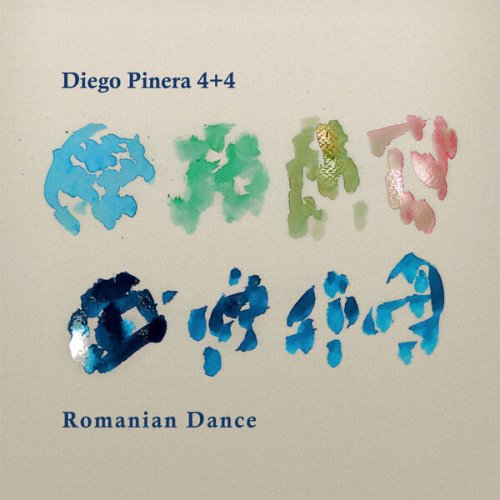
Artist: Diego Pinera, Igor Osypov, Peter Ehwald, Marcel Krömker
Title: Romanian Dance
Year Of Release: 2026
Label: iapetus distribution
Genre: Jazz
Quality: FLAC (tracks)
Total Time: 43:40
Total Size: 273 MB
WebSite: Album Preview
Tracklist:Title: Romanian Dance
Year Of Release: 2026
Label: iapetus distribution
Genre: Jazz
Quality: FLAC (tracks)
Total Time: 43:40
Total Size: 273 MB
WebSite: Album Preview
1. Cielo Gris (05:09)
2. Romanian Dance (03:22)
3. Bartok 2 (04:27)
4. Through Hell (05:27)
5. Sueno Herido (02:35)
6. Mi Cosmos Reloaded (04:17)
7. Bartok 3 (03:52)
8. Front Office (04:53)
9. Bartok 1 (04:24)
10. Polovtsian Dances Reloaded (05:14)
Romanian Dance is the debut album of the Diego Piñera 4+4 Octet, a project born from a long-standing artistic vision: to bring composed and improvised music into a shared space where both can unfold with equal intensity. By combining a jazz quartet with a string quartet, the ensemble opens up an expanded sound world—rich in color, texture, and emotional depth—where structure and freedom exist side by side.
At the heart of the album lies an ongoing dialogue with the work of Béla Bartók. Rather than paying tribute in a historical sense, Piñera approaches Bartók as a living influence. Romanian Dance features new arrangements of Bartók’s Romanian folk dances and selected string quartet movements, alongside reimagined works by Alexander Borodin and five original compositions. Bartók’s fascination with folk traditions, rhythmic complexity, and harmonic experimentation resonates deeply with Piñera’s own musical language, shaped by his Afro-Uruguayan roots and a lifelong engagement with trans-cultural rhythms.
In addition to Latin American influences, Piñera weaves in folkloric elements from other regions, particularly Eastern Europe. His recent immersion in Bulgarian rhythmic traditions further informs the album’s exploration of asymmetrical meters and polyrhythms, creating subtle bridges between distant musical cultures. These rhythmic and melodic intersections give the music its distinctive pulse—grounded, open, and constantly in motion.
Through intensive rehearsal and close collaboration, the octet has developed a natural balance between interpretation and improvisation. Classical musicians and jazz players meet on equal footing, listening closely and shaping the music together in real time. This shared responsibility gives the album its organic flow and emotional immediacy.
The music of Romanian Dance is also deeply personal. Some of its most powerful moments emerged during a period of serious illness, when Piñera continued composing from a hospital bed. This experience lends the album a quiet intensity—resilient, vulnerable, and deeply human—without ever becoming inward-looking.
Romanian Dance is a statement of connection: between traditions, cultures, and musical practices often kept apart. It is not an experiment, but a living, breathing form—rooted in history, shaped by the present, and open to what may emerge next.
Diego Pinera — drums, compositions, arrangements
Igor Osypov — guitar
Peter Ehwald — saxophone
Marcel Krömker — bass
Semion Gurevich — violin I
Alessia Laurora — violin II
Joaquín León Fernández — viola
Elisabet Iserte López — cello
At the heart of the album lies an ongoing dialogue with the work of Béla Bartók. Rather than paying tribute in a historical sense, Piñera approaches Bartók as a living influence. Romanian Dance features new arrangements of Bartók’s Romanian folk dances and selected string quartet movements, alongside reimagined works by Alexander Borodin and five original compositions. Bartók’s fascination with folk traditions, rhythmic complexity, and harmonic experimentation resonates deeply with Piñera’s own musical language, shaped by his Afro-Uruguayan roots and a lifelong engagement with trans-cultural rhythms.
In addition to Latin American influences, Piñera weaves in folkloric elements from other regions, particularly Eastern Europe. His recent immersion in Bulgarian rhythmic traditions further informs the album’s exploration of asymmetrical meters and polyrhythms, creating subtle bridges between distant musical cultures. These rhythmic and melodic intersections give the music its distinctive pulse—grounded, open, and constantly in motion.
Through intensive rehearsal and close collaboration, the octet has developed a natural balance between interpretation and improvisation. Classical musicians and jazz players meet on equal footing, listening closely and shaping the music together in real time. This shared responsibility gives the album its organic flow and emotional immediacy.
The music of Romanian Dance is also deeply personal. Some of its most powerful moments emerged during a period of serious illness, when Piñera continued composing from a hospital bed. This experience lends the album a quiet intensity—resilient, vulnerable, and deeply human—without ever becoming inward-looking.
Romanian Dance is a statement of connection: between traditions, cultures, and musical practices often kept apart. It is not an experiment, but a living, breathing form—rooted in history, shaped by the present, and open to what may emerge next.
Diego Pinera — drums, compositions, arrangements
Igor Osypov — guitar
Peter Ehwald — saxophone
Marcel Krömker — bass
Semion Gurevich — violin I
Alessia Laurora — violin II
Joaquín León Fernández — viola
Elisabet Iserte López — cello
![Daisy DeVell - UNDERWORLD (2026) [Hi-Res]](https://www.dibpic.com/uploads/posts/2026-10/1791891459_folder.jpg "Daisy DeVell - UNDERWORLD (2026) [Hi-Res]")



![Dimitri Naïditch & Polina de Carlo - French Kiss (2026) [Hi-Res]](https://www.dibpic.com/uploads/posts/2026-10/1791891903_folder.jpg "Dimitri Naïditch & Polina de Carlo - French Kiss (2026) [Hi-Res]")


![George Benson - Weekend In London (2020) [Vinyl]](https://www.dibpic.com/uploads/posts/2026-10/1791620797_r-15480587-1630683386-3748.jpg "George Benson - Weekend In London (2020) [Vinyl]")