Sean Payne - Long Story, Short (2026) [Hi-Res]
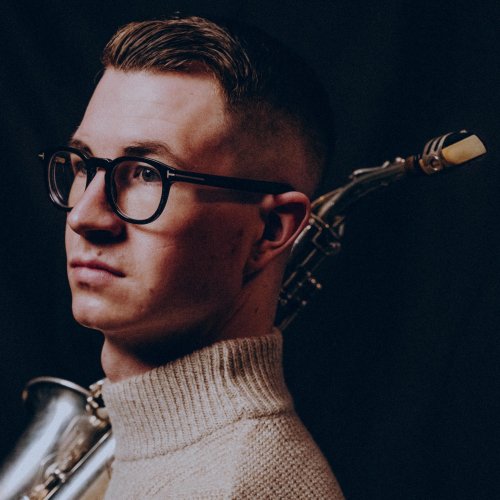
Artist: Sean Payne
Title: Long Story, Short
Year Of Release: 2026
Label: Sean Payne
Genre: Jazz
Quality: FLAC (tracks) 24/96, FLAC (tracks)
Total Time: 00:42:05
Total Size: 947 / 267 mb
WebSite: Album Preview
Tracklist:Title: Long Story, Short
Year Of Release: 2026
Label: Sean Payne
Genre: Jazz
Quality: FLAC (tracks) 24/96, FLAC (tracks)
Total Time: 00:42:05
Total Size: 947 / 267 mb
WebSite: Album Preview
01. Sean Payne - Introduction (2:52)
02. Sean Payne - Long Story, Short (5:48)
03. Sean Payne - Fractures (6:20)
04. Sean Payne - Press Pause (7:28)
05. Sean Payne - Roderick Ward (5:34)
06. Sean Payne - Three Beautiful Days (3:28)
07. Sean Payne - Night Owl (10:39)
Perhaps the greatest challenge for a jazz musician is developing an individual artistic voice. An easy path is to reject the rich history of this art form; to embrace the bizarre and outlandish instead. But the more astute student understands that to curate an authentic original voice requires a deeper respect and understanding of what came before. When the latter approach is combined with an artist’s unique life experiences, his or her work has a much higher chance to stand the test of time. It is a mantra that English saxophonist Sean Payne very much took to heart for his debut album, ‘Long Story, Short’: “I wanted to make an honest document of the music I genuinely love.” Just 22 years old at the time of the recording, he champions the major figures in contemporary jazz. Above all the late pianist Kenny Kirkland, whose stylings he has captured to great effect on the alto. Look no further than the final track, a dedication entitled “Night Owl”, as a testament to that admiration.
All the tracks on ‘Long Story, Short’ were composed by Payne as part of a renewed approach. Its opening and title track, the oldest of six compositions, was a reaction to his previous work: “I found there was a bit of a disconnect between what I was writing when compared with what I wanted to listen to….this was my way of telling myself to get to the point.” Part of that realisation came from working regularly in duo with drummer Kai Craig. Together they developed a symbiotic sense of feel and time that better suited shorter, more open-ended tunes. But as their styles and opinions naturally evolved other similarities from their collaboration, a different challenge emerged: “It got to the point where our playing was so locked that it was almost difficult to introduce other band members without there being a feeling of separation between us as a duo and them.”
Payne was a student at the Royal Academy of Music in London from 2018 to 2022 but moved to Cologne for a year in September 2020 on the Erasmus Exchange Programme. It proved a most fruitful experience, not least because it was there that he encountered the other half of the band he was in search of. Hearing pianist Rainer Böhm was his first epiphany: “When I first played with Rainer, I instantly knew he was the kind of musician we were looking for.” Soon after, he discovered Austrian bassist Matthias Pichler at a concert with pianist Pablo Held’s group: “He was playing with a full quintet, yet I was drawn to his playing the entire time and I knew straight away that he was the right guy.” Individually accomplished leaders themselves, Böhm and Pichler expertly complement Payne and Craig’s pre-existing duo.
Although the album is advanced from a compositional perspective as well as in its execution, its inception was more of a throwback. The quartet made sure to capture each piece using a tape recorder in no more than two takes, resulting in an authentic flow from track to track and a subtle grainy undertone (inherent with tape recording) that exquisitely balances its high level of production. Recording in this manner was more of a self-imposed restriction for Payne: “I knew that getting into the realm of endless takes could become detrimental….having the tape rolling gave me a real-life barrier because I knew it would eventually run out.”
An innovative exponent of the alto sax, he has received a good deal of recognition for his instrumental ability: from the youngest-ever BBC Young Jazz Musician finalist in 2014, to one of eight semi-finalists in the Michael Brecker International Saxophone Competition in 2019. And having since assimilated the sounds of his heroes Brecker and Kirkland – careers cut tragically short – he now possesses a similar flair of individuality as a composer. Combining those two elements has opened the door to one of the most exciting visions in jazz today, emphatically announced with ‘Long Story, Short’. Perhaps we may someday look back on it as the beginning to a career that earned its own place in jazz history. —Charlie Rees
All the tracks on ‘Long Story, Short’ were composed by Payne as part of a renewed approach. Its opening and title track, the oldest of six compositions, was a reaction to his previous work: “I found there was a bit of a disconnect between what I was writing when compared with what I wanted to listen to….this was my way of telling myself to get to the point.” Part of that realisation came from working regularly in duo with drummer Kai Craig. Together they developed a symbiotic sense of feel and time that better suited shorter, more open-ended tunes. But as their styles and opinions naturally evolved other similarities from their collaboration, a different challenge emerged: “It got to the point where our playing was so locked that it was almost difficult to introduce other band members without there being a feeling of separation between us as a duo and them.”
Payne was a student at the Royal Academy of Music in London from 2018 to 2022 but moved to Cologne for a year in September 2020 on the Erasmus Exchange Programme. It proved a most fruitful experience, not least because it was there that he encountered the other half of the band he was in search of. Hearing pianist Rainer Böhm was his first epiphany: “When I first played with Rainer, I instantly knew he was the kind of musician we were looking for.” Soon after, he discovered Austrian bassist Matthias Pichler at a concert with pianist Pablo Held’s group: “He was playing with a full quintet, yet I was drawn to his playing the entire time and I knew straight away that he was the right guy.” Individually accomplished leaders themselves, Böhm and Pichler expertly complement Payne and Craig’s pre-existing duo.
Although the album is advanced from a compositional perspective as well as in its execution, its inception was more of a throwback. The quartet made sure to capture each piece using a tape recorder in no more than two takes, resulting in an authentic flow from track to track and a subtle grainy undertone (inherent with tape recording) that exquisitely balances its high level of production. Recording in this manner was more of a self-imposed restriction for Payne: “I knew that getting into the realm of endless takes could become detrimental….having the tape rolling gave me a real-life barrier because I knew it would eventually run out.”
An innovative exponent of the alto sax, he has received a good deal of recognition for his instrumental ability: from the youngest-ever BBC Young Jazz Musician finalist in 2014, to one of eight semi-finalists in the Michael Brecker International Saxophone Competition in 2019. And having since assimilated the sounds of his heroes Brecker and Kirkland – careers cut tragically short – he now possesses a similar flair of individuality as a composer. Combining those two elements has opened the door to one of the most exciting visions in jazz today, emphatically announced with ‘Long Story, Short’. Perhaps we may someday look back on it as the beginning to a career that earned its own place in jazz history. —Charlie Rees
Download Link Isra.Cloud
Sean Payne - Long Story, Short (2026) [Hi-Res]
Sean Payne - Long Story, Short (2026)
My blog
Sean Payne - Long Story, Short (2026) [Hi-Res]
Sean Payne - Long Story, Short (2026)
My blog
![Ella Fitzgerald - Ella Wishes You a Swinging Christmas (1960) [1993]](https://www.dibpic.com/uploads/posts/2022-04/1650112977_folder.jpg "Ella Fitzgerald - Ella Wishes You a Swinging Christmas (1960) [1993]")