Ray Barretto - The Message (Remastered 2026) (2026) [Hi-Res]
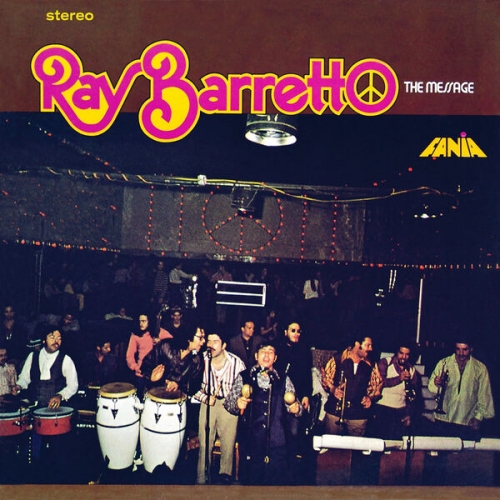
Artist: Ray Barretto
Title: The Message (Remastered 2026)
Year Of Release: 2026
Label: Fania
Genre: Son Montuno, Bolero, Salsa, Latin Jazz
Quality: FLAC 24/192000; 16/44100
Total Time: 00:36:18
Total Size: 220; 1468 MB
WebSite: Album Preview
The Message is the seventh studio album by New York conguero and bandleader Ray Barretto, of Puerto Rican descent, originally released on Fania Records in late 1971 (with some pressings dated 1972). The 2026 edition is a remastered digital version prepared by Craft Recordings — the catalog arm of Concord Music Group, which has been systematically reissuing the Fania legacy (in parallel with the vinyl reissue of Acid released in May 2026).Title: The Message (Remastered 2026)
Year Of Release: 2026
Label: Fania
Genre: Son Montuno, Bolero, Salsa, Latin Jazz
Quality: FLAC 24/192000; 16/44100
Total Time: 00:36:18
Total Size: 220; 1468 MB
WebSite: Album Preview
The album was created at a moment when Barretto — already an established master of boogaloo and Latin soul following the breakthrough of Acid (1968) — was decisively shifting toward the tougher, denser orchestral sound that would be canonized mid-decade as "New York salsa." The record was cut at La Tierra Sound Studios in New York with engineer Irv Greenbaum; Fania co-founder Jerry Masucci served as executive producer, and Barretto shared production duties with him. The orchestra featured the core lineup that, less than a year later, would leave the leader to form Típica 73: vocalist Adalberto Santiago, timbalero Orestes Vilató, bongo player Johnny Rodríguez, and trumpeter René López — along with bassist Andy González, pianist and arranger Luis Cruz, and trumpeter Roberto Rodríguez. Sleeve design is by Izzy Sanabria, the defining visual architect of the Fania aesthetic, with cover photography by José Flores.
Stylistically The Message balances danceable salsa, Afro-Cuban guaguancó, son montuno, and descarga passages in which the rhythm section and horns engage in the jazz dialogues characteristic of the Barretto school. The album's central compositional tension is built on the contrast between high-energy orchestral numbers (among them "Se Traba," which would later become a classic) and slower balladic and merengue-inflected passages anchored by Santiago's narrative vocal presence. A hallmark of late-period Barretto — a nervous, angular yet rock-steady rhythmic foundation in which the Afro-Cuban tradition deliberately collides with the legacy of hard bop and 1960s soul-jazz — appears here in its most concentrated form. It is on this material that the orchestra achieved the ensemble coherence that critics and the label itself would later cite as a peak of Fania's early period.
The album's historical significance is twofold. First, it documents the final joint lineup of Barretto and the future founders of Típica 73 on the eve of their departure — making the record a kind of final frame of the era immediately preceding the total dominance of salsa. Second, it belongs to that line of early-1970s Fania releases that defined the very notion of the "New York sound" and which the label has consistently invoked in its anthology collections alongside Indestructible and Que Viva La Música. The 2026 remaster continues Craft Recordings' ongoing policy of returning the Fania catalog to high-quality digital and analog formats.
Tracklist:
1-1 Ray Barretto - Se Traba (Remastered 2026) [3:59]
1-2 Ray Barretto - Con el Cimarrón (Remastered 2026) [6:14]
1-3 Ray Barretto - Alma con Alma (Remastered 2026) [4:15]
1-4 Ray Barretto - Flor de los Lindos Campos (Remastered 2026) [3:53]
1-5 Ray Barretto - Arrepiéntete (Remastered 2026) [5:17]
1-6 Ray Barretto - Te Traigo Mi Son (Remastered 2026) [4:54]
1-7 Ray Barretto - O Elefante (Remastered 2026) [3:13]
1-8 Ray Barretto - Seguiré Sin Soñar (Remastered 2026) [4:32]

![Isao Suzuki Quartet +1 - Blue City (1974) [2025]](https://www.dibpic.com/uploads/posts/2026-10/1792564960_ff.jpg "Isao Suzuki Quartet +1 - Blue City (1974) [2025]")

![Agbeko - When the People Say (2026) [Hi-Res]](https://img.israbox.com/img/2026-10/22/yj2z4ijdfklbx7y7co5gf15ra.jpg "Agbeko - When the People Say (2026) [Hi-Res]")

![Charles Tolliver - Mosaic Select 20 (2005) [Box Set 3CD]](https://www.dibpic.com/uploads/posts/2021-01/1610661758_folder.jpeg "Charles Tolliver - Mosaic Select 20 (2005) [Box Set 3CD]")