Robinson Khoury - Transara (2026) [Hi-Res]
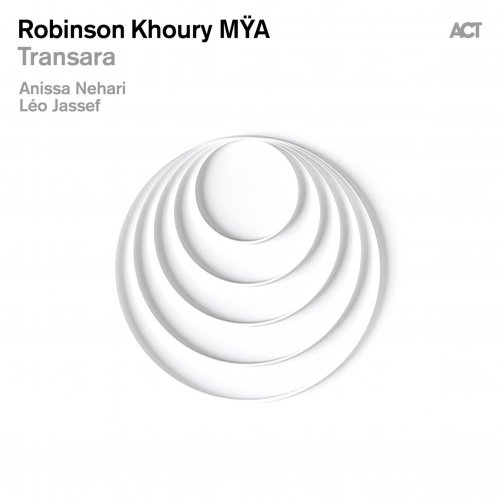
Artist: Robinson Khoury
Title: Transara
Year Of Release: 2026
Label: ACT Music
Genre: Jazz, Arabic, Cinematic
Quality: FLAC (tracks) / 24bit-48kHz FLAC (tracks+booklet)
Total Time: 43:23
Total Size: 237 / 486 MB
WebSite: Album Preview
Tracklist:Title: Transara
Year Of Release: 2026
Label: ACT Music
Genre: Jazz, Arabic, Cinematic
Quality: FLAC (tracks) / 24bit-48kHz FLAC (tracks+booklet)
Total Time: 43:23
Total Size: 237 / 486 MB
WebSite: Album Preview
1. Coquillage (4:28)
2. Alaoui Club (4:20)
3. Poussière (3:54)
4. Hope (2:05)
5. Taxi Brousse (3:46)
6. Pensées Irréelles (6:11)
7. Cyclone (3:41)
8. Sumud (4:09)
9. Matriarchy (4:01)
10. Prophétie Part I (2:38)
11. Prophétie Part II (4:15)
Robinson Khoury- trombone, modular synths, lead vocal in 6, 9
Anissa Nehari - percussions, voice in 6, 9
Léo Jassef - piano, synths, voice in 6, 9
Trombonist/composer Robinson Khoury is one of the most prominent and visible rising stars on the French jazz and cross-genre scene. A charismatic live performer, his breakthrough came in 2024 with the album MŸA, featuring his trio with percussionist Anissa Nehari and keyboardist Léo Yassef. This group, in which Khoury plays not just trombone but also modular synths – he sings as well – became a tightly-knit and vibrant musical unit; the title of their debut album became the band name Robinson Khoury MŸA. This trio now takes centre stage on their ACT debut album, Transara.
“I really like the unusual,” says Khoury. “Strange combinations, unexpected line-ups. Trombone, modular synths, keyboards and percussion...I’d never heard anything like it (!), and that’s exactly what fascinated me.” And there are other important affinities within the group: “I think that part of the reason we work so well together is because we share a Mediterranean heritage through our families – the Mediterranean connects us.” Equally formative, he explains, has been their life based in Paris, a world city where a wide variety of influences converge.
For Khoury, Transara marks an important step forward. He describes the first MŸA album as having been a kind of “embryo” in which a musical entity was slowly taking shape, and that the trio has made huge strides since then. The three have become fluent in the musical language which they share. According to Khoury, their organic and intuitive music moves “into another world, another reality”. This progression is what the title Transara signifies: a transition between worlds, a connection of spaces and states.
Robinson Khoury has had a fascinating, broad and transformative musical journey. Growing up in Lyon as the son of a jazz pianist and a jazz singer, music was ever-present right from the start. He sang in the highly renowned Maîtrise (children’s choir) of the Opéra de Lyon, and spent his summers at the Jazz à Vienne festival. The turning point came at the age of eleven, when his voice broke and he had to leave the choir. In search of a new form of expression, he discovered the trombone: “I was looking for an instrument through which I could continue to sing – and the trombone was perfect for that.” Just a few years later, he was studying at the Conservatoire in Lyon while also playing in jazz clubs. From an early age, he moved between classical and jazz, developing an openness to different styles.
At around the age of 18, he also discovered Arabic music – singers such as Egyptian icon Umm Kulthum and South Asian legend Nusrat Fateh Ali Khan – and they left a lasting impression. Although Khoury has Lebanese roots, this music was not initially a natural part of his everyday life; all the more so, it felt like a direct form of expression for him on the trombone. “What I particularly love about Arabic music is the singing. Translating this onto the trombone felt very natural, as it is like a second voice to me.” Soon, musicians such as Ibrahim Maalouf and Natacha Atlas became aware of him, and invited him to join their bands. Khoury also founded the sextet Sarāb, which likewise blends Arabic music and jazz.
All of these multiple sides of Khoury’s musical identity – jazz, Arabic music, the means to be expressive as an instrumentalist from his classical training, plus his love of singing and his motivation for change – find a reflection in Transara. The music is also a deeply-felt commentary on our times, constantly shifting between melancholy and warmth. “Given the state of the world around us, one cannot help but be pensive and melancholic,” says Robinson Khoury. At the same time, he says, his aim is to create a safe space where musicians and the audience feel secure and at ease, a place where feelings and thoughts can be shared.
The track “Poussière” (dust) encapsulates all of this particularly well. Khoury explains that it is about the lives of all the people who “leave us too soon”. At the same time, there is a comforting perspective in this: “They haven’t simply vanished. The dust remains part of this planet; we breathe it in; it is a part of us.” And from this idea springs hope – the certainty that the past continues to have an effect and helps us to “continue to hope and to breathe”.
Anissa Nehari - percussions, voice in 6, 9
Léo Jassef - piano, synths, voice in 6, 9
Trombonist/composer Robinson Khoury is one of the most prominent and visible rising stars on the French jazz and cross-genre scene. A charismatic live performer, his breakthrough came in 2024 with the album MŸA, featuring his trio with percussionist Anissa Nehari and keyboardist Léo Yassef. This group, in which Khoury plays not just trombone but also modular synths – he sings as well – became a tightly-knit and vibrant musical unit; the title of their debut album became the band name Robinson Khoury MŸA. This trio now takes centre stage on their ACT debut album, Transara.
“I really like the unusual,” says Khoury. “Strange combinations, unexpected line-ups. Trombone, modular synths, keyboards and percussion...I’d never heard anything like it (!), and that’s exactly what fascinated me.” And there are other important affinities within the group: “I think that part of the reason we work so well together is because we share a Mediterranean heritage through our families – the Mediterranean connects us.” Equally formative, he explains, has been their life based in Paris, a world city where a wide variety of influences converge.
For Khoury, Transara marks an important step forward. He describes the first MŸA album as having been a kind of “embryo” in which a musical entity was slowly taking shape, and that the trio has made huge strides since then. The three have become fluent in the musical language which they share. According to Khoury, their organic and intuitive music moves “into another world, another reality”. This progression is what the title Transara signifies: a transition between worlds, a connection of spaces and states.
Robinson Khoury has had a fascinating, broad and transformative musical journey. Growing up in Lyon as the son of a jazz pianist and a jazz singer, music was ever-present right from the start. He sang in the highly renowned Maîtrise (children’s choir) of the Opéra de Lyon, and spent his summers at the Jazz à Vienne festival. The turning point came at the age of eleven, when his voice broke and he had to leave the choir. In search of a new form of expression, he discovered the trombone: “I was looking for an instrument through which I could continue to sing – and the trombone was perfect for that.” Just a few years later, he was studying at the Conservatoire in Lyon while also playing in jazz clubs. From an early age, he moved between classical and jazz, developing an openness to different styles.
At around the age of 18, he also discovered Arabic music – singers such as Egyptian icon Umm Kulthum and South Asian legend Nusrat Fateh Ali Khan – and they left a lasting impression. Although Khoury has Lebanese roots, this music was not initially a natural part of his everyday life; all the more so, it felt like a direct form of expression for him on the trombone. “What I particularly love about Arabic music is the singing. Translating this onto the trombone felt very natural, as it is like a second voice to me.” Soon, musicians such as Ibrahim Maalouf and Natacha Atlas became aware of him, and invited him to join their bands. Khoury also founded the sextet Sarāb, which likewise blends Arabic music and jazz.
All of these multiple sides of Khoury’s musical identity – jazz, Arabic music, the means to be expressive as an instrumentalist from his classical training, plus his love of singing and his motivation for change – find a reflection in Transara. The music is also a deeply-felt commentary on our times, constantly shifting between melancholy and warmth. “Given the state of the world around us, one cannot help but be pensive and melancholic,” says Robinson Khoury. At the same time, he says, his aim is to create a safe space where musicians and the audience feel secure and at ease, a place where feelings and thoughts can be shared.
The track “Poussière” (dust) encapsulates all of this particularly well. Khoury explains that it is about the lives of all the people who “leave us too soon”. At the same time, there is a comforting perspective in this: “They haven’t simply vanished. The dust remains part of this planet; we breathe it in; it is a part of us.” And from this idea springs hope – the certainty that the past continues to have an effect and helps us to “continue to hope and to breathe”.
Download Link Isra.Cloud
Robinson Khoury - Transara Hi-Res.rar - 486.4 MB
Robinson Khoury - Transara FLAC.rar - 237.6 MB
Robinson Khoury - Transara Hi-Res.rar - 486.4 MB
Robinson Khoury - Transara FLAC.rar - 237.6 MB
![Morten Georg Gismervik - Starfall (2026) [Hi-Res]](https://img.israbox.com/img/2026-10/18/98jkdlumshpj3dys6g7dqkl7e.jpg "Morten Georg Gismervik - Starfall (2026) [Hi-Res]")

![Isao Suzuki Quartet +2 - Orang-Utan (1975) [2024]](https://www.dibpic.com/uploads/posts/2026-10/1792561815_ff.jpg "Isao Suzuki Quartet +2 - Orang-Utan (1975) [2024]")