Nu Genea - People of the Moon (2026)
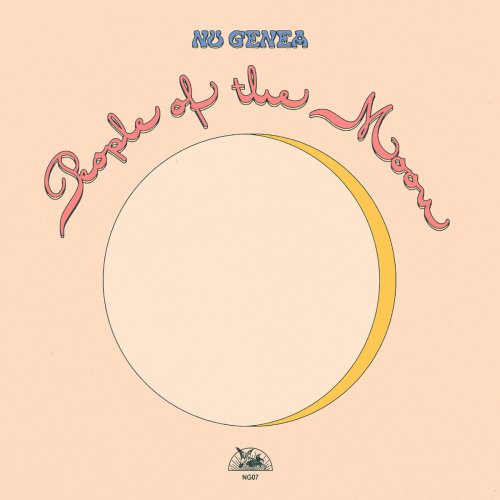
Artist: Nu Genea
Title: People of the Moon
Year Of Release: 2026
Label: Self Released
Genre: Disco, Funk, Fusion, Jazz-Funk, Boogie
Quality: Mp3 320 kbps / FLAC (tracks)
Total Time: 36:12
Total Size: 83 / 235 MB
WebSite: Album Preview
Tracklist:Title: People of the Moon
Year Of Release: 2026
Label: Self Released
Genre: Disco, Funk, Fusion, Jazz-Funk, Boogie
Quality: Mp3 320 kbps / FLAC (tracks)
Total Time: 36:12
Total Size: 83 / 235 MB
WebSite: Album Preview
1. Acelera (feat. Maria José Llergo) (03:44)
2. Onenon (feat. Tom Misch) (04:04)
3. Puleza (feat. Fabiana Martone) (03:47)
4. Celavì (feat. Maria José Llergo) (03:05)
5. Carè (03:49)
6. People of the Moon (03:10)
7. Ma tu che bbuò (03:07)
8. Sciallà (04:16)
9. Shway shway (feat. Celinatique) (03:33)
10. Ondas do mar (feat. Gabriel Prado) (03:37)
After the acclaimed Bar Mediterraneo, Massimo Di Lena and Lucio Aquilina return with a new album that broadens the scope of their sound even further, sailing beyond the Pillars of Hercules into a constellation of gravity-defying creative freedom.
People Of The Moon is not an imagined cosmic species, but a dimension within us all. Deeply personal yet universally shared. An alternative way of thinking that lays dormant until we find the courage to untether it, helping us experience life more fully. It is that precious sphere of the soul that slips away from everyday life. A form of self-expression free from the social pressures that weigh on each, at every latitude on the planet.
Under the moonlight, these songs trace anxieties and aspirations, guided by the international language of groove and rhythmic motion, articulated in Neapolitan, Arabic, English, Spanish, and Portuguese. It speaks with equal clarity through the Afro-Cuban influences of Celavì (“That’s Life”), with its circular rhythmic energy, and through the Anatolian zurna of Ma Tu Che Bbuò (“What Do You Want?” in Neapolitan), moving from highlife guitars to the mandolins that have become a Nu Genea signature. New idioms and rhythms, filtered through an Italian perspective.
The first single Sciallà (“Go Away” in Neapolitan), released in the summer of 2025, already hinted at what was taking shape in the Nu Genea workshop - a radiant guide to embracing difficulty and finding relief in dance. Not so much an escape, but a form of catharsis. Looking up at the giant mirror ball orbiting above us, we catch a glimpse of our best selves reflected back, and appreciate that the People Of The Moon invoked in the title track are more familiar than we first realised.
There’s a kind of resilience in these voices that isn’t loud or triumphant, but persistent and rooted in the simple act of continuing. The imagery of high-speed motion is central to Onenon (“On and On”), where British singer and multi-instrumentalist Tom Misch helps conjure a Mediterranean brit-funk reminiscent of Pino D’Angiò’s basslines.
The voice in Acelera (“Speed Up” in Spanish) summons the strength to chase the moon as if it were an unattainable ideal, in this Andalusian-tinged track featuring María José Llergo, who also lends her voice to Celavì. Both tracks are among the more languorous arrangements, with flamenco palmas introducing an original fusion into the Nu Genea groove.
With its driving momentum, Puleza (“Clean Up” in Neapolitan) recalls the spirit of Nuova Napoli, albeit with vintage synth textures and wild, unrestrained delays. The track’s protagonist, performed by Fabiana Martone, is another of our lunar dwellers.
Yet even when it leans into forward motion, People Of The Moon doesn’t pulse at a frantic pace, moving instead through shifting states of speed, orbit, and suspension. In fact, the Levantine bossa nova Shway Shway (“Slowly, Slowly” in Arabic), sung by Celinatique, captures the orbital motion of the entire record. Not exactly slow, but measured. Rich in color, and marked by a rhythmic complexity that was also heard on the duo’s rare access to foundational afrobeat on The Tony Allen Experiments.
All the while, the album remains deeply attuned to melody - a Nu Genea hallmark - as heard in the effervescent hook of Carè (“Falling” in Neapolitan). In the lunar microgravity of these ten tracks, falling and flying become interchangeable with dancing as ways of following the beat, suspended yet compelled to move. That compulsion is also invoked by Brazilian percussionist Gabriel Prado, making his vocal debut on Ondas Do Mar (“Waves Of The Sea” in Portuguese). The pull of the waves, a constant interplay of motion and return, steady as a lunar phase, is impossible to resist. One might as well lean into the blue, not to dissolve but to rebuild. “Você vai ver que dentro de nós / vai rolar”: you’ll see that something will happen within us.
People Of The Moon is not an imagined cosmic species, but a dimension within us all. Deeply personal yet universally shared. An alternative way of thinking that lays dormant until we find the courage to untether it, helping us experience life more fully. It is that precious sphere of the soul that slips away from everyday life. A form of self-expression free from the social pressures that weigh on each, at every latitude on the planet.
Under the moonlight, these songs trace anxieties and aspirations, guided by the international language of groove and rhythmic motion, articulated in Neapolitan, Arabic, English, Spanish, and Portuguese. It speaks with equal clarity through the Afro-Cuban influences of Celavì (“That’s Life”), with its circular rhythmic energy, and through the Anatolian zurna of Ma Tu Che Bbuò (“What Do You Want?” in Neapolitan), moving from highlife guitars to the mandolins that have become a Nu Genea signature. New idioms and rhythms, filtered through an Italian perspective.
The first single Sciallà (“Go Away” in Neapolitan), released in the summer of 2025, already hinted at what was taking shape in the Nu Genea workshop - a radiant guide to embracing difficulty and finding relief in dance. Not so much an escape, but a form of catharsis. Looking up at the giant mirror ball orbiting above us, we catch a glimpse of our best selves reflected back, and appreciate that the People Of The Moon invoked in the title track are more familiar than we first realised.
There’s a kind of resilience in these voices that isn’t loud or triumphant, but persistent and rooted in the simple act of continuing. The imagery of high-speed motion is central to Onenon (“On and On”), where British singer and multi-instrumentalist Tom Misch helps conjure a Mediterranean brit-funk reminiscent of Pino D’Angiò’s basslines.
The voice in Acelera (“Speed Up” in Spanish) summons the strength to chase the moon as if it were an unattainable ideal, in this Andalusian-tinged track featuring María José Llergo, who also lends her voice to Celavì. Both tracks are among the more languorous arrangements, with flamenco palmas introducing an original fusion into the Nu Genea groove.
With its driving momentum, Puleza (“Clean Up” in Neapolitan) recalls the spirit of Nuova Napoli, albeit with vintage synth textures and wild, unrestrained delays. The track’s protagonist, performed by Fabiana Martone, is another of our lunar dwellers.
Yet even when it leans into forward motion, People Of The Moon doesn’t pulse at a frantic pace, moving instead through shifting states of speed, orbit, and suspension. In fact, the Levantine bossa nova Shway Shway (“Slowly, Slowly” in Arabic), sung by Celinatique, captures the orbital motion of the entire record. Not exactly slow, but measured. Rich in color, and marked by a rhythmic complexity that was also heard on the duo’s rare access to foundational afrobeat on The Tony Allen Experiments.
All the while, the album remains deeply attuned to melody - a Nu Genea hallmark - as heard in the effervescent hook of Carè (“Falling” in Neapolitan). In the lunar microgravity of these ten tracks, falling and flying become interchangeable with dancing as ways of following the beat, suspended yet compelled to move. That compulsion is also invoked by Brazilian percussionist Gabriel Prado, making his vocal debut on Ondas Do Mar (“Waves Of The Sea” in Portuguese). The pull of the waves, a constant interplay of motion and return, steady as a lunar phase, is impossible to resist. One might as well lean into the blue, not to dissolve but to rebuild. “Você vai ver que dentro de nós / vai rolar”: you’ll see that something will happen within us.
Download Link Isra.Cloud
Nu Genea - People of the Moon FLAC.rar - 235.2 MB
Nu Genea - People of the Moon MP3.rar - 83.0 MB
Nu Genea - People of the Moon FLAC.rar - 235.2 MB
Nu Genea - People of the Moon MP3.rar - 83.0 MB
![Prism - Mju (2003) [SACD]](https://www.dibpic.com/uploads/posts/2026-04/1777277829_87266a6f258eb7caf1715ad8144bca4f.jpg "Prism - Mju (2003) [SACD]")
![Alcyona Mick, Liam Noble - Distant Plains (2026) [Hi-Res]](https://img.israbox.com/img/2026-04/28/4y2fum1cuowkipojpumnrmydq.jpg "Alcyona Mick, Liam Noble - Distant Plains (2026) [Hi-Res]")
![HYPS - Chaotic Planet (2009) [SACD]](https://www.dibpic.com/uploads/posts/2026-04/1777527332_front.jpg "HYPS - Chaotic Planet (2009) [SACD]")