Hex - Hex (1990)
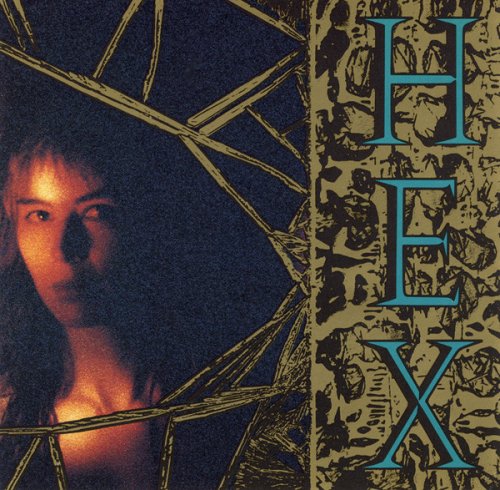
Artist: Hex
Title: Hex
Year Of Release: 1990
Label: Rykodisc – RCD 1018 / CD, Reissue
Genre: Alternative Rock, Ethereal
Quality: FLAC (tracks+.cue,log artwork)
Total Time: 41:01
Total Size: 277 Mb
WebSite: Album Preview
Tracklist: Title: Hex
Year Of Release: 1990
Label: Rykodisc – RCD 1018 / CD, Reissue
Genre: Alternative Rock, Ethereal
Quality: FLAC (tracks+.cue,log artwork)
Total Time: 41:01
Total Size: 277 Mb
WebSite: Album Preview
01. Diviner (4:44)
02. Hermaphrodite (2:15)
03. Ethereal Message (5:44)
04. Mercury Towers (5:04)
05. Out Of The Pink Sky (2:49)
06. Fire Island (5:12)
07. In The Net (6:44)
08. Silvermine (2:10)
09. Elizabeth Green (5:11)
10. An Arrangement (1:13)
Donnette Ruth Thayer is a vocalist, guitarist, and songwriter most active in the 1980s and early 1990s indie rock scenes of Northern California. Thayer was a member of the band Game Theory, and later formed Hex with Steve Kilbey of The Church.
She has been described by Bucketfull of Brains magazine as "the enchantress," and by radio trade journal The Hard Report as "Gaea personified," while Trouser Press Record Guide described her work as "a suave (post-paisley?) successor to California flower-pop."
In 1988, Thayer teamed up with Steve Kilbey of Australian psychedelic rock band The Church, to create the band Hex. Kilbey and Thayer were romantically involved at the time – Kilbey's nickname for Thayer was "Starfish," which became the title of The Church's album Starfish. Starfish featured the single "Under The Milky Way," a top 40 hit for the Church on the US Billboard Hot 100.
Hex (1989)
Hex, the 1989 self-titled debut album by the duo, was originally released on First Warning, then on Rykodisc. Kilbey's biographer has described this collaboration as "one of the most inspired and artistically rewarding collaborations of Steve's career. The arrangements for many of the songs were spare – often consisting of softly strummed acoustic guitars, ambient keyboard textures, and tasteful electronic percussion – which allowed her voice to float up through the wide open spaces like smoke."
According to AllMusic critic Ned Raggett, the debut album "somehow gets the mood right from the start, that lovely end-of-the-'80s psych-pop/indie or whatever groove that had defined much of the underground music of that era."[7] Raggett called it "lovely to hear how well they go together, Thayer's voice just tripped out and intoxicating enough, Kilbey's arrangements suiting the mood well," noting that other than a guest drummer on one track, "the two create everything themselves and do a lovely job", creating a "rainy/sunny rural-afternoon glaze throughout Hex, a wonderful way to spend some time with music."
She has been described by Bucketfull of Brains magazine as "the enchantress," and by radio trade journal The Hard Report as "Gaea personified," while Trouser Press Record Guide described her work as "a suave (post-paisley?) successor to California flower-pop."
In 1988, Thayer teamed up with Steve Kilbey of Australian psychedelic rock band The Church, to create the band Hex. Kilbey and Thayer were romantically involved at the time – Kilbey's nickname for Thayer was "Starfish," which became the title of The Church's album Starfish. Starfish featured the single "Under The Milky Way," a top 40 hit for the Church on the US Billboard Hot 100.
Hex (1989)
Hex, the 1989 self-titled debut album by the duo, was originally released on First Warning, then on Rykodisc. Kilbey's biographer has described this collaboration as "one of the most inspired and artistically rewarding collaborations of Steve's career. The arrangements for many of the songs were spare – often consisting of softly strummed acoustic guitars, ambient keyboard textures, and tasteful electronic percussion – which allowed her voice to float up through the wide open spaces like smoke."
According to AllMusic critic Ned Raggett, the debut album "somehow gets the mood right from the start, that lovely end-of-the-'80s psych-pop/indie or whatever groove that had defined much of the underground music of that era."[7] Raggett called it "lovely to hear how well they go together, Thayer's voice just tripped out and intoxicating enough, Kilbey's arrangements suiting the mood well," noting that other than a guest drummer on one track, "the two create everything themselves and do a lovely job", creating a "rainy/sunny rural-afternoon glaze throughout Hex, a wonderful way to spend some time with music."

![Bill Connors - Step It (1985) [Vinyl]](https://www.dibpic.com/uploads/posts/2026-07/1784135244_000001.jpg "Bill Connors - Step It (1985) [Vinyl]")
![Jeff Beck - Loud Hailer (2016) [Vinyl]](https://www.dibpic.com/uploads/posts/2026-07/1783948512_0603497877348_600.jpg "Jeff Beck - Loud Hailer (2016) [Vinyl]")


![Sunny Murray - Hommage to Africa (1970) [Hi-Res]](https://img.israbox.com/img/2026-07/17/mudmozyce4j4y4ckqzeqwurhn.jpg "Sunny Murray - Hommage to Africa (1970) [Hi-Res]")