Apollo's Fire & Jeannette Sorrell - Mozart: Symphonies Nos. 35 & 41 (2004)
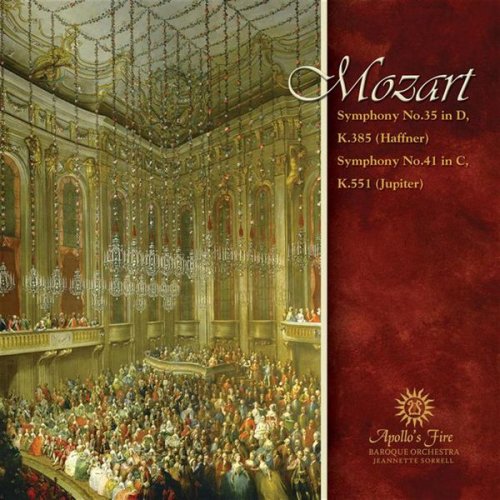
Artist: Apollo's Fire, Jeannette Sorrell
Title: Mozart: Symphonies Nos. 35 & 41
Year Of Release: 2004
Label: eOne Music International Classics
Genre: Classical
Quality: FLAC (tracks)
Total Time: 1:03:56
Total Size: 288 MB
WebSite: Album Preview
Tracklist:Title: Mozart: Symphonies Nos. 35 & 41
Year Of Release: 2004
Label: eOne Music International Classics
Genre: Classical
Quality: FLAC (tracks)
Total Time: 1:03:56
Total Size: 288 MB
WebSite: Album Preview
1. Symphony No. 35 in D Major, K. 385: I. Adagio (05:53)
2. Symphony No. 35 in D Major, K. 385: II. Allegro con spirito (08:58)
3. Symphony No. 35 in D Major, K. 385: III. Menuetto - Trio (03:42)
4. Symphony No. 35 in D Major, K. 385: IV. Presto (03:59)
5. Symphony No. 41 in C Major, K. 551: I. Allegro (11:34)
6. Symphony No. 41 in C Major, K. 551: II. Andante (10:16)
7. Symphony No. 41 in C Major, K. 551: III. Menuet. Allegretto (04:32)
8. Symphony No. 41 in C Major, K. 551: IV. Molto allegro (08:54)
9. Don Giovanni, K. 527: Overture (06:09)
From Cleveland, OH, Apollo's Fire is that musical city's critically acclaimed Baroque chamber orchestra, boasting a roster of skilled early music performers and a full array of period instruments. Led by founder Jeannette Sorrell, Apollo's Fire ventures into the Classical repertoire with this all-Mozart disc. These crisp performances follow period practices, and offer exceptional color and dynamic variety. The Symphony No. 35, "Haffner," is quite polished, yet it is also warm and inviting, always a plus in the realm of authentic interpretations. Sorrell elicits elegant lines and shapes the melodies with awareness of their mannerisms, yet the music is genuinely emotional within Mozart's stylistic boundaries. In the Symphony No. 41, "Jupiter," the ensemble is spry and shimmering, with none of the heaviness so often applied to this Olympian work. If there is one astonishing track on this disc, it is the glorious Molto allegro, which Apollo's Fire executes with excitement and brilliance, and with transparent colors in the movement's fantastic stretto. Apparently provided as filler but wholly engaging, the Overture to Don Giovanni receives the most dramatic reading, and suggests that the ensemble can be as powerful in Mozart's darker works as it is delightful in his brighter music. Koch's recording is clear and resonant.
![Alessio Menconi and Nigel Price - Duo (2026) [Hi-Res]](https://img.israbox.com/img/2026-08/13/90f4trso2e51uhmna9j7merl6.jpg "Alessio Menconi and Nigel Price - Duo (2026) [Hi-Res]")
![Gretchen Parlato - The Wise Ones (2026) [Hi-Res]](https://www.dibpic.com/uploads/posts/2026-08/1786478076_folder.jpg "Gretchen Parlato - The Wise Ones (2026) [Hi-Res]")

![Werner Müller And His Orchestra - Werner Muller Plays Leroy Anderson (1964) [Vinyl Rip]](https://www.dibpic.com/uploads/posts/2026-08/1786477908_folder.jpg "Werner Müller And His Orchestra - Werner Muller Plays Leroy Anderson (1964) [Vinyl Rip]")