Parma Teatro Regio Orchestra and Chorus & Andrea Battistoni - Verdi: Stiffelio (2014) [Hi-Res]
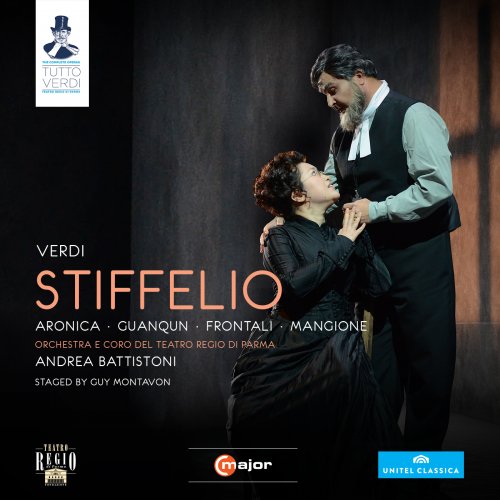
Artist: Parma Teatro Regio Orchestra and Chorus, Andrea Battistoni
Title: Verdi: Stiffelio
Year Of Release: 2014
Label: C Major - 727602
Genre: Classical
Quality: FLAC (tracks) 24/48, FLAC (tracks)
Total Time: 01:49:56
Total Size: 1.2 GB / 513 mb
WebSite: Album Preview
Tracklist:Title: Verdi: Stiffelio
Year Of Release: 2014
Label: C Major - 727602
Genre: Classical
Quality: FLAC (tracks) 24/48, FLAC (tracks)
Total Time: 01:49:56
Total Size: 1.2 GB / 513 mb
WebSite: Album Preview
CD 1 - 00:55:19
Stiffelio, opera in three acts (1850) -
ATTO PRIMO / ACT I -
01. Sinfonia - [09:50]
02. Oh santo libro, oh dell'eterno Vero (Jorg, Stiffelio, Stankar, Dorotea, Raffaele, Lina, Federico) - [02:51]
03. Di qua varcando sul primo albore (Stiffelio, Stankar, Lina, Raffaele, Jorg, Dorotea, Federico) - [02:16]
04. Colla cenere disperso (Stiffelio, Jorg, Stankar, Lina, Raffaele, Dorotea, Federico) - [02:29]
05. Viva Stiffelio! …A te, Stiffelio, un canto (Chorus, Stiffelio, Jorg, Lina, Dorotea, Federico, Raffaele, Stankar) - [03:24]
06. Non ha par me un accento! (Stiffelio, Lina) - [02:03]
07. Vidi dovunque gemere (Stiffelio, Lina) - [04:22]
08. Ah, v'appare in fronte scritto (Stiffelio, Lina, Stankar) - [01:35]
09. Tosto ei disse! …A te ascenda, o Dio clemente (Lina) - [04:14]
10. Verrà! Dovrò risponder! (Stankar, Lina) - [01:36]
11. Dite che il fallo a tergere (Stankar, Lina) - [01:10]
12. Ed io pure in faccia agli uomini (Stankar, Lina) - [02:26]
13. Basti adesso… Or meco venite (Stankar, Lina) - [03:43]
14. M'evitan! (Raffaele, Jorg, Federico) - [00:54]
15. Plaudiam! Di Stiffelio s'allegri il soggiorno (Chorus, Stiffelio, Jorg) - [03:39]
16. Cugino, pensate al sermone? (Dorotea, Federico, Chorus, Stiffelio, Lina, Raffaele) - [02:09]
17. Oh qual m'invade ed agita (Stiffelio, Lina, Raffaele, Dorotea, Federico, Chorus) - [03:10]
18. Nol volete? …Chi ti salva, sciagurato (Stiffelio, Lina, Stankar, Jorg, Raffaele, Dorotea, Federico, Chorus) - [03:28]
CD 2 - 00:54:37
ATTO SECONDO / ACT II -
01. Oh cielo! Dove son io! (Lina) - [03:56]
02. Ah dagli scanni eterei (Lina, Raffaele) - [03:26]
03. Lina, Lina! …Perder dunque voi volete (Raffaele, Lina) - [02:19]
04. Io resto… Scegli - Un uello? (Raffaele, Lina, Stankar, Stiffelio) - [05:04]
05. Ah no! È impossibile! (Stiffelio, Lina, Stankar, Raffaele) - [03:05]
06. Dessa non è, comprendilo … Non punirmi, Signor, nel tuo furore (Stankar, Stiffelio, Raffaele, Chorus, Jorg, Lina) - [05:35]
ATTO TERZO / ACT III -
07. Ei fugge! E in questo foglio (Stankar) - [02:35]
08. Lina, pensai che un angelo (Stankar) - [02:34]
09. Ah sì, finisca … Oh gioia inesprimibile (Stankar, Jorg) - [03:55]
10. Dite ai fratei che al tempio (Stiffelio, Jorg, Raffaele, Lina) - [02:47]
11. Opposto è il calle che in avvenire (Stiffelio, Lina) - [05:07]
12. Non allo sposo volgomi … Ah sì, voliamo al tempio (Lina, Stiffelio, Stankar, Jorg) - [06:17]
13. Non punirmi, Signor, nel tuo furore (Chorus, Dorotea, Federico, Stankar, Lina) - [03:41]
14. Stiffelio! - Eccomi! (Jorg, Stiffelio, Lina, Stankar, Dorotea, Federico, Chorus) - [04:16]
Lead Vocals -
___Lina (his wife) — Yu Guanqun (Soprano)
___Dorotea (Lina's cousin) — Lorelay Solis (Mezzo-soprano)
___Federico di Frengel (Lina's cousin) — Cosimo Vassallo (Tenor)
___Stiffelio (Ahasverian minister) — Roberto Aronica (Tenor)
___Raffaele (a nobleman, Lina's lover) — Gabriele Mangione (Tenor)
___Stankar (an old count, Lina's father) — Roberto Frontali (Baritone)
___Jorg (an old minister) — George Andguladze (Bass)
Chorus –
___Coro del Teatro Regio di Parma
Chorus Master –
___Martino Faggiani
Orchestra –
___Orchestra del Teatro Regio di Parma
Conductor -
___Andrea Battistoni
Organ -
___Simone Savina
Musical Consultant -
___PIERLUIGI MONTESI
Recording Engineers -
___PAOLO BERTI
___MICHELE RUGGIERO
___ALESSANDRO MARSICO
Audio Assistant -
___CLAUDIO SPERANZINI
[Editor -
___PAOLO BERTI
Production Manager -
___TINA VIANI
Technical Manager -
___LUIGI CIPELLI
Producer -
___THOMAS HIEBER
"Stiffelio" was the first Italian opera set in the modern era (19th century), rather than "La Traviata," as is commonly believed.
It is one of Verdi's most unpopular and rarely performed operas. In the 19th century, religious censors were horrified by the plot (a Protestant
priest, an unfaithful wife, a sermon on the Gospel theme in the finale). The censors hacked the libretto, and Verdi himself eventually gave in, withdrew the score, and reworked the music into an entirely different opera, "Aroldo."
So many details had to be removed from the original plot that it was very difficult for audiences
to understand how Lina had sinned and what mitigating circumstances she might have briefly mentioned. After its first performance in Trieste, the opera reappeared the following year (1851) under the title "Guglielmo Wellingrode." Verdi then rewrote the opera, adding the Crusader theme—"Aroldo." He then abandoned the work,
and it fell into such disuse that his autograph score was lost. It was only discovered in 1992. A new critical edition, published after the discovery of the autograph, was used by the Metropolitan Opera for its first production of Stiffelio in 1993, with Domingo in the title role.
This superb production is for those who desire to own all of Verdi's works. After this opera, according to Benjamin Britten, Verdi seemed to have discovered the secret of perfection.
It is one of Verdi's most unpopular and rarely performed operas. In the 19th century, religious censors were horrified by the plot (a Protestant
priest, an unfaithful wife, a sermon on the Gospel theme in the finale). The censors hacked the libretto, and Verdi himself eventually gave in, withdrew the score, and reworked the music into an entirely different opera, "Aroldo."
So many details had to be removed from the original plot that it was very difficult for audiences
to understand how Lina had sinned and what mitigating circumstances she might have briefly mentioned. After its first performance in Trieste, the opera reappeared the following year (1851) under the title "Guglielmo Wellingrode." Verdi then rewrote the opera, adding the Crusader theme—"Aroldo." He then abandoned the work,
and it fell into such disuse that his autograph score was lost. It was only discovered in 1992. A new critical edition, published after the discovery of the autograph, was used by the Metropolitan Opera for its first production of Stiffelio in 1993, with Domingo in the title role.
This superb production is for those who desire to own all of Verdi's works. After this opera, according to Benjamin Britten, Verdi seemed to have discovered the secret of perfection.

![Joyce Cheung - Set Loose (2026) [Hi-Res]](https://www.dibpic.com/uploads/posts/2026-08/1787803966_pbl5fyeuhjjlm_600.jpg "Joyce Cheung - Set Loose (2026) [Hi-Res]")
![Tony Bennett - Saga All Stars: Boulevard of Broken Dreams (Selected EPs 1955-1956) (2026) [Hi-Res]](https://img.israbox.com/img/2026-08/27/0xmlqmw37q6binvx2bm1cstci.jpg "Tony Bennett - Saga All Stars: Boulevard of Broken Dreams (Selected EPs 1955-1956) (2026) [Hi-Res]")