Masahiko Satoh, Toshiyuki Miyama & His New Herd - Yamataifu (1972/2023) [Hi-Res]
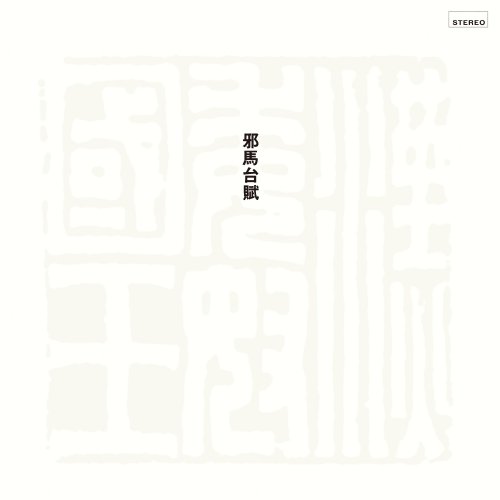
Artist: Masahiko Satoh, Toshiyuki Miyama, His New Herd
Title: Yamataifu
Year Of Release: 1972/2023
Label: Universal Music
Genre: Jazz, Big Band, Free Jazz
Quality: FLAC (tracks) 24/192, FLAC (tracks)
Total Time: 36:39
Total Size: 1.4 GB / 206 MB
WebSite: Album Preview
1. Ichi – 19:28Title: Yamataifu
Year Of Release: 1972/2023
Label: Universal Music
Genre: Jazz, Big Band, Free Jazz
Quality: FLAC (tracks) 24/192, FLAC (tracks)
Total Time: 36:39
Total Size: 1.4 GB / 206 MB
WebSite: Album Preview
2. Ni – 12:17
3. San – 04:55
Masahiko Satoh - Electric Piano
Toshiyuki Miyama - Conductor
Yoshinobu Imashiro - Piano
Kozaburo Yamaki - Guitar
Miki Matsui - Baritone Saxophone
Kazumi Oguro, Shinji Nakayama - Alto Saxophone
Kiyoshi Saito, Shoji Maeda - Tenor Saxophone
Masao Kunisada - Bass
Bunji Murata, Kenichi Sano, Koji Hatori, Kunio Fujisaki - Trumpet
Masamichi Uetaka, Seiichi Tokura, Takeshi Aoki, Teruhiko Kataoka - Trombone
This is an artist/composer (and his arranger) who no doubt was extremely inspired by America's Free Jazz, Post Bop, and more-recent Jazz-Rock fusion experimentation. My feeling is that, as a modern big band leader and world music enthusiast, he would have gotten on famously with American band leader DON ELLIS.
A. "Ichi" (19:21) Is this really jazz-rock fusion? Despite its definite inspiration from both John Coltrane, Ornette Coleman, and Pharoah Sanders, it also expresses a debt to Tony Williams, Don Ellis, and Miles Davis. It's definitely avant garde--like 1960s big band avant garde--and, I believe, highly scripted. There's even a similarity here to the earliest music published by Magma. The longer it plays, the more I find myself liking it! The odd electronic sounds remind me very much of some of the weird sounds coming out of Teo Macero's treatment of Miles Davis' band's Bitches Brew songs as well as Herbie Hancock's upcoming work with his Headhunters and beyond while it also traipses into the realm of soundtrack electronica. Part 2 of the jam sees a turn toward a quieter, more sparsely populated instrumental palette while the individual and banked horns take turns blasting their two cents worth, again sounding more Big Band-like (even more DON ELLIS-like) as the instruments reconstitute and rebuild their momentum. Fascintating, interesting, entertaining, (36.75/40)
B1. "Ni" (12:17) weird sound and harmonic experiments in discordant, sound-fx-type chiller music that, while employing the latest in electronic instrumental sound that were commonly being incorporated into the jazz-rock infusionists, is not as Jazz-Rock oriented as it is avant garde classical--though there is a lot in common here, for me, with the awful stuff coming from Miles Davis' Bitches Brew. It also reminds me of the chaotic cacophonous music used in the pre-cognition chimpanzee scenes in the 2001: A Space Odyssey soundtrack. The drumming, when there is any (after the 6:50 mark), sometimes outright sucks, at other times comes across as absolutely brilliant. This is a very impressive "song"--especially for the development and evolution of avant-garde jazz. It is certainly entertaining, but not exactly what I'd call enjoyable music--and certainly not the type of music you would use for a dance party. (21.5/25)
B2. "San" (4:53) opens up with some fast moving lounge jazz of a very serious nature. But then the big band horns enter and make it obvious that this music could hardly be played in a dark, smokey jazz lounge--at least not the ones made de rigeur since the secretive Underworld mentality of the Beatnik and BeBop eras had formed around this kind of music. Then, the crazy, polyphonic and polymetric practices of Toshiyuki's music takes over. Again: impressive if not very cozy or heart-warming. (9.25/10)
A. "Ichi" (19:21) Is this really jazz-rock fusion? Despite its definite inspiration from both John Coltrane, Ornette Coleman, and Pharoah Sanders, it also expresses a debt to Tony Williams, Don Ellis, and Miles Davis. It's definitely avant garde--like 1960s big band avant garde--and, I believe, highly scripted. There's even a similarity here to the earliest music published by Magma. The longer it plays, the more I find myself liking it! The odd electronic sounds remind me very much of some of the weird sounds coming out of Teo Macero's treatment of Miles Davis' band's Bitches Brew songs as well as Herbie Hancock's upcoming work with his Headhunters and beyond while it also traipses into the realm of soundtrack electronica. Part 2 of the jam sees a turn toward a quieter, more sparsely populated instrumental palette while the individual and banked horns take turns blasting their two cents worth, again sounding more Big Band-like (even more DON ELLIS-like) as the instruments reconstitute and rebuild their momentum. Fascintating, interesting, entertaining, (36.75/40)
B1. "Ni" (12:17) weird sound and harmonic experiments in discordant, sound-fx-type chiller music that, while employing the latest in electronic instrumental sound that were commonly being incorporated into the jazz-rock infusionists, is not as Jazz-Rock oriented as it is avant garde classical--though there is a lot in common here, for me, with the awful stuff coming from Miles Davis' Bitches Brew. It also reminds me of the chaotic cacophonous music used in the pre-cognition chimpanzee scenes in the 2001: A Space Odyssey soundtrack. The drumming, when there is any (after the 6:50 mark), sometimes outright sucks, at other times comes across as absolutely brilliant. This is a very impressive "song"--especially for the development and evolution of avant-garde jazz. It is certainly entertaining, but not exactly what I'd call enjoyable music--and certainly not the type of music you would use for a dance party. (21.5/25)
B2. "San" (4:53) opens up with some fast moving lounge jazz of a very serious nature. But then the big band horns enter and make it obvious that this music could hardly be played in a dark, smokey jazz lounge--at least not the ones made de rigeur since the secretive Underworld mentality of the Beatnik and BeBop eras had formed around this kind of music. Then, the crazy, polyphonic and polymetric practices of Toshiyuki's music takes over. Again: impressive if not very cozy or heart-warming. (9.25/10)
![Fourplay - Between The Sheets (30th Anniversary 2023 Remastered) (2023) [Hi-Res]](https://www.dibpic.com/uploads/posts/2023-12/1702000394_cover.jpg "Fourplay - Between The Sheets (30th Anniversary 2023 Remastered) (2023) [Hi-Res]")
![Isao Suzuki Trio & Quartet - Blow Up (1973) [2024]](https://www.dibpic.com/uploads/posts/2026-10/1792562876_ff.jpg "Isao Suzuki Trio & Quartet - Blow Up (1973) [2024]")
![Raphael Jost - Over the Moon (2026) [Hi-Res]](https://www.dibpic.com/uploads/posts/2026-10/1792498812_folder.jpg "Raphael Jost - Over the Moon (2026) [Hi-Res]")
![Dean Kalaitzidis - Bright Tree (2026) [Hi-Res]](https://img.israbox.com/img/2026-10/18/obltgczcjevcnwjxn6aeyfq09.jpg "Dean Kalaitzidis - Bright Tree (2026) [Hi-Res]")