Adam Brodsky - American Epitaph (2026)
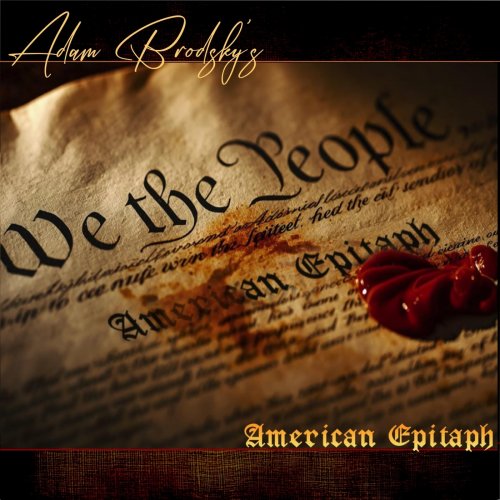
Artist: Adam Brodsky
Title: American Epitaph
Year Of Release: 2026
Label: Adam Brodsky
Genre: Folk Rock, Alt Folk, Singer-Songwriter
Quality: 320 / FLAC (tracks)
Total Time: 56:32
Total Size: 131 / 349 Mb
WebSite: Album Preview
Tracklist: Title: American Epitaph
Year Of Release: 2026
Label: Adam Brodsky
Genre: Folk Rock, Alt Folk, Singer-Songwriter
Quality: 320 / FLAC (tracks)
Total Time: 56:32
Total Size: 131 / 349 Mb
WebSite: Album Preview
1. Achy Breaky America (4:06)
2. Nazis in the White House (3:46)
3. New World Order (4:15)
4. Good Enough (4:15)
5. Don't Break Bread (4:29)
6. 2020 (3:37)
7. King of Antifolk (4:53)
8. Daddy Issues (3:36)
9. Gainsvile (3:48)
10. The Song I Wrote the Day Johnny Cash Died (5:16)
11. Birthday Cake (4:48)
12. Gentle (2:49)
13. Window Pain (7:03)
Adam Brodsky is a curious character. A local Philadelphia figure and an anti-folk anti-hero, he wields self-deprecation, political satire, and social commentary with brilliance. He is back with his first album in a very long time, American Epitaph (Permanent Records), a collection of thirteen songs penned with biting humor and righteous indignation.
It tackles serious subjects without ever being entirely serious itself. Musically, imagine a punk-infused cross between Woody Guthrie—with the famous “This Machine Kills Fascists” scrawled across his guitar—and a lo-fi Bruce Springsteen. As Brodsky himself puts it: “Though there are a few songs on here that weren’t written to save democracy, most of them are in the screed/pean vein, hoping to give joy and some encouragement to the millions of reasonable people that are gonna need to stand up and stay standing to meet this terrible moment.”
The opening track, “Achy Breaky America,” is a bouncy protest song built around a lopsided rhythm and a buzzing harmonica accompanying bitter lyrics—though with Adam, you never quite know at what level of irony to take things:
“I get an ache, I get an achy achy ache
When I think about America
I get sad, and then a little bit mad
To think she ain’t as cool as she once was”
“New World Order” rides a Bo Diddley-inspired beat and allows the band—Jesse Lundy on guitar, Alex Meltzer on drums, and Chris Bixler on bass—to showcase their talents while Brodsky delivers another dose of sharp political commentary.
“Don’t Break Bread” tells the story of a friendship shattered by political differences, delivered in a drawl that occasionally recalls Bob Dylan. Recorded with the full band at Retro Studios, the song also features a horn section that almost never made the final cut. As Brodsky jokingly recalls:
“Butch Ross really, really, really wanted to put horns on it… Don’t let him know, but I think it sounds pretty awesome with the horns.”
“King of Antifolk” dives into New York’s anti-folk scene with tenderness and sincerity. Another touching moment arrives with “Johnny Cash,” one of the album’s most heartfelt songs.
The album closes with the seven-minute “Window Pain,” a song that seems to carry a little of Tom Waits’ spirit. Brodsky jokes that if you ever go see Waits at Town Hall in New York, you’d better bring a notebook in the car because you’re going to write a song like this one on the drive home. After being left off two previous records, it finally finds its place here and provides a fitting conclusion to the album.. At its core, American Epitaph is the work of a songwriter who has been around long enough to know exactly what he wants to say and how to say it. These are, as Brodsky himself puts it, “the songs of a grownup whose first rodeo was so long ago that all the clowns have gotten day jobs.” Equal parts protest record, folk manifesto, and dark comedy, the album delivers a joyful, vitriolic kick to the Americana scene, and it feels great.
It tackles serious subjects without ever being entirely serious itself. Musically, imagine a punk-infused cross between Woody Guthrie—with the famous “This Machine Kills Fascists” scrawled across his guitar—and a lo-fi Bruce Springsteen. As Brodsky himself puts it: “Though there are a few songs on here that weren’t written to save democracy, most of them are in the screed/pean vein, hoping to give joy and some encouragement to the millions of reasonable people that are gonna need to stand up and stay standing to meet this terrible moment.”
The opening track, “Achy Breaky America,” is a bouncy protest song built around a lopsided rhythm and a buzzing harmonica accompanying bitter lyrics—though with Adam, you never quite know at what level of irony to take things:
“I get an ache, I get an achy achy ache
When I think about America
I get sad, and then a little bit mad
To think she ain’t as cool as she once was”
“New World Order” rides a Bo Diddley-inspired beat and allows the band—Jesse Lundy on guitar, Alex Meltzer on drums, and Chris Bixler on bass—to showcase their talents while Brodsky delivers another dose of sharp political commentary.
“Don’t Break Bread” tells the story of a friendship shattered by political differences, delivered in a drawl that occasionally recalls Bob Dylan. Recorded with the full band at Retro Studios, the song also features a horn section that almost never made the final cut. As Brodsky jokingly recalls:
“Butch Ross really, really, really wanted to put horns on it… Don’t let him know, but I think it sounds pretty awesome with the horns.”
“King of Antifolk” dives into New York’s anti-folk scene with tenderness and sincerity. Another touching moment arrives with “Johnny Cash,” one of the album’s most heartfelt songs.
The album closes with the seven-minute “Window Pain,” a song that seems to carry a little of Tom Waits’ spirit. Brodsky jokes that if you ever go see Waits at Town Hall in New York, you’d better bring a notebook in the car because you’re going to write a song like this one on the drive home. After being left off two previous records, it finally finds its place here and provides a fitting conclusion to the album.. At its core, American Epitaph is the work of a songwriter who has been around long enough to know exactly what he wants to say and how to say it. These are, as Brodsky himself puts it, “the songs of a grownup whose first rodeo was so long ago that all the clowns have gotten day jobs.” Equal parts protest record, folk manifesto, and dark comedy, the album delivers a joyful, vitriolic kick to the Americana scene, and it feels great.
![Kosmonauci - Brudna - Bielizna (2026) [Hi-Res]](https://www.dibpic.com/uploads/posts/2026-08/1788069357_xalsyo9fro9x5_600.jpg "Kosmonauci - Brudna - Bielizna (2026) [Hi-Res]")
![Ted Taforo - The Leaning Tower of Panther (2026) [Hi-Res]](https://img.israbox.com/img/2026-08/30/507wecba1bz8e2ocq7ysnabnz.jpg "Ted Taforo - The Leaning Tower of Panther (2026) [Hi-Res]")