Wild Turkey - Turkey (Reissue, Remastered) (2013)
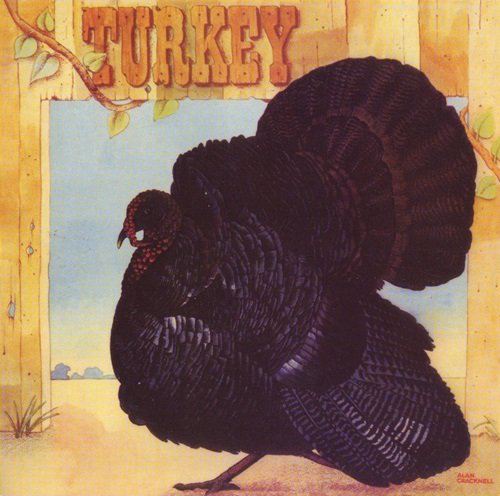
Artist: Wild Turkey
Title: Turkey
Year Of Release: 1972/2013
Label: Esoteric Recordings
Genre: Classic Rock, Prog Rock, Blues Rock, Hard Rock
Quality: Mp3 320 / Flac (tracks, .cue, log)
Total Time: 45:58
Total Size: 130/285 Mb (scans)
WebSite: Album Preview
Tracklist:Title: Turkey
Year Of Release: 1972/2013
Label: Esoteric Recordings
Genre: Classic Rock, Prog Rock, Blues Rock, Hard Rock
Quality: Mp3 320 / Flac (tracks, .cue, log)
Total Time: 45:58
Total Size: 130/285 Mb (scans)
WebSite: Album Preview
1. Good Old Days (Glenn Cornick, Gary Pickford Hopkins, Tweke Lewis, Mick Dyche, Jeff Jones) - 4:13
2. Tomorrow's Friend (Gary Pickford Hopkins) - 4:08
3. A Universal Man - 3:49
4. Eternal Mother/The Return - 7:59
5. Chuck Stallion And The Mustangs (Gary Pickford Hopkins) - 3:42
6. The Street - 4:45
7. See You Next Tuesday - 6:52
8. Telephone - 3:40
Bonus Tracks:
9. Good Old Days (Single A-Side) - 3:02
10. Life Is A Symphony (Single B-Side) - 3:44
The second and final self-titled album by the British band Wild Turkey, "Turkey," released in September 1972, became a vibrant but undeservedly forgotten landmark of the classic British rock heyday of the early 1970s.
The project is primarily interesting because it was founded by Glenn Cornick, the original bassist for the cult band Jethro Tull, who left the band after recording the landmark album "Benefit."
Unlike their debut album, "Battle Hymn" (1971), on "Turkey," the musicians sounded much more confident and cohesive. The album's sound is dense and guitar-driven, with distinct blues roots and a touch of early prog.
Since Glenn Cornick deliberately avoided making the band "bass-centric," the music rests on the powerful riffs of two guitarists (Alan "Tweek" Lewis and Mick Dyke) and the expressive, powerful vocals of Gary Pickford-Hopkins, whose tone has often been compared by critics to the style of Rod Stewart. The highlight of this album was the introduction of electric piano, handled by Steve Girl (the band's former road manager, who officially joined the lineup during the sessions). This added a refined, multi-layered sound to the songs, in the spirit of Wishbone Ash, Uriah Heep, and early Deep Purple.
The project is primarily interesting because it was founded by Glenn Cornick, the original bassist for the cult band Jethro Tull, who left the band after recording the landmark album "Benefit."
Unlike their debut album, "Battle Hymn" (1971), on "Turkey," the musicians sounded much more confident and cohesive. The album's sound is dense and guitar-driven, with distinct blues roots and a touch of early prog.
Since Glenn Cornick deliberately avoided making the band "bass-centric," the music rests on the powerful riffs of two guitarists (Alan "Tweek" Lewis and Mick Dyke) and the expressive, powerful vocals of Gary Pickford-Hopkins, whose tone has often been compared by critics to the style of Rod Stewart. The highlight of this album was the introduction of electric piano, handled by Steve Girl (the band's former road manager, who officially joined the lineup during the sessions). This added a refined, multi-layered sound to the songs, in the spirit of Wishbone Ash, Uriah Heep, and early Deep Purple.
![DAYNA KURTZ - Postcards From Downtown (25th Anniversary Edition) (2026) [Hi-Res]](https://img.israbox.com/img/2026-08/31/d5yg5b010sblbwep9g2nqr0mn.jpg "DAYNA KURTZ - Postcards From Downtown (25th Anniversary Edition) (2026) [Hi-Res]")


![New York Mary - New York Mary (2026) [Hi-Res]](https://www.dibpic.com/uploads/posts/2026-09/1788495949_d6hvmnt46nzax_600.jpg "New York Mary - New York Mary (2026) [Hi-Res]")
![Geof Bradfield, Myra Melford, Ben Goldberg & Dana Hall - Open Or Close (2026) [Hi-Res]](https://www.dibpic.com/uploads/posts/2026-09/1788498209_mu4ovyef12ckv_600.jpg "Geof Bradfield, Myra Melford, Ben Goldberg & Dana Hall - Open Or Close (2026) [Hi-Res]")
![NOVA FELLOWSHIP - CONTINUUM (2026) [Hi-Res]](https://img.israbox.com/img/2026-09/04/c2163f9p3h5rb9fcjc7d501gp.jpg "NOVA FELLOWSHIP - CONTINUUM (2026) [Hi-Res]")