Elena Stella, Ante Jeličić Sextet - Mačak u vreći (2026) [Hi-Res]
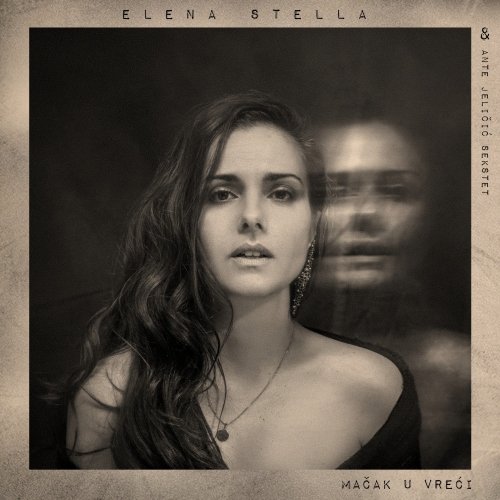
Artist: Elena Stella, Ante Jeličić Sextet
Title: Mačak u vreći
Year Of Release: 2026
Label: Dallas Records Croatia
Genre: Vocal Jazz
Quality: FLAC (tracks) 24/44, FLAC (tracks)
Total Time: 00:28:15
Total Size: 386 / 206 MB
WebSite: Album Preview
Tracklist:Title: Mačak u vreći
Year Of Release: 2026
Label: Dallas Records Croatia
Genre: Vocal Jazz
Quality: FLAC (tracks) 24/44, FLAC (tracks)
Total Time: 00:28:15
Total Size: 386 / 206 MB
WebSite: Album Preview
01. Elena Stella - Greška (4:02)
02. Elena Stella - Manevar (2:30)
03. Elena Stella - Elenin blues (3:51)
04. Elena Stella - Kuća pored mora (4:40)
05. Elena Stella - Ostati (3:55)
06. Elena Stella - Mačak u vreći (3:53)
07. Elena Stella - Neponištivo (2:43)
08. Elena Stella - Ti (2:47)
Elena Stella and Ante Jeličić are well-kept secrets of Croatian jazz. Hidden and dislocated from the spotlight and deprived of Zagreb's centralism, bathed in the Zadar-Biograd sun, they zealously create their own vision of original jazz.
Stella is a singer with a very distinctive and unique voice, with several kilograms of thick smoke and grease on her vocal cords, which is evident in every note she sings, from her beginnings on the talent show The Voice to her much more serious aspirations today. Jeličić, on the other hand, is undeservedly less exposed (he doesn't sing, for a start!) and very self-deprecating, while he is a pianist who has a completely original expression (I don't write that lightly) driven by a unique approach to the piano, which he himself devised and sticks to with conviction.
Two albums to date, Common Language from 2017 and Da-du from 2023, have defined him as a skilled and thoughtful author, mostly inclined to tradition, but open to embracing various new expressions and influences. Their joint debut, Mačak u vreći , was recently released by Dallas Records and represents the fusion of their musical and life journeys, supported by a proven lineup – Miro Kadoić on tenor saxophone, Darko Sedak Benčić on trumpet, Hrvoje Štefanić on trombone, Bojan Skočilić on double bass and Adriano Bernobić on drums.
How to approach the realization of an album of vocal original jazz in this era? Any intelligent answer to this question is difficult and too multifaceted for these few lines. Whether it is a question of some kind of faux -avant-garde, a re-penetration of the ocean of sung and re-arranged standards, or complete ECM-ification, everything has already been seen. The initial eyebrow-raising when listening to this album is reserved for – the use of the Croatian language!
What everyone shys away from, readily leaning towards Anglicization, or the internationalization of everything and anything – and the signatory of these lines is by no means innocent – Stella and Jeličić have embraced and made it their own. The result is striking, because making a Slavic language fluid and singable in a true jazz context is no easy task. This is already evident in grand style in the opening composition Greška , and is also significant for the rest of the material. The melodies sung are of a very instrumental character, indented and above all complicated, and host numerous lines of very sharp and original text with Stella's signature.
Stella is a singer with a very distinctive and unique voice, with several kilograms of thick smoke and grease on her vocal cords, which is evident in every note she sings, from her beginnings on the talent show The Voice to her much more serious aspirations today. Jeličić, on the other hand, is undeservedly less exposed (he doesn't sing, for a start!) and very self-deprecating, while he is a pianist who has a completely original expression (I don't write that lightly) driven by a unique approach to the piano, which he himself devised and sticks to with conviction.
Two albums to date, Common Language from 2017 and Da-du from 2023, have defined him as a skilled and thoughtful author, mostly inclined to tradition, but open to embracing various new expressions and influences. Their joint debut, Mačak u vreći , was recently released by Dallas Records and represents the fusion of their musical and life journeys, supported by a proven lineup – Miro Kadoić on tenor saxophone, Darko Sedak Benčić on trumpet, Hrvoje Štefanić on trombone, Bojan Skočilić on double bass and Adriano Bernobić on drums.
How to approach the realization of an album of vocal original jazz in this era? Any intelligent answer to this question is difficult and too multifaceted for these few lines. Whether it is a question of some kind of faux -avant-garde, a re-penetration of the ocean of sung and re-arranged standards, or complete ECM-ification, everything has already been seen. The initial eyebrow-raising when listening to this album is reserved for – the use of the Croatian language!
What everyone shys away from, readily leaning towards Anglicization, or the internationalization of everything and anything – and the signatory of these lines is by no means innocent – Stella and Jeličić have embraced and made it their own. The result is striking, because making a Slavic language fluid and singable in a true jazz context is no easy task. This is already evident in grand style in the opening composition Greška , and is also significant for the rest of the material. The melodies sung are of a very instrumental character, indented and above all complicated, and host numerous lines of very sharp and original text with Stella's signature.
![Mattia Basilico - On The Edge (2026) [Hi-Res]](https://img.israbox.com/img/2026-10/18/jmh5y9fmkbxue02egykzrfp0z.jpg "Mattia Basilico - On The Edge (2026) [Hi-Res]")