Friedhelm Flamme - Richard Bartmuß: Organ Sonatas 1 & 3 - Chorale Fantasias (2026) [Hi-Res]
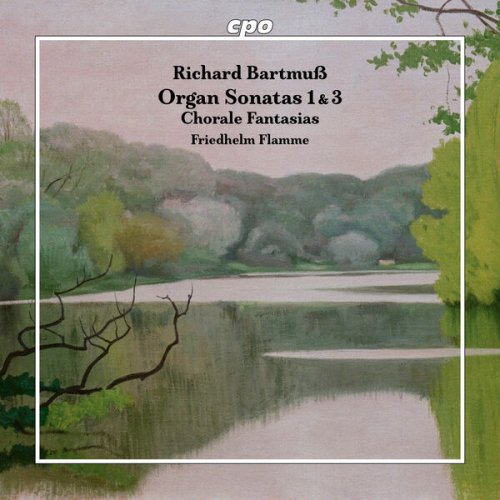
Artist: Friedhelm Flamme
Title: Richard Bartmuß: Organ Sonatas 1 & 3 - Chorale Fantasias
Year Of Release: 2026
Label: CPO
Genre: Classical Organ
Quality: flac lossless (tracks) / flac 24bits - 44.1kHz +Booklet
Total Time: 01:10:04
Total Size: 280 / 589 mb
WebSite: Album Preview
TracklistTitle: Richard Bartmuß: Organ Sonatas 1 & 3 - Chorale Fantasias
Year Of Release: 2026
Label: CPO
Genre: Classical Organ
Quality: flac lossless (tracks) / flac 24bits - 44.1kHz +Booklet
Total Time: 01:10:04
Total Size: 280 / 589 mb
WebSite: Album Preview
01. Praeludium in D minor op. 36/1
02. Organ Sonata No. 1 in E flat major op. 17: I. Allegro spirituoso
03. Organ Sonata No. 1 in E flat major op. 17: II. Andante, quasi Adagio
04. Organ Sonata No. 1 in E flat major op. 17: III. Introduction
05. Chorale Fantasia “Christ ist erstanden” op. 44/1
06. Chorale Fantasia “Jesu, meine Freude” op. 44/2
07. Organ Sonata No. 3 in G major op. 39: I. Praeludium. Allegro moderato
08. Organ Sonata No. 3 in G major op. 39: II. Canzone. Adagio semplice
09. Organ Sonata No. 3 in G major op. 39: III. Fuga. Allegro
10. Organ Sonata No. 3 in G major op. 39: IV. Finale. Andante tranquillo
11. “Gebet” in F major op. 36/2
12. Toccata in C minor op. 36/6
It was only natural that an artist with such an encyclopedic bent as Friedhelm Flamme would one day turn his attention to the work of the organist and composer Richard Bartmuß (1859–1910). For one thing, forays into the late Romantic period are likely to serve as a welcome counterbalance to the North German Baroque organ music that cpo has recently released on a total of 22 CDs; on the other hand, the work of this contemporary of Mahler and Strauss—who served as court organist in Dessau from 1890 onward—deserves attention that goes beyond mere occasional diversions. To date, only a fraction of the compositions Bartmuß left behind have been published; yet this small selection—from which Friedhelm Flamme has made a dramaturgically successful choice here—opens up a vast, promising field that urgently needs to be explored: Neither the two (of a total of four) sonatas nor the two great chorale fantasies, nor the powerful prelude and the magnificent toccata from Opus 36 leave the slightest doubt about this.
![Solveig Slettahjell - Det er vi (2026) [Hi-Res]](https://img.israbox.com/img/2026-10/09/xmqre7a7s0ijly51stls4qrnk.jpg "Solveig Slettahjell - Det er vi (2026) [Hi-Res]")
![Mirna Bogdanović - Glimmerence (2026) [Hi-Res]](https://img.israbox.com/img/2026-10/09/9eo9iyrdand68wdfbao7fecp6.jpg "Mirna Bogdanović - Glimmerence (2026) [Hi-Res]")
![Marek De Vann featuring Paolo Apollo Negri - Stereotyping (2026) [Hi-Res]](https://www.dibpic.com/uploads/posts/2026-10/1791717328_m0etmyfd1688x_600.jpg "Marek De Vann featuring Paolo Apollo Negri - Stereotyping (2026) [Hi-Res]")