Vanessa-Mae - The Classical Album 1 (1996)
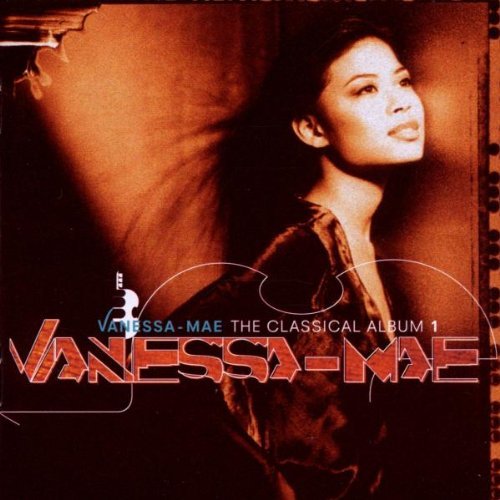
Artist: Vanessa-Mae
Title: The Classical Album 1
Year Of Release: 1996
Label: EMI Classics – 7243 5 55395 2 6
Genre: Classical
Quality: FLAC (tracks+.cue,log artwork)
Total Time: 58:45
Total Size: 341 Mb
WebSite: Album Preview
Tracklist: Title: The Classical Album 1
Year Of Release: 1996
Label: EMI Classics – 7243 5 55395 2 6
Genre: Classical
Quality: FLAC (tracks+.cue,log artwork)
Total Time: 58:45
Total Size: 341 Mb
WebSite: Album Preview
01. I. Preludio - Johann Sebastian Bach (3:53)
02. II. Loure - Johann Sebastian Bach (3:14)
03. III. Gavotte en Rondeau - Johann Sebastian Bach (3:05)
04. IV. Menuet I - Johann Sebastian Bach (1:16)
05. V. Menuet II - Johann Sebastian Bach (1:25)
06. VI. Bourrйe - Johann Sebastian Bach (0:00)
07. VII. Gigue - Johann Sebastian Bach (1:26)
08. Scherzo in C minor for violin and piano - Johannes Brahms (5:19)
09. Romanze No. 2 in F for violin and orchestra - Ludwig van Beethoven (8:23)
10. 1st Movement. Introduction, Grave - Max Bruch (3:18)
11. 1st Movement. Adagio Cantabile (On thro' the Wood, Laddie / Auld Rob Morris) ... (4:05)
12. 2nd Movement. Allegro (On 'Hey the Dusty Miller') - Max Bruch (5:27)
13. 3rd Movemen. Adagio - Max Bruch (1:00)
14. 3rd Movement. Andante Sostenuto (On 'I'm a-Doun for Lack O' Johnnie) - Max Bruch (5:32)
15. 4th Movement. Finale. Allegro Guerriero (On 'Scots Wha Hae') - Max Bruch (7:00)
16. I'm a-Doun for Lack O' Johnnie (A Little Scottish Fantasy), for violin & orch... (4:29)
Vanessa-Mae started her career as a violin prodigy at age 10. Now, as an adult, she successfully straddles the worlds of classical and popular music. This has made her a sensation, but judging from this disc, the publicity surrounding her has nothing to do with either music or her playing. She is clearly a very talented violinist. Her technique is solid, sometimes even brilliant, but it's so old-fashioned that one cannot tell whether she slides so much because she likes it or because she can't find better fingerings, and her vibrato only gets wider when she tries to make it more intense. Her approach to the music is idiosyncratic, but shows no personal involvement or romantic feeling. The Brahms Scherzo and Bruch's Scottish Fantasia are aggressive and accented, rather than dramatic and passionate; the Beethoven Romance is sentimental, rather than expressive.
The Third Bach Partita comes off best: though a bit stiff and stodgy, it has character and really dances. The program ends with her own pop-rock arrangement of the Fantasia's final Scottish song. The recording does not serve her well. Poor engineering makes her tone, though basically good, shrill and squeezed under stress; the piano sounds distant, but clangorous; the orchestra ragged and unbalanced. The booklet carries a skimpy biography and lots of hype, as well as a lengthy essay written by her that makes her sound arrogant, condescending, and defensive, though it is clear that she honestly aspires to be all things to all people. Also, it is printed in type so small as to be barely visible.
The Third Bach Partita comes off best: though a bit stiff and stodgy, it has character and really dances. The program ends with her own pop-rock arrangement of the Fantasia's final Scottish song. The recording does not serve her well. Poor engineering makes her tone, though basically good, shrill and squeezed under stress; the piano sounds distant, but clangorous; the orchestra ragged and unbalanced. The booklet carries a skimpy biography and lots of hype, as well as a lengthy essay written by her that makes her sound arrogant, condescending, and defensive, though it is clear that she honestly aspires to be all things to all people. Also, it is printed in type so small as to be barely visible.
![Ted Taforo - The Leaning Tower of Panther (2026) [Hi-Res]](https://img.israbox.com/img/2026-08/30/507wecba1bz8e2ocq7ysnabnz.jpg "Ted Taforo - The Leaning Tower of Panther (2026) [Hi-Res]")
![Ale Núñez - Blue Room (2026) [Hi-Res]](https://img.israbox.com/img/2026-08/27/x7n7owmuquv203irmpuzayub4.jpg "Ale Núñez - Blue Room (2026) [Hi-Res]")
![Alicia Witt - Between Heaven and Earth (2026) [Hi-Res]](https://img.israbox.com/img/2026-08/29/vdfub0as4sebuz9ep06t3j7q4.jpg "Alicia Witt - Between Heaven and Earth (2026) [Hi-Res]")
![Dos Santos - Es Amor (2026) [Hi-Res]](https://img.israbox.com/img/2026-08/27/01zwg61342s1i48xgyhm7u1fv.jpg "Dos Santos - Es Amor (2026) [Hi-Res]")