Laghonia - Etcetera (Reissue) (1971/1998)
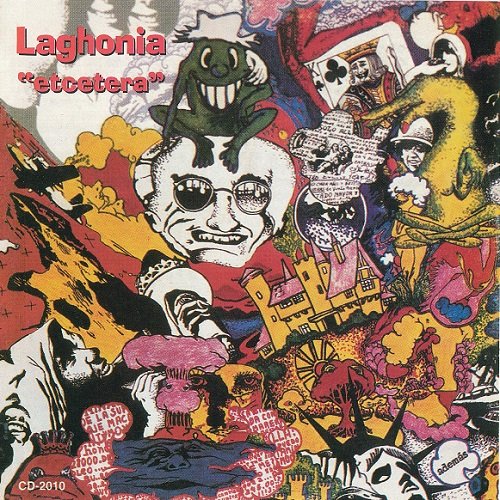
Artist: Laghonia
Title: Etcetera
Year Of Release: 1971/1998
Label: Lazarus Audio Products
Genre: Psychedelic Pop/Rock, British Invasion, Beat
Quality: Mp3 320 / Flac (image, .cue, log)
Total Time: 40:21
Total Size: 104/291 Mb (scans)
WebSite: Album Preview
Title: Etcetera
Year Of Release: 1971/1998
Label: Lazarus Audio Products
Genre: Psychedelic Pop/Rock, British Invasion, Beat
Quality: Mp3 320 / Flac (image, .cue, log)
Total Time: 40:21
Total Size: 104/291 Mb (scans)
WebSite: Album Preview
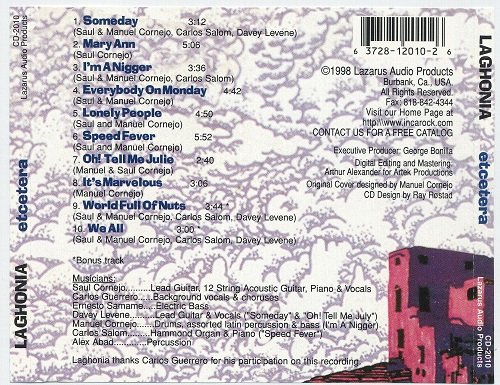
Tracklist:
1. Someday (3:15)
2. Mary Ann (5:09)
3. I'm a Nigger (3:39)
4. Everybody on Monday (4:45)
5. Lonely People (4:52)
6. Speed Fever (5:55)
7. Oh! Tell Me Julie (2:43)
8. It's Marvelous (3:09)
9. World Full of Nuts (3:46)
10. We All (3:04)
Saúl Cornejo - guitar, piano, vocals, guitar (12 string acoustic)
Davey Levene - guitar, vocals
Ernesto Samamé - bass (electric)
Carlos Salom - organ (Hammond B2)
Manuel Cornejo - drums
Alex Abad - percussion
Carlos Guerrero - vocals (background)
Laghonia was an important part of Peru's surprisingly fertile psychedelic/progressive rock scene during the late '60s and early '70s. Originally formed in 1965 as the New Juggler Sound, their initial lineup featured lead guitarist/vocalist Davey Levene, rhythm guitarist/vocalist Saul Cornejo, keyboardist Carlos Salom, bassist Eddy Zarauz, and drummer Alex Abad. At first they played British Invasion-style pop/rock, and released a few singles in this vein (including 1967's "Baby Baby" b/w "I Must Go"). As their style evolved, they became a harder-edged psychedelic garage band (think Nuggets) with touches of prog rock, soul, and blues-rock. Abad left in 1968, upon which point the group replaced him with Manuel Cornejo and changed their name to Laghonia. That year, they recorded their first full-length album, Glue, which was released in extremely limited quantities on the MAG label. In 1970, Zarauz left and was replaced by Ernesto Samamé; this lineup recorded the second Laghonia LP, Etcetera, which was released in 1971 and drew more from the progressive late-period Beatles. After leader Levene departed, the remaining members recruited guitarist/vocalist/songwriter Carlos Guerrero and regrouped as We All Together, releasing two albums during the '70s that later found a cult audience among devoted record collectors.


![Janne Schaffer - Bla Passager Och Roda Vagor (1982) [Vinyl Rip]](https://www.dibpic.com/uploads/posts/2026-08/1786396323_5.jpg "Janne Schaffer - Bla Passager Och Roda Vagor (1982) [Vinyl Rip]")