Dirk Piezunka, Christian "Hille" Klein, Martin Flindt, Sigi Busch, BuschMusic - How Real Is Real (2019)
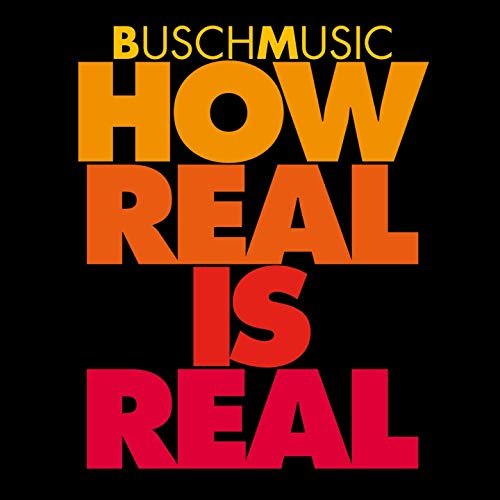
Artist: Dirk Piezunka, Christian "Hille" Klein, Martin Flindt, Sigi Busch, BuschMusic
Title: How Real Is Real
Year Of Release: 2019
Label: Laika Records
Genre: Jazz
Quality: 320 kbps | FLAC (tracks)
Total Time: 00:55:51
Total Size: 128 mb | 345 mb
WebSite: Album Preview
Tracklist:Title: How Real Is Real
Year Of Release: 2019
Label: Laika Records
Genre: Jazz
Quality: 320 kbps | FLAC (tracks)
Total Time: 00:55:51
Total Size: 128 mb | 345 mb
WebSite: Album Preview
01. Via Augusta
02. Fahrradfahren im Havelland
03. Tutanchamun
04. Der Baumlaeufer
05. Flageoletti
06. A Lot of Notes / How Real Is Real
07. Liebling mein Herz läßt Dich grüßen
08. Queen of Benin
09. Dark Dreams / Deep Blue C
10. Sweet Potato
How true is reality, what is appearance, what is being? A question that Paul Watzlawick already dealt with in the mid-1970s. In his book, How Real Is Real, first published in 1976, the famous psychologist and communication scientist argued that there is no genuine reality, but that it is always the result of interpersonal communication. A reality manipulated by delusion, deception and understanding. An issue that has been increasingly discussed not only in politics since the presidency of Donald Trump. Manipulation has long been part of daily life in the music business, says Sigi Busch. The composer and double bass player has been on stage all over the world for five decades, and has written numerous musical textbooks. He wants to know his album title "How Real is Real" with a wink.
"From voice correction to timing, in the recording studios you can do almost anything today, so that self-absorbed musicians and singers sound quite passable in the end. With my Quartet BuschMusic I represent the opposite approach. For our album, the reality factor is around 99 percent. We recorded it completely live and made only minimal changes - in selecting the microphones, for example, or in one of my solos, which we cut a bit, "Busch looks back on the production process of the album.
His band "BuschMusic" is a musical resurrection. Already in the early 1990s he had called the ensemble to life. At that time, the repertoire consisted solely of pieces by Jewish composers rooted in the vibrant Berlin cabaret scene of the 1920's. In the following years, the Wahl-Bremer was busy with various other musical projects and with his professorship at the University of the Arts in Berlin, so that the band took a creative break. By the time Busch returned to the northwestern part of the country in 2011, he felt a need to reactivate the ensemble with local musicians. He chose saxophonist Dirk Piezunka, guitarist Martin Flindt and drummer Christian "Hille" Klein. The chemistry between the now 75-year-old namesake and his playmates agreed immediately. In addition, the younger ones found it appealing to go on a musical search for clues. "When Sigi asked me if I would like to join Buschmusic, I felt very honored," recalls Oldenburg guitarist Martin Flindt, explaining: "Sigi is a highly educated, political person. A bourgeois artist type in the best sense. In his compositions, he processes much of what he has experienced and what he sees - also from other artistic directions. And he has a sometimes a little jarring humor, which he proves in dadaistic-looking sections. "
Most of the time, however, sonorous passages dominate on "How Real is Real". But again and again, Busch and his playmates also provide rhythmic moments of surprise. As in "Via Augusta" or "Cycling in Havelland". The latter is Bush's preference for extensive tours on two wheels already in the title recognize. "When I was still living in Berlin, I often drove through the Havelland - and on one of these tours, this melody fragment that I had to be noted in 5/4-Takt, I only noticed afterwards .. Luckily: If I had tried To pedal in time, I would probably quickly tilted from the saddle, "smiles Busch. Also "Via Augusta" refers to an extended bicycle tour, which led Busch on the historic Roman route from Donaueschingen over the Alps to Venice. "In this composition we processed two grooves. The first slower part stands for the arduous uphill passages, the faster, Latin-American for the lively downhill, as we had the Reschenpass behind us. "
"From voice correction to timing, in the recording studios you can do almost anything today, so that self-absorbed musicians and singers sound quite passable in the end. With my Quartet BuschMusic I represent the opposite approach. For our album, the reality factor is around 99 percent. We recorded it completely live and made only minimal changes - in selecting the microphones, for example, or in one of my solos, which we cut a bit, "Busch looks back on the production process of the album.
His band "BuschMusic" is a musical resurrection. Already in the early 1990s he had called the ensemble to life. At that time, the repertoire consisted solely of pieces by Jewish composers rooted in the vibrant Berlin cabaret scene of the 1920's. In the following years, the Wahl-Bremer was busy with various other musical projects and with his professorship at the University of the Arts in Berlin, so that the band took a creative break. By the time Busch returned to the northwestern part of the country in 2011, he felt a need to reactivate the ensemble with local musicians. He chose saxophonist Dirk Piezunka, guitarist Martin Flindt and drummer Christian "Hille" Klein. The chemistry between the now 75-year-old namesake and his playmates agreed immediately. In addition, the younger ones found it appealing to go on a musical search for clues. "When Sigi asked me if I would like to join Buschmusic, I felt very honored," recalls Oldenburg guitarist Martin Flindt, explaining: "Sigi is a highly educated, political person. A bourgeois artist type in the best sense. In his compositions, he processes much of what he has experienced and what he sees - also from other artistic directions. And he has a sometimes a little jarring humor, which he proves in dadaistic-looking sections. "
Most of the time, however, sonorous passages dominate on "How Real is Real". But again and again, Busch and his playmates also provide rhythmic moments of surprise. As in "Via Augusta" or "Cycling in Havelland". The latter is Bush's preference for extensive tours on two wheels already in the title recognize. "When I was still living in Berlin, I often drove through the Havelland - and on one of these tours, this melody fragment that I had to be noted in 5/4-Takt, I only noticed afterwards .. Luckily: If I had tried To pedal in time, I would probably quickly tilted from the saddle, "smiles Busch. Also "Via Augusta" refers to an extended bicycle tour, which led Busch on the historic Roman route from Donaueschingen over the Alps to Venice. "In this composition we processed two grooves. The first slower part stands for the arduous uphill passages, the faster, Latin-American for the lively downhill, as we had the Reschenpass behind us. "
![ALA.NI & Adrian Younge - Proud of Me (2026) [Hi-Res]](https://www.dibpic.com/uploads/posts/2026-10/1791376144_1.jpg "ALA.NI & Adrian Younge - Proud of Me (2026) [Hi-Res]")


![Jocelyn Gould - So Delighted (2026) [Hi-Res]](https://www.dibpic.com/uploads/posts/2026-10/1791388700_1.jpg "Jocelyn Gould - So Delighted (2026) [Hi-Res]")