Vox Clamantis & Jaan-Eik Tulve - Filia Sion (2012)
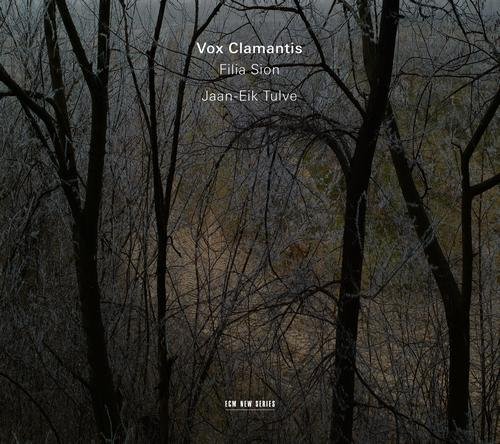
Artist: Vox Clamantis & Jaan-Eik Tulve
Title: Filia Sion
Year Of Release: 2012
Label: ECM New Series
Genre: Classical
Quality: FLAC (tracks + .cue, log, artwork)
Total Time: 1:11:10
Total Size: 331 MB
WebSite: Album Preview
Tracklist:Title: Filia Sion
Year Of Release: 2012
Label: ECM New Series
Genre: Classical
Quality: FLAC (tracks + .cue, log, artwork)
Total Time: 1:11:10
Total Size: 331 MB
WebSite: Album Preview
01. Ecce venit/Psalm 94 (Gregorian antiphon) (9:37)
02. Virgo prudentissima/Magnificat (Gregorian antiphon) (5:00)
03. Gaudeamus (Gregorian introit) (2:48)
04. Rex virginum (Organum from Codex Las Huelgas) (3:36)
05. Gloria (Gregorian chant) (3:32)
06. Magister Perotinus: Beata viscera (Conductus) (8:20)
07. Audi filia (Gregorian gradual) (5:23)
08. Petrus Wilhelmi de Grudencz: Prelustri elucentia (Cantio) (2:44)
09. Ave Maria (Gregorian offertory) (6:10)
10. Hildegard von Bingen: O ignis spiritus (Sequentia) (6:25)
11. Agnus Dei (Gregorian chant) (1:08)
12. Exulta filia Sion (Gregorian communion) (3:06)
13. O Maria (Motet from Montpellier Manuscript) (4:46)
14. Salve regina (Gregorian antiphon) (2:53)
15. Ma navu (Jewish chant from Cochin) (5:42)
Listeners looking for an album of chant that is free of hype and condescending claims to be mood-mellowing should be thrilled with these exquisite performances by the Estonian ensemble Vox Clamantis, led by Jaan-Eik Tulve. Most of the chants are from the Gregorian tradition, but there are also works by three named composers, Hildegard von Bingen, Perotin, and Petrus Wilhelmi de Grudencz, as well as the Codex Las Huelgas, the Montpellier Manuscript, and from the Jewish community in Cochin, India. The tone of the album is serenely reverent, but at the same time the singing is vibrant and full of life. The performances might not pass muster with listeners who demand strict adherence to historically informed performance practice; there are some tracks that are hugely effective, but that employ practices that are speculative at best. Perotin's Beata viscera, for instance, is a monophonic conductus, an unaccompanied melody, but it was written at a time when a spirit of experimentalism was in the air in the world of liturgical music in 13th century Paris. In this performance, the singers add a vocal drone; what sounds like whistling, but which may be a version of throat singing; and a second line sung in canon with the first. Hildegard's O ignis spiritus receives a similar treatment, but without the second vocal line. Authentic or not, the result is inexpressibly ethereal and haunting. Other performances are more traditional; the Gregorian offertory Ave Maria and several other tracks alternate solo voices with a unison chorus. The performances offer a wider range of timbral variety than is usual for albums of chant, with the alternation of solo and choral singing and the use of drones. The sound of the voices, both individually and as a group, is disciplined but relaxed, and exceptionally pure, with immaculate intonation. The sound of ECM's recording is perfectly clean with an ideal level of resonance. Highly recommended. -- Stephen Eddins


![Maria Emrik - Road to Heaven (Remastered 2017) [Hi-Res]](https://www.dibpic.com/uploads/posts/2026-09/1789283841_s36a88vnyh7ob_600.jpg "Maria Emrik - Road to Heaven (Remastered 2017) [Hi-Res]")
![Ramsey Lewis - Routes (1980) [Vinyl]](https://www.dibpic.com/uploads/posts/2026-09/1789408304_0886446489384_600.jpg "Ramsey Lewis - Routes (1980) [Vinyl]")

![Brand X - Livestock (1977) [Vinyl]](https://www.dibpic.com/uploads/posts/2026-09/1789406652_0077778711650_600.jpg "Brand X - Livestock (1977) [Vinyl]")