Corinna Scheurle, Klara Hornig - Schwarze Erde (2024) [Hi-Res]
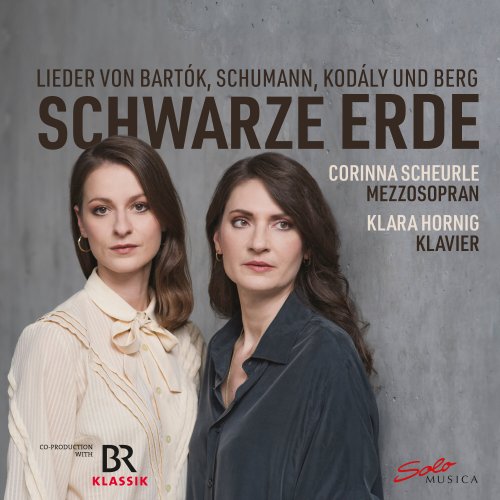
Artist: Corinna Scheurle, Klara Hornig
Title: Schwarze Erde
Year Of Release: 2024
Label: Solo Musica
Genre: Classical
Quality: flac lossless (tracks) / flac 24bits - 96.0kHz +Booklet
Total Time: 00:55:04
Total Size: 233 / 921 mb
WebSite: Album Preview
TracklistTitle: Schwarze Erde
Year Of Release: 2024
Label: Solo Musica
Genre: Classical
Quality: flac lossless (tracks) / flac 24bits - 96.0kHz +Booklet
Total Time: 00:55:04
Total Size: 233 / 921 mb
WebSite: Album Preview
01. 8 Hungarian Folksongs, Sz. 64: No. 1, Fekete főd, fehér az én zsebkendőm
02. 8 Hungarian Folksongs, Sz. 64: No. 2, Istenem, Istenem, áraszd meg a vizet
03. 8 Hungarian Folksongs, Sz. 64: No. 3, Asszonyok, asszonyok, had' legyek társatok
04. 8 Hungarian Folksongs, Sz. 64: No. 4, Annyi bánat a szűvemen
05. 8 Hungarian Folksongs, Sz. 64: No. 5, Ha kimegyek arr' a magos tetőre
06. 8 Hungarian Folksongs, Sz. 64: No. 6, Töltik a nagy erdő útját
07. 8 Hungarian Folksongs, Sz. 64: No. 7, Eddig való dolgom a tavaszi szántás
08. 8 Hungarian Folksongs, Sz. 64: No. 8, Olvad a hó, csárdás kis angyalom
09. 5 Lieder, Op. 40: No. 1, Märzveilchen
10. 5 Lieder, Op. 40: No. 2, Muttertraum
11. 5 Lieder, Op. 40: No. 3, Der Soldat
12. 5 Lieder, Op. 40: No. 4, Der Spielmann
13. 5 Lieder, Op. 40: No. 5, Verratene Liebe
14. Megkésett melódiák, Op. 6, K. 33: No. 1, Magányosság
15. Megkésett melódiák, Op. 6, K. 33: No. 2, Levéltöredék barátnémhoz
16. Megkésett melódiák, Op. 6, K. 33: No. 3, Az élet dele
17. Megkésett melódiák, Op. 6, K. 33: No. 4, A tavasz
18. Megkésett melódiák, Op. 6, K. 33: No. 5, Búsan csörög a lomb
19. Megkésett melódiák, Op. 6, K. 33: No. 6, Elfojtódás
20. 4 Gesänge, Op. 2: No. 1, Aus Dem Schmerz sein Recht
21. 4 Gesänge, Op. 2: No. 2, Schlafend trägt man mich in mein Heimatland
22. 4 Gesänge, Op. 2: No. 3, Nun ich der Riesen Stärksten überwand
23. 4 Gesänge, Op. 2: No. 4, Warm die Lüfte
In the 20th Century, whilst new song forms emerged around the world, including genres such as jazz, rock and pop, the classical art song of the 19th Century lost popularity. A singer, a piano, poems of love and death, and a romantic tonal language: the leading art form of the bourgeois salon increasingly became a musical niche for lovers and afficionados. The heyday of the European art song, which began in the middle of the 18th century, came to an end at the beginning of the 20th century. However, the composers Béla Bartók and Zoltán Kodály took a different path: they renewed the art song by returning it to its folk origins. The most fascinating thing about the work of these two musicians was not just their painstaking ethnomusicological field research. Whilst they preserved Hungarian folk music, recording (as best they could at the time) and notating this music, they also allowed it to inspire their own compositions. At this Time, when many musicians appropriated folk music for political reasons, Bartók and Kodály created a genuine folk art that did not pander or simplify, but spoke of feelings that directly touched its listeners.
![Trey Magnifique - Bebop Cowboy (2026) [Hi-Res]](https://img.israbox.com/img/2026-09/22/tin1fchgatm9l4njzyuoquptb.jpg "Trey Magnifique - Bebop Cowboy (2026) [Hi-Res]")