April Varner - Ella (2026)
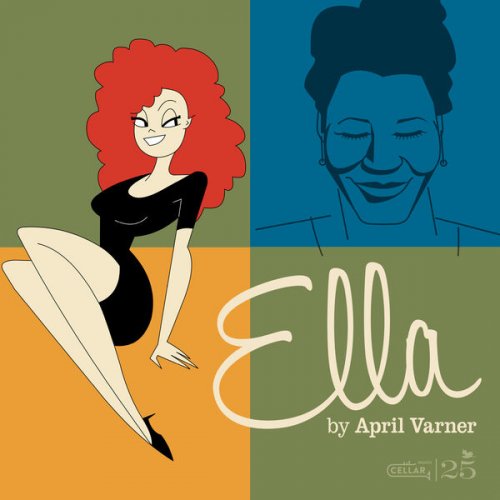
Artist: April Varner
Title: Ella
Year Of Release: 2026
Label: Cellar Live
Genre: Vocal Jazz
Quality: Mp3 320 kbps / FLAC (tracks)
Total Time: 39:32
Total Size: 92.1 / 228 MB
WebSite: Album Preview
Tracklist:Title: Ella
Year Of Release: 2026
Label: Cellar Live
Genre: Vocal Jazz
Quality: Mp3 320 kbps / FLAC (tracks)
Total Time: 39:32
Total Size: 92.1 / 228 MB
WebSite: Album Preview
1. A-Tisket, A-Tasket (3:18)
2. I've Got You Under My Skin (3:58)
3. Dream a Little Dream of Me (3:00)
4. Night and Day (5:03)
5. I Couldn't Sleep a Wink Last Night In the Wee Small Hours of the Morning (4:25)
6. Cheek to Cheek (4:34)
7. Mr. Paganini (3:37)
8. Bewitched, Bothered and Bewildered (5:02)
9. Fly Me To The Moon (3:22)
10. Undecided (3:20)
The great pianist Bill Evans once remarked that the problem with the question "What is Jazz" is that it is the wrong question. Jazz, he explained, is not a "what" but a "how". Jazz musicians look at songs as vehicles for improvisation and they transform the music through a combination of new harmonies and original approaches. To prove the point, just compare Ella Fitzgerald's original recordings to the same songs performed here by April Varner. The arrangements and the genres presented on the enclosed disc are quite different from Ella's vintage discs. April never imitates her long-time idol. Instead, she captures the spirit of Ella, and mixes elements from Ella's style with her own creative imagination.
April came to jazz late, when she was an undergraduate student at Indiana University. She learned the basics in a show choir called The Singing Hoosiers and deepened her knowledge through her studies with noted jazz vocalists Sachal Vasandani, Tierney Sutton (and later in graduate studies at the Manhattan School of Music), Theo Bleckmann. In 2023, she won the International Ella Fitzgerald Jazz Vocal Competition, an experience which deepened her love for the First Lady of Song. This tribute album further illuminates her appreciation of Ella's artistry.
"A-Tisket, A-Tasket" was Ella's hit adaptation of a traditional nursery rhyme. The arrangement for April's version was written by Emmet Cohen, and it alternates between swing and Latin genres. April presents a completely different approach to the song, as she portrays the protagonist as a blithe adult instead of Ella's emotional little girl. On this and all of the small group sides, pianist Cohen, bassist Yasushi Nakamura and drummer/producer Ulysses Owens, Jr. provide extraordinary support for April's expressive voice. Cole Porter's "I've Got You Under My Skin" features a tight big band (with arrangements by Brian Lynch) and more dramatic style changes between Latin and swing. Listen to the way April places notes around the beat, and how she makes variations on the melody without drawing attention to the technique. In 1950, "Dream a Little Dream" appeared as a warm duet by Ella and Louis Armstrong; it's a duet here too, with Cohen echoing the silky piano of Ellis Larkins, who accompanied Ella on two magnificent Decca LPs and a reunion concert at Carnegie Hall. April coasts over the delightful melody with a carefree approach to the underlying rhythm.
The sensuous arrangement of "Night & Day" is one of the album's highlights. In contrast to the brassy delivery she offers on the earlier tracks, April reduces the volume and intensity to perform one of the greatest love songs ever written. This is the true mark of a great singer: the ability to sing softly while effectively communicating an intimate message. Two more ballads follow as a medley, and the first one is a ringer. Ella never recorded "I Couldn't Sleep a Wink Last Night", but listen to April's interpretation for an idea of how Ella might have sung it. Ella did sing "In the Wee Small Hours" many years after Frank Sinatra recorded his heart-breaking version. Again, note the differences in delivery and attitude: April's warm rendition sounds like someone who misses her lover while he is temporarily out of town. For Sinatra, his wife Ava Gardner was gone forever.
Ella Fitzgerald married the great jazz bassist Ray Brown in 1947. The marriage dissolved after a few years, but the two remained close friends, and they worked together on many occasions after their divorce. Yasushi Nakamura's profound appreciation for Brown is evident throughout Irving Berlin's "Cheek to Cheek". April and Yashushi perform like a well-prepared dance team, each one doing their best to make their partner look good. The bass solo is a pure homage to Brown, while the final vocal chorus reminds us of the ecstatic inventions Ella would create to bring audiences to their feet. Ella recorded "Mr. Paganini" many times during her career, but never with a deceptively complex setting like the one April performs on this disc. In a way, April is drawing from Ella's earliest influences, the Boswell Sisters, who recorded an amazing series of discs during the early 1930s, featuring Connee Boswell's innovative multi-tempoed arrangements.
In her recording of "Bewitched, Bothered and Bewildered", Ella performed several rare verses by Lorenz Hart. But since the album, "Ella Fitzgerald Sings the Rodgers and Hart Songbook" is easily available to modern listeners, April chooses a different tack: She sticks with the well-known lyrics, then goes back to the verse. Instead of following with another vocal chorus, she yields the spotlight to Emmet Cohen, who plays a solo that compliments April's vocals. Then April closes the arrangement with a glorious melodic variation. "Fly Me to the Moon" was originally titled "In Other Words", and April's arrangement opens with a tender reading of the verse before segueing into a gentle swing. This concept brings out the tenderness of the lyric in ways that hard-driving swing versions often lack. "Undecided" closes the album with a rip-roaring tempo and brilliant improvisations from April and the combo.
As with most singers of her generation and all to come, April Varner learned about Ella Fitzgerald from recordings. Born just one year after Ella's passing, she had to discover the wonderful music that was forgotten by many others. Yet Ella's expansive recorded legacy continues to inspire young jazz vocalists. It reminds me of a beautiful song written by pianist Russ Freeman and vocalist Annie Ross called "Music is Forever". The lyrics give a roll call of late jazz icons, and concludes with this message to their spirits: You still live when we listen to you.
Thomas Cunniffe is a free-lance jazz historian who writes and publishes the acclaimed website Jazz History Online.com. His liner notes have appeared on the Mosaic, Summit, Concord, High Note (and now, Cellar) labels. In addition to writing about jazz, he has worked as a professional choral and jazz singer, performing in venues all over the globe.
April Varner, Vocals
Emmet Cohen, Piano/Arranger
William Hill III, Piano
Yasushi Nakamura, Bass
Ulysses Owens Jr., Drums/Producer
Brian Lynch, Trumpet/Arranger
Nathaniel Williford, Trumpet
Michael Cruse, Trumpet
Jeffrey Miller, Trombone
Jacob Melsha, Trombone
Cleave Guyton, Saxophone
Bruce Williams, Saxophone
April came to jazz late, when she was an undergraduate student at Indiana University. She learned the basics in a show choir called The Singing Hoosiers and deepened her knowledge through her studies with noted jazz vocalists Sachal Vasandani, Tierney Sutton (and later in graduate studies at the Manhattan School of Music), Theo Bleckmann. In 2023, she won the International Ella Fitzgerald Jazz Vocal Competition, an experience which deepened her love for the First Lady of Song. This tribute album further illuminates her appreciation of Ella's artistry.
"A-Tisket, A-Tasket" was Ella's hit adaptation of a traditional nursery rhyme. The arrangement for April's version was written by Emmet Cohen, and it alternates between swing and Latin genres. April presents a completely different approach to the song, as she portrays the protagonist as a blithe adult instead of Ella's emotional little girl. On this and all of the small group sides, pianist Cohen, bassist Yasushi Nakamura and drummer/producer Ulysses Owens, Jr. provide extraordinary support for April's expressive voice. Cole Porter's "I've Got You Under My Skin" features a tight big band (with arrangements by Brian Lynch) and more dramatic style changes between Latin and swing. Listen to the way April places notes around the beat, and how she makes variations on the melody without drawing attention to the technique. In 1950, "Dream a Little Dream" appeared as a warm duet by Ella and Louis Armstrong; it's a duet here too, with Cohen echoing the silky piano of Ellis Larkins, who accompanied Ella on two magnificent Decca LPs and a reunion concert at Carnegie Hall. April coasts over the delightful melody with a carefree approach to the underlying rhythm.
The sensuous arrangement of "Night & Day" is one of the album's highlights. In contrast to the brassy delivery she offers on the earlier tracks, April reduces the volume and intensity to perform one of the greatest love songs ever written. This is the true mark of a great singer: the ability to sing softly while effectively communicating an intimate message. Two more ballads follow as a medley, and the first one is a ringer. Ella never recorded "I Couldn't Sleep a Wink Last Night", but listen to April's interpretation for an idea of how Ella might have sung it. Ella did sing "In the Wee Small Hours" many years after Frank Sinatra recorded his heart-breaking version. Again, note the differences in delivery and attitude: April's warm rendition sounds like someone who misses her lover while he is temporarily out of town. For Sinatra, his wife Ava Gardner was gone forever.
Ella Fitzgerald married the great jazz bassist Ray Brown in 1947. The marriage dissolved after a few years, but the two remained close friends, and they worked together on many occasions after their divorce. Yasushi Nakamura's profound appreciation for Brown is evident throughout Irving Berlin's "Cheek to Cheek". April and Yashushi perform like a well-prepared dance team, each one doing their best to make their partner look good. The bass solo is a pure homage to Brown, while the final vocal chorus reminds us of the ecstatic inventions Ella would create to bring audiences to their feet. Ella recorded "Mr. Paganini" many times during her career, but never with a deceptively complex setting like the one April performs on this disc. In a way, April is drawing from Ella's earliest influences, the Boswell Sisters, who recorded an amazing series of discs during the early 1930s, featuring Connee Boswell's innovative multi-tempoed arrangements.
In her recording of "Bewitched, Bothered and Bewildered", Ella performed several rare verses by Lorenz Hart. But since the album, "Ella Fitzgerald Sings the Rodgers and Hart Songbook" is easily available to modern listeners, April chooses a different tack: She sticks with the well-known lyrics, then goes back to the verse. Instead of following with another vocal chorus, she yields the spotlight to Emmet Cohen, who plays a solo that compliments April's vocals. Then April closes the arrangement with a glorious melodic variation. "Fly Me to the Moon" was originally titled "In Other Words", and April's arrangement opens with a tender reading of the verse before segueing into a gentle swing. This concept brings out the tenderness of the lyric in ways that hard-driving swing versions often lack. "Undecided" closes the album with a rip-roaring tempo and brilliant improvisations from April and the combo.
As with most singers of her generation and all to come, April Varner learned about Ella Fitzgerald from recordings. Born just one year after Ella's passing, she had to discover the wonderful music that was forgotten by many others. Yet Ella's expansive recorded legacy continues to inspire young jazz vocalists. It reminds me of a beautiful song written by pianist Russ Freeman and vocalist Annie Ross called "Music is Forever". The lyrics give a roll call of late jazz icons, and concludes with this message to their spirits: You still live when we listen to you.
Thomas Cunniffe is a free-lance jazz historian who writes and publishes the acclaimed website Jazz History Online.com. His liner notes have appeared on the Mosaic, Summit, Concord, High Note (and now, Cellar) labels. In addition to writing about jazz, he has worked as a professional choral and jazz singer, performing in venues all over the globe.
April Varner, Vocals
Emmet Cohen, Piano/Arranger
William Hill III, Piano
Yasushi Nakamura, Bass
Ulysses Owens Jr., Drums/Producer
Brian Lynch, Trumpet/Arranger
Nathaniel Williford, Trumpet
Michael Cruse, Trumpet
Jeffrey Miller, Trombone
Jacob Melsha, Trombone
Cleave Guyton, Saxophone
Bruce Williams, Saxophone
Download Link Isra.Cloud
April Varner - Ella FLAC.rar - 228.5 MB
April Varner - Ella MP3.rar - 92.1 MB
April Varner - Ella FLAC.rar - 228.5 MB
April Varner - Ella MP3.rar - 92.1 MB
![Harvie S - Bright Dawn (2026) [Hi-Res]](https://www.dibpic.com/uploads/posts/2026-03/1773926721_sbp4dgbqedjiw_600.jpg "Harvie S - Bright Dawn (2026) [Hi-Res]")