Giuseppe Andalora, Orchestra Sinfonica Abruzzese & Filippo Arlia - Shostakovich: Piano Concertos, Fantastic Dances, Prelude & Fugue (2026) [Hi-Res]
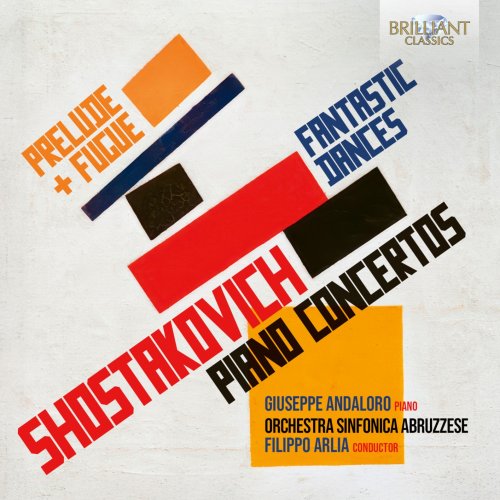
Artist: Giuseppe Andalora, Orchestra Sinfonica Abruzzese, Filippo Arlia
Title: Shostakovich: Piano Concertos, Fantastic Dances, Prelude & Fugue
Year Of Release: 2026
Label: Brilliant Classics
Genre: Classical
Quality: FLAC (tracks) / 24bit-44.1kHz FLAC (tracks)
Total Time: 01:01:05
Total Size: 281 / 590 MB
WebSite: Album Preview
Tracklist:Title: Shostakovich: Piano Concertos, Fantastic Dances, Prelude & Fugue
Year Of Release: 2026
Label: Brilliant Classics
Genre: Classical
Quality: FLAC (tracks) / 24bit-44.1kHz FLAC (tracks)
Total Time: 01:01:05
Total Size: 281 / 590 MB
WebSite: Album Preview
1. Shostakovich: Piano Concerto No. 1 in C Minor, Op. 35: I. Allegro Moderato (6:14)
2. Shostakovich: Piano Concerto No. 1 in C Minor, Op. 35: II. Lento (8:26)
3. Shostakovich: Piano Concerto No. 1 in C Minor, Op. 35: III. Moderato (1:38)
4. Shostakovich: Piano Concerto No. 1 in C Minor, Op. 35: IV. Allegro Con Brio (6:51)
5. Shostakovich: Piano Concerto No. 2 in F Major, Op. 102: I. Allegro (7:36)
6. Shostakovich: Piano Concerto No. 2 in F Major, Op. 102: II. Andante (7:36)
7. Shostakovich: Piano Concerto No. 2 in F Major, Op. 102: III. Allegro (5:26)
8. Shostakovich: 3 Fantastic Dances, Op. 5: I. March - Allegretto (1:17)
9. Shostakovich: 3 Fantastic Dances, Op. 5: II. Waltz - Andantino (1:29)
10. Shostakovich: 3 Fantastic Dances, Op. 5: III. Polka - Allegretto (1:04)
11. Shostakovich: Prelude and Fugue No. 24, Op. 87: I. Preludio - Andante (4:50)
12. Shostakovich: Prelude and Fugue No. 24, Op. 87: II. Fugue - Moderato (8:43)
Dmitri Shostakovich (1906–1975) composed two piano concertos that stand as strikingly different yet complementary reflections of his evolving musical and emotional world.
The Piano Concerto No.1 in C minor, Op. 35 (1933), written for piano, trumpet, and string orchestra, is a work of youthful brilliance and wit. Shostakovich himself was the soloist at its premiere, showcasing his virtuosity and sharp humor. The concerto brims with parody, irony, and stylistic playfulness—traits that would define much of his music. The first movement alternates between dramatic, driving passages and cheeky references to classical motifs. The second movement offers a surprisingly lyrical, melancholic interlude before the music veers back into high-spirited satire. The inclusion of the trumpet, often acting as a witty commentator or foil to the piano, adds to the concerto’s sense of mischievous dialogue. Beneath the humor, however, lies an undercurrent of anxiety and intensity, reflecting Shostakovich’s growing awareness of the political pressures surrounding Soviet artists in the 1930s.
The Piano Concerto No.2 in F major, Op. 102 (1957), by contrast, is lighter, more transparent, and more optimistic. Written as a gift for his son Maxim’s 19th birthday, it is among Shostakovich’s most accessible works. The outer movements sparkle with energy and joy, evoking the vitality of youth, while the slow movement stands as one of the composer’s most beautiful lyrical statements—a tender, introspective melody that has become a concert favorite. Although less satirical and complex than the First Concerto, the Second demonstrates Shostakovich’s mastery of clear form, elegant orchestration, and emotional directness.
The Piano Concerto No.1 in C minor, Op. 35 (1933), written for piano, trumpet, and string orchestra, is a work of youthful brilliance and wit. Shostakovich himself was the soloist at its premiere, showcasing his virtuosity and sharp humor. The concerto brims with parody, irony, and stylistic playfulness—traits that would define much of his music. The first movement alternates between dramatic, driving passages and cheeky references to classical motifs. The second movement offers a surprisingly lyrical, melancholic interlude before the music veers back into high-spirited satire. The inclusion of the trumpet, often acting as a witty commentator or foil to the piano, adds to the concerto’s sense of mischievous dialogue. Beneath the humor, however, lies an undercurrent of anxiety and intensity, reflecting Shostakovich’s growing awareness of the political pressures surrounding Soviet artists in the 1930s.
The Piano Concerto No.2 in F major, Op. 102 (1957), by contrast, is lighter, more transparent, and more optimistic. Written as a gift for his son Maxim’s 19th birthday, it is among Shostakovich’s most accessible works. The outer movements sparkle with energy and joy, evoking the vitality of youth, while the slow movement stands as one of the composer’s most beautiful lyrical statements—a tender, introspective melody that has become a concert favorite. Although less satirical and complex than the First Concerto, the Second demonstrates Shostakovich’s mastery of clear form, elegant orchestration, and emotional directness.