Yonin Bayashi - Golden Picnics (1976/2014) [Hi-Res]
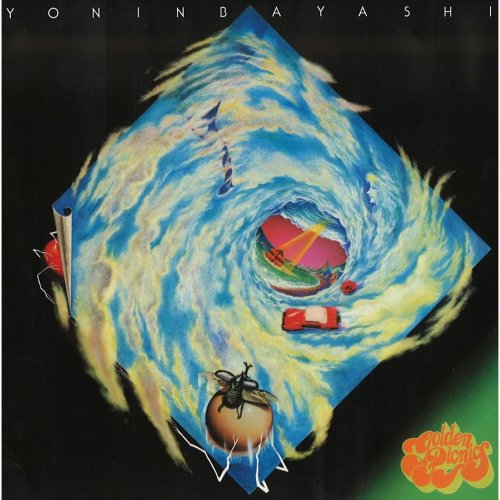
Artist: Yonin Bayashi
Title: Golden Picnics
Year Of Release: 1976/2014
Label: (P) 1976 Sony Music Entertainment (Japan) Inc.
Genre: Progressive Rock, Art Rock
Quality: FLAC (tracks) 24/96, FLAC (tracks), 320 kbps
Total Time: 00:50:35
Total Size: 1.14 GB / 330 / 118 mb
WebSite: Album Preview
Tracklist:Title: Golden Picnics
Year Of Release: 1976/2014
Label: (P) 1976 Sony Music Entertainment (Japan) Inc.
Genre: Progressive Rock, Art Rock
Quality: FLAC (tracks) 24/96, FLAC (tracks), 320 kbps
Total Time: 00:50:35
Total Size: 1.14 GB / 330 / 118 mb
WebSite: Album Preview
01. Yonin Bayashi - Flying (4:20)
02. Yonin Bayashi - Carnival (3:59)
03. Yonin Bayashi - Continental Laid-Back-Breakers (4:44)
04. Yonin Bayashi - Kool Sailer & Fools (9:01)
05. Yonin Bayashi - Bird's & Nessy's (16:55)
06. Yonin Bayashi - A Song For Lady Violetta (7:09)
07. Yonin Bayashi - A Song For Lady Violetta (Single Version) (4:27)
The history of Yonin Bayashi (or Yoninbayashi) is a chronicle of how Japanese rock evolved from "exported imitation" into a sophisticated, independent art form. The group emerged in Tokyo in 1971 when four teenagers, barely out of high school, set out to create music as complex as their Western idols—Pink Floyd, King Crimson, and the Canterbury scene (Caravan, Camel).
Genesis and Early Years
The core of the group consisted of virtuoso guitarist Katsutoshi Morizono and drummer Daiji Okai. In the very beginning, they performed as a trio (alongside bassist Shinichi Nakamura), focusing on heavy psychedelia. However, with the addition of keyboardist Hidemi Sakashita, their sound acquired the multilayered, architectural precision that set them apart from loud contemporaries like Flower Travellin' Band.
Their debut album, Isshoku-Sokuhatsu (1974), had the effect of a bombshell. The young Japanese musicians presented world-class music featuring jagged rhythms, deep analog synthesis, and—a rarity at the time—Japanese lyrics that fit perfectly into the progressive framework.
The Golden Lineup and Evolution
By the mid-70s, the band had become a cultural phenomenon. They performed at major festivals like the One Step Festival, where their technical proficiency stunned even the Western headliners.
A pivotal shift occurred between 1975 and 1976. The departure of bassist Nakamura could have been fatal, but he was replaced by Masahide Sakuma. This event altered the band's DNA. Sakuma was not just a musician, but a sonic architect (he would later become the "father" of Japanese New Wave and a legendary producer for BOØWY and The Blue Hearts). Under his influence, Yonin Bayashi’s sound became more refined, crystalline, and structurally deliberate.
Musical Philosophy
What defined the "maturity" of their approach?
Dynamic Control: Unlike many prog bands that sought to fill every second with sound, Yonin Bayashi masterfully utilized silence and minimalism.
Morizono’s Guitar Work: His style is often compared to Andrew Latimer of Camel. It wasn't about high-speed shredding, but meaningful melodicism where every bend and vibrato held weight.
Synthesis of Cultures: They successfully transplanted European melancholy onto the soil of the Japanese "wabi-sabi" aesthetic (beauty in simplicity and imperfection). Even in their most complex 15-minute compositions, a human, almost intimate motif always remained.
Decline and Legacy
After Morizono left in 1977 to pursue a solo career in jazz-fusion, the band released Seishun No Rakugaki and several other works, gradually drifting toward pop-rock and New Wave. However, it was the "Golden Period" of 1974–1976 that cemented their status as the premier intellectuals of the Japanese scene.
Today, Yonin Bayashi is a "musician's band." Their records are collected worldwide, and reissues are frequently released on audiophile formats. They proved that progressive rock in Japan was not a borrowed genre, but an organic extension of national musical tradition translated into the language of synthesizers and electric guitars.
Genesis and Early Years
The core of the group consisted of virtuoso guitarist Katsutoshi Morizono and drummer Daiji Okai. In the very beginning, they performed as a trio (alongside bassist Shinichi Nakamura), focusing on heavy psychedelia. However, with the addition of keyboardist Hidemi Sakashita, their sound acquired the multilayered, architectural precision that set them apart from loud contemporaries like Flower Travellin' Band.
Their debut album, Isshoku-Sokuhatsu (1974), had the effect of a bombshell. The young Japanese musicians presented world-class music featuring jagged rhythms, deep analog synthesis, and—a rarity at the time—Japanese lyrics that fit perfectly into the progressive framework.
The Golden Lineup and Evolution
By the mid-70s, the band had become a cultural phenomenon. They performed at major festivals like the One Step Festival, where their technical proficiency stunned even the Western headliners.
A pivotal shift occurred between 1975 and 1976. The departure of bassist Nakamura could have been fatal, but he was replaced by Masahide Sakuma. This event altered the band's DNA. Sakuma was not just a musician, but a sonic architect (he would later become the "father" of Japanese New Wave and a legendary producer for BOØWY and The Blue Hearts). Under his influence, Yonin Bayashi’s sound became more refined, crystalline, and structurally deliberate.
Musical Philosophy
What defined the "maturity" of their approach?
Dynamic Control: Unlike many prog bands that sought to fill every second with sound, Yonin Bayashi masterfully utilized silence and minimalism.
Morizono’s Guitar Work: His style is often compared to Andrew Latimer of Camel. It wasn't about high-speed shredding, but meaningful melodicism where every bend and vibrato held weight.
Synthesis of Cultures: They successfully transplanted European melancholy onto the soil of the Japanese "wabi-sabi" aesthetic (beauty in simplicity and imperfection). Even in their most complex 15-minute compositions, a human, almost intimate motif always remained.
Decline and Legacy
After Morizono left in 1977 to pursue a solo career in jazz-fusion, the band released Seishun No Rakugaki and several other works, gradually drifting toward pop-rock and New Wave. However, it was the "Golden Period" of 1974–1976 that cemented their status as the premier intellectuals of the Japanese scene.
Today, Yonin Bayashi is a "musician's band." Their records are collected worldwide, and reissues are frequently released on audiophile formats. They proved that progressive rock in Japan was not a borrowed genre, but an organic extension of national musical tradition translated into the language of synthesizers and electric guitars.

![Cheryl Durongpisitkul - I Still Miss You (2026) [Hi-Res]](https://img.israbox.com/img/2026-10/23/7qon5kbl0ub4adq92homcpc1a.jpg "Cheryl Durongpisitkul - I Still Miss You (2026) [Hi-Res]")


![ALLVEI - Allvei (2026) [Hi-Res]](https://img.israbox.com/img/2026-10/25/7yhdzh18ajqi1uda0no4lcs1p.jpg "ALLVEI - Allvei (2026) [Hi-Res]")
![James Brandon Lewis, Red Lily - Calling Antonín (2026) [Hi-Res]](https://www.dibpic.com/uploads/posts/2026-10/1792596674_1.jpg "James Brandon Lewis, Red Lily - Calling Antonín (2026) [Hi-Res]")