Concert - Concert (2026) [Hi-Res]
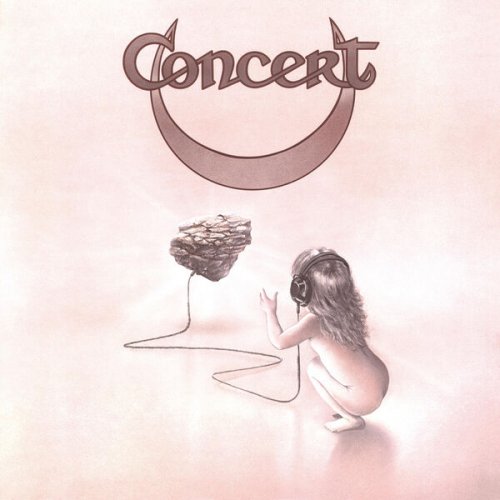
Artist: Concert
Title: Concert
Year Of Release: 1980 / 2026
Label: Sony Music Entertainment Canada Inc.
Genre: Rock, Progressive Rock
Quality: FLAC (tracks) [44.1kHz/24bit]
Total Time: 36:33
Total Size: 400 / 221 MB
WebSite: Album Preview
Tracklist:Title: Concert
Year Of Release: 1980 / 2026
Label: Sony Music Entertainment Canada Inc.
Genre: Rock, Progressive Rock
Quality: FLAC (tracks) [44.1kHz/24bit]
Total Time: 36:33
Total Size: 400 / 221 MB
WebSite: Album Preview
1. Poudre à canon (03:26)
2. Désirs (04:48)
3. Arrête-toé donc là! (04:07)
4. Le temps de m'asseoir (04:19)
5. Concert (01:12)
6. Ça fait du bien (04:04)
7. Comme une bombe (02:38)
8. Coïncidence (05:36)
9. Besoin de toi (02:55)
10. Ça pas d'bon sens (03:24)
On Concert, Concert presents a tightly structured studio work grounded in late-1970s/early-1980s production aesthetics, where arrangement discipline and tonal clarity define the musical language. The album prioritizes cohesion over contrast, with each track constructed from clearly articulated melodic units supported by stable harmonic frameworks.
The vocal writing is integrated into the ensemble fabric rather than foregrounded as a dominant layer. Delivery is controlled and rhythmically aligned, with frequent use of doubling and close harmonization to reinforce pitch center and blend. Expressive nuance emerges through articulation and dynamic contour rather than wide registral or timbral extremes.
Harmonically, the material remains predominantly diatonic, with selective use of extended chords and passing chromatic tones to introduce color without destabilizing the tonal center. Keyboard textures are central, providing both harmonic grounding and midrange density, often functioning as a bridge between rhythm section and vocal line.
Rhythmically, the album favors consistency and precision. Drum patterns are steady and metrically grounded, while bass lines outline harmonic movement through repetitive, groove-oriented figures. Variation is achieved through incremental changes in orchestration—layering, subtraction, and redistribution of instrumental roles—rather than through tempo fluctuation or structural fragmentation.
The sonic profile reflects a controlled studio environment: instruments are clearly separated, with a balanced stereo image and moderate dynamic compression. Reverb is applied sparingly to maintain spatial definition, resulting in a soundstage that is cohesive but not diffuse.
The album’s most effective moments arise from subtle internal shifts—harmonic coloration within repeated sections, the introduction of vocal harmonies that reframe a melodic idea, or gradual textural builds achieved without overt dynamic escalation. Concert operates as a study in structural economy and ensemble balance, where precision and restraint shape the overall expressive impact.
The vocal writing is integrated into the ensemble fabric rather than foregrounded as a dominant layer. Delivery is controlled and rhythmically aligned, with frequent use of doubling and close harmonization to reinforce pitch center and blend. Expressive nuance emerges through articulation and dynamic contour rather than wide registral or timbral extremes.
Harmonically, the material remains predominantly diatonic, with selective use of extended chords and passing chromatic tones to introduce color without destabilizing the tonal center. Keyboard textures are central, providing both harmonic grounding and midrange density, often functioning as a bridge between rhythm section and vocal line.
Rhythmically, the album favors consistency and precision. Drum patterns are steady and metrically grounded, while bass lines outline harmonic movement through repetitive, groove-oriented figures. Variation is achieved through incremental changes in orchestration—layering, subtraction, and redistribution of instrumental roles—rather than through tempo fluctuation or structural fragmentation.
The sonic profile reflects a controlled studio environment: instruments are clearly separated, with a balanced stereo image and moderate dynamic compression. Reverb is applied sparingly to maintain spatial definition, resulting in a soundstage that is cohesive but not diffuse.
The album’s most effective moments arise from subtle internal shifts—harmonic coloration within repeated sections, the introduction of vocal harmonies that reframe a melodic idea, or gradual textural builds achieved without overt dynamic escalation. Concert operates as a study in structural economy and ensemble balance, where precision and restraint shape the overall expressive impact.
![Juliana Blumenschein - Constelação Feminina (2026) [Hi-Res]](https://img.israbox.com/img/2026-09/28/tmypga5chmsxo6n0lv5flw25o.jpg "Juliana Blumenschein - Constelação Feminina (2026) [Hi-Res]")
![Gabriel Mervine - Live at Nocturn (2023) [DSD]](https://www.dibpic.com/uploads/posts/2026-09/1790280767_oct0036.jpg "Gabriel Mervine - Live at Nocturn (2023) [DSD]")
![Sofia Laiti - The Shadow of Your Smile (2026) [Hi-Res]](https://img.israbox.com/img/2026-09/27/h3v4yfyj72dvnlz7c9vt5j0pk.jpg "Sofia Laiti - The Shadow of Your Smile (2026) [Hi-Res]")