Eclipse - Eclipse (2026) [Hi-Res]
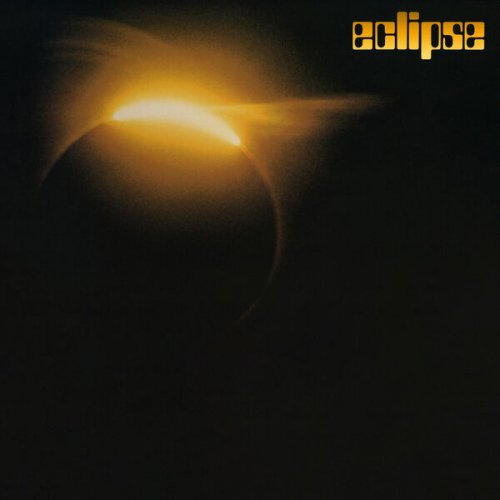
Artist: Eclipse
Title: Eclipse
Year Of Release: 1976 / 2026
Label: Sony Music Entertainment Canada Inc.
Genre: Rock, Progressive Rock
Quality: FLAC (tracks) [44.1kHz/24bit]
Total Time: 43:34
Total Size: 468 / 253 MB
WebSite: Album Preview
Tracklist:Title: Eclipse
Year Of Release: 1976 / 2026
Label: Sony Music Entertainment Canada Inc.
Genre: Rock, Progressive Rock
Quality: FLAC (tracks) [44.1kHz/24bit]
Total Time: 43:34
Total Size: 468 / 253 MB
WebSite: Album Preview
1. Vision intérieure (11:05)
2. Le rêve de John W. (06:34)
3. T'aime (voix) (00:59)
4. La dernière fois (03:14)
5. Pleine lune (07:58)
6. T'aime (moog) (01:34)
7. Qu'attends-tu de moi (03:02)
8. Jusqu'au premier ciel (02:33)
9. Pensée pour barbara (00:24)
10. Honey #36 (06:08)
On Eclipse, Eclipse situates itself within a mid-1970s idiom where rock, pop, and light progressive elements intersect through arrangement detail rather than extended form. The writing favors concise structures, but within them the band introduces shifts in texture and harmonic color that subtly expand the material’s scope.
Vocally, the approach is centered and controlled. Lead lines are delivered with a clean, unforced tone, often reinforced through close harmonies that emphasize blend over contrast. Phrasing remains rhythmically aligned, with expressive weight carried by small inflections—slight delays, softened attacks, and carefully shaped sustain—rather than overt dynamic swings.
Harmonically, the album is grounded in tonal frameworks enriched by extended chords and occasional modal inflections. Keyboard voicings play a defining role, frequently introducing color tones that thicken the harmonic field without destabilizing it. Guitar work alternates between supportive chordal textures and concise melodic figures, contributing to a layered but balanced midrange.
The rhythm section maintains a steady, forward-moving pulse. Bass lines are functional but not static, often outlining harmonic motion with linear clarity, while drum patterns prioritize articulation and structural definition over density. Transitions between sections are achieved through incremental changes in instrumentation and register rather than abrupt shifts.
The sonic profile reflects its era: a cohesive, studio-shaped image with clear separation between elements. The mix favors midrange presence, allowing vocals and keyboards to remain prominent, while restrained use of reverb provides depth without diffusing detail. Analog warmth and slight compression contribute to a unified, rounded sound.
The album’s most effective moments arise from internal balance—harmonic coloration within repeated phrases, the entrance of layered vocals that reframe a melodic line, or the gradual accumulation of texture across a section. Eclipse stands as a document of controlled arrangement and tonal refinement, where nuance and proportion define its expressive character.
Vocally, the approach is centered and controlled. Lead lines are delivered with a clean, unforced tone, often reinforced through close harmonies that emphasize blend over contrast. Phrasing remains rhythmically aligned, with expressive weight carried by small inflections—slight delays, softened attacks, and carefully shaped sustain—rather than overt dynamic swings.
Harmonically, the album is grounded in tonal frameworks enriched by extended chords and occasional modal inflections. Keyboard voicings play a defining role, frequently introducing color tones that thicken the harmonic field without destabilizing it. Guitar work alternates between supportive chordal textures and concise melodic figures, contributing to a layered but balanced midrange.
The rhythm section maintains a steady, forward-moving pulse. Bass lines are functional but not static, often outlining harmonic motion with linear clarity, while drum patterns prioritize articulation and structural definition over density. Transitions between sections are achieved through incremental changes in instrumentation and register rather than abrupt shifts.
The sonic profile reflects its era: a cohesive, studio-shaped image with clear separation between elements. The mix favors midrange presence, allowing vocals and keyboards to remain prominent, while restrained use of reverb provides depth without diffusing detail. Analog warmth and slight compression contribute to a unified, rounded sound.
The album’s most effective moments arise from internal balance—harmonic coloration within repeated phrases, the entrance of layered vocals that reframe a melodic line, or the gradual accumulation of texture across a section. Eclipse stands as a document of controlled arrangement and tonal refinement, where nuance and proportion define its expressive character.

![Gabriel Mervine - Live at Nocturn (2023) [DSD]](https://www.dibpic.com/uploads/posts/2026-09/1790280767_oct0036.jpg "Gabriel Mervine - Live at Nocturn (2023) [DSD]")

![Doug Webb - Watch Your Step (2026) [Hi-Res]](https://img.israbox.com/img/2026-09/24/eusfw4z2nox1auxehaho13alc.jpg "Doug Webb - Watch Your Step (2026) [Hi-Res]")