Cristiano Sbolci - Fuorimoda (2026) [Hi-Res]
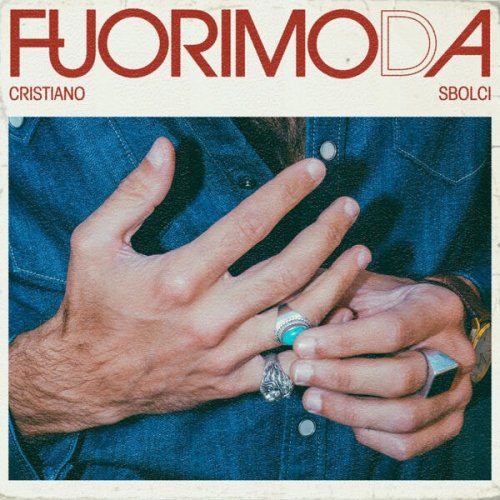
Artist: Cristiano Sbolci
Title: Fuorimoda
Year Of Release: 2026
Label: PulpMusic SRL
Genre: Pop
Quality: FLAC (tracks) 24/44, FLAC (tracks), 320 kbps
Total Time: 00:35:47
Total Size: 417 / 237 / 83 MB
WebSite: Album Preview
Tracklist:Title: Fuorimoda
Year Of Release: 2026
Label: PulpMusic SRL
Genre: Pop
Quality: FLAC (tracks) 24/44, FLAC (tracks), 320 kbps
Total Time: 00:35:47
Total Size: 417 / 237 / 83 MB
WebSite: Album Preview
01. Cristiano Sbolci - Fuorimoda (Titoli di testa) [feat. Enrico Gabrielli] (0:55)
02. Cristiano Sbolci - Rock'n'roll (3:36)
03. Cristiano Sbolci - Il pianoforte di Sebastian Bach (3:06)
04. Cristiano Sbolci - Era una serata come tante all'Ortica (3:01)
05. Cristiano Sbolci - Hai avuto paura? (Intermezzo) [feat. Enrico Gabrielli] (2:10)
06. Cristiano Sbolci - Divi morti del pop (3:36)
07. Cristiano Sbolci - Ti prego lasciati guardare bene (3:47)
08. Cristiano Sbolci - La morte di una star (3:29)
09. Cristiano Sbolci - Maledetto amore mio (3:50)
10. Cristiano Sbolci - Cosmetici e veleni (3:20)
11. Cristiano Sbolci - Il rumore di un bacio (feat. MOX) (3:16)
12. Cristiano Sbolci - Il vizio (Titoli di coda) [feat. Enrico Gabrielli & Federico Maria Sardelli] (1:41)
Cristiano Sbolci, born in 1989, is a singer-songwriter who grew up musically in the provinces, where he began writing songs as a teenager. After several musical experiences, he joined Siberia in 2016, appearing on the album Si vuole scappa (2018) as a musician and backing vocalist, and later contributing to the songwriting of songs included on Tutti amiamo senza fine (2019).
At the same time, he continues his Caleido project, for which he is the frontman and sole songwriter, releasing an EP and two albums and playing over one hundred concerts in Italian clubs. In 2019, he signed with Pulp Music, collaborating with Italian pop artists such as Comete and Michele Merlo.
On May 8, 2026, he released FUORIMODA, his first solo album. The album represents a return to a more personal style of writing and stems from the need to transform the pain of the end of an unrequited love into a musical narrative. The work unfolds like a soundtrack inspired by 1970s Italian horror and thriller films, focusing on the contrast between love and death, light and loss, beginning and end.
Produced by Francesco Massidda and Federico Nardelli, the album's atmosphere recalls the soundtracks of Ennio Morricone, Stelvio Cipriani, Armando Trovajoli, and Riz Ortolani. Guests include Mox, Enrico Gabrielli, and Federico Maria Sardelli.
Cristiano Sbolci describes FUORIMODA as a work in which love and death are constantly intertwined, describing how the end of a relationship can take on the weight of grief and profoundly transform those who experience it.
Hello and welcome to TuttoRock! The album's title suggests an almost existential stance. What does it mean to be "out of fashion" today?
For me, being out of fashion means not following the current market: it means artistic freedom. I try to treat songs as cultured compositions, giving great importance to harmonic choices and orchestral arrangements. In today's market, I no longer find this attention; I sense a lack of curiosity and a strong need to chase numbers rather than quality and purity.
The '70s permeate the entire album: in the sounds, the titles, the arrangements. What fascinates you so much about that aesthetic?
It may seem trivial, but almost everything about those years fascinates me: the aesthetics, the cinema, the music, and so much more. My father was a student of Ennio Morricone, so I grew up with that music and with a certain type of aesthetic and artistic taste.
Of course, I'm aware that I live in 2026, but I still want to try to keep alive that part of myself that I now feel is mine and that I believe I can carry forward with dignity.
In your lyrics, very concrete images and almost dreamlike visions coexist. How does your writing originate?
My writing arises almost unconsciously. I start writing and very often let my thoughts drift. Almost always, a sentence, sometimes even just a word, is enough to catapult me into the creative phase.
Even today, I'm not sure how I manage to write: there are definitely periods when I follow a method and I focus on stimulating inspiration every day. Often it doesn't come, but when it does, it's always a small, great miracle.
How much of the album is autobiographical, and how much is fictionalized?
The album is almost entirely autobiographical. There are only a few details that recount the lives of people close to me. I firmly believe that, to reach the listeners' hearts, you need to share your own experiences, strip away everything, and allow others to find themselves in something.
The album features references to the Beatles, Morricone, John Barry, Battisti, but also to the Arctic Monkeys and The Last Shadow Puppets. How did you work to bring such different worlds together?
I worked naturally: they are all artists I love madly. That's the world I've always listened to, so everything came naturally. I didn't focus on finding a key or a common thread connecting Arctic Monkeys to Ennio Morricone; it happened because it was probably meant to happen.
You've cited Ennio Morricone as a fundamental influence, also for personal and family reasons. What kind of presence did he have in your musical development?
Ennio Morricone was my father's teacher at the Accademia Chigiana. His presence has always been very strong in my home: his music has always been present, and consequently, the images and films he set to music.
I firmly believe he was the greatest composer the world has ever known: a poet, a sage, music understood in its purest form. I often thank him for everything he left us.
What was it like working with Francesco Massidda and Federico Nardelli on the production of the album?
It was a wonderful experience. I worked on this album with Francesco Massidda from day one: we wrote everything together, comparing notes, discussing, getting excited and dreaming.
At the same time, he continues his Caleido project, for which he is the frontman and sole songwriter, releasing an EP and two albums and playing over one hundred concerts in Italian clubs. In 2019, he signed with Pulp Music, collaborating with Italian pop artists such as Comete and Michele Merlo.
On May 8, 2026, he released FUORIMODA, his first solo album. The album represents a return to a more personal style of writing and stems from the need to transform the pain of the end of an unrequited love into a musical narrative. The work unfolds like a soundtrack inspired by 1970s Italian horror and thriller films, focusing on the contrast between love and death, light and loss, beginning and end.
Produced by Francesco Massidda and Federico Nardelli, the album's atmosphere recalls the soundtracks of Ennio Morricone, Stelvio Cipriani, Armando Trovajoli, and Riz Ortolani. Guests include Mox, Enrico Gabrielli, and Federico Maria Sardelli.
Cristiano Sbolci describes FUORIMODA as a work in which love and death are constantly intertwined, describing how the end of a relationship can take on the weight of grief and profoundly transform those who experience it.
Hello and welcome to TuttoRock! The album's title suggests an almost existential stance. What does it mean to be "out of fashion" today?
For me, being out of fashion means not following the current market: it means artistic freedom. I try to treat songs as cultured compositions, giving great importance to harmonic choices and orchestral arrangements. In today's market, I no longer find this attention; I sense a lack of curiosity and a strong need to chase numbers rather than quality and purity.
The '70s permeate the entire album: in the sounds, the titles, the arrangements. What fascinates you so much about that aesthetic?
It may seem trivial, but almost everything about those years fascinates me: the aesthetics, the cinema, the music, and so much more. My father was a student of Ennio Morricone, so I grew up with that music and with a certain type of aesthetic and artistic taste.
Of course, I'm aware that I live in 2026, but I still want to try to keep alive that part of myself that I now feel is mine and that I believe I can carry forward with dignity.
In your lyrics, very concrete images and almost dreamlike visions coexist. How does your writing originate?
My writing arises almost unconsciously. I start writing and very often let my thoughts drift. Almost always, a sentence, sometimes even just a word, is enough to catapult me into the creative phase.
Even today, I'm not sure how I manage to write: there are definitely periods when I follow a method and I focus on stimulating inspiration every day. Often it doesn't come, but when it does, it's always a small, great miracle.
How much of the album is autobiographical, and how much is fictionalized?
The album is almost entirely autobiographical. There are only a few details that recount the lives of people close to me. I firmly believe that, to reach the listeners' hearts, you need to share your own experiences, strip away everything, and allow others to find themselves in something.
The album features references to the Beatles, Morricone, John Barry, Battisti, but also to the Arctic Monkeys and The Last Shadow Puppets. How did you work to bring such different worlds together?
I worked naturally: they are all artists I love madly. That's the world I've always listened to, so everything came naturally. I didn't focus on finding a key or a common thread connecting Arctic Monkeys to Ennio Morricone; it happened because it was probably meant to happen.
You've cited Ennio Morricone as a fundamental influence, also for personal and family reasons. What kind of presence did he have in your musical development?
Ennio Morricone was my father's teacher at the Accademia Chigiana. His presence has always been very strong in my home: his music has always been present, and consequently, the images and films he set to music.
I firmly believe he was the greatest composer the world has ever known: a poet, a sage, music understood in its purest form. I often thank him for everything he left us.
What was it like working with Francesco Massidda and Federico Nardelli on the production of the album?
It was a wonderful experience. I worked on this album with Francesco Massidda from day one: we wrote everything together, comparing notes, discussing, getting excited and dreaming.
![Neil Jones, Nick Corbin - Silent Stream (2026) [Hi-Res]](https://www.dibpic.com/uploads/posts/2026-08/1786092094_esuo8ydgcuffs_600.jpg "Neil Jones, Nick Corbin - Silent Stream (2026) [Hi-Res]")
![David Moss - Dense Band (2026) [Hi-Res]](https://www.dibpic.com/uploads/posts/2026-08/1786120908_cover.jpg "David Moss - Dense Band (2026) [Hi-Res]")
![Art Blakey & The New Jazz Messengers - Buttercorn Lady (Remastered) (2026) [Hi-Res]](https://www.dibpic.com/uploads/posts/2026-08/1786086616_folder.jpg "Art Blakey & The New Jazz Messengers - Buttercorn Lady (Remastered) (2026) [Hi-Res]")
![Cleo Laine - Cleo (Cleo Laine Sings 20 Famous Show Hits) (1978) [Vinyl]](https://www.dibpic.com/uploads/posts/2026-08/1786288647_5.jpg "Cleo Laine - Cleo (Cleo Laine Sings 20 Famous Show Hits) (1978) [Vinyl]")
![Mike Jones - Mike Jones With Strings (2026) [Hi-Res]](https://img.israbox.com/img/2026-08/06/8aimn17ocxv6kryicm7jvk4wk.jpg "Mike Jones - Mike Jones With Strings (2026) [Hi-Res]")
![Cary Brown - Organic Music Synthesis (2026) [Hi-Res]](https://img.israbox.com/img/2026-08/07/5tasdcx2o6mvxgx1trgic7hq9.jpg "Cary Brown - Organic Music Synthesis (2026) [Hi-Res]")