Tyshawn Sorey - The Inner Spectrum of Variables (2016) [Hi-Res]
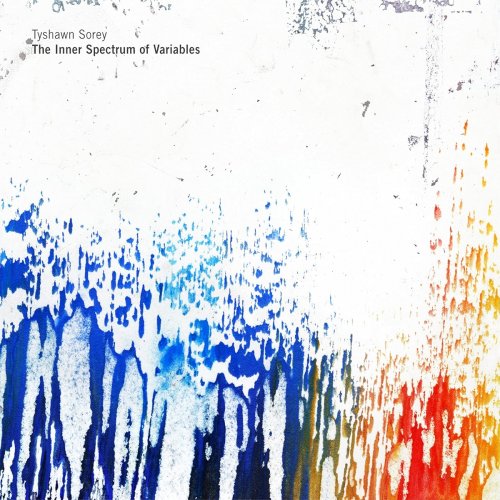
Artist: Tyshawn Sorey
Title: The Inner Spectrum of Variables
Year Of Release: 2016
Label: Pi Recordings
Genre: Jazz
Quality: FLAC (tracks) 24/96
Total Time: 01:56:38
Total Size: 2.1 GB
WebSite: Album Preview
Tracklist:Title: The Inner Spectrum of Variables
Year Of Release: 2016
Label: Pi Recordings
Genre: Jazz
Quality: FLAC (tracks) 24/96
Total Time: 01:56:38
Total Size: 2.1 GB
WebSite: Album Preview
01. Tyshawn Sorey - Movement I (Introduction) (3:12)
02. Tyshawn Sorey - Movement II (21:51)
03. Tyshawn Sorey - Movement III (32:53)
04. Tyshawn Sorey - Reverie (15:07)
05. Tyshawn Sorey - Movement IV (20:14)
06. Tyshawn Sorey - Movement V + VI + Reprise (23:21)
Primarily known as an avant-garde jazz drummer, Tyshawn Sorey is also an adept classical composer whose music doesn't so much straddle genres as leap over them. Whether playing with his own groups, like his trio with pianist Kris Davis and saxophonist Ingrid Laubrock, or with such luminaries as trumpeter Dave Douglas and saxophonist Roscoe Mitchell, Sorey has proven himself a mutative player with a sympathetic ear for highly impressionistic group interplay. So sympathetic, in fact, that he often melds so deeply into the overall group sound that you're left with less a sense of Sorey's own playing than of the group's. On his 2016 solo effort, 2016's classically inclined The Inner Spectrum of Variables, Sorey takes this ego-less aesthetic to new heights with his composition for piano trio and string trio. Acting as drummer and conductor, Sorey is joined on these languid, gorgeously rendered compositions by pianist Cory Smythe and bassist Chris Tordini, as well as violinist Chern Hwei Fung, violist Kyle Armbrust, and cellist Rubin Kodheli. Even for most avant-garde jazz fans familiar with Sorey's work, The Inner Spectrum of Variables will play as a straight classical composition. Which isn't to say that there aren't moments of groove-oriented jazz here. There are, as evidenced by the roiling "Movement III," which finds Sorey setting an angular string melody against a kinetically funky Cecil Taylor-esque piano and drum figure. Primarily however, Sorey offers up three largely piano-and-string-driven movements spread across two discs. Stylistically, his work, especially his writing for piano, evinces an impressionistic quality. In fact, the introductory "Movement I" is a delicately executed solo piano feature for Smythe that sounds like sunlight dancing across water -- it brings to mind similar works by Claude Debussy. That said, much of the playing on display on The Inner Spectrum of Variables, especially the droney, ominously sculpted "Movement IV," has a modern edge that comes closer to the work of 20th century composers like Morton Feldman, Karlheinz Stockhausen, and Pierre Boulez. Ultimately, Sorey has crafted an album of deeply hued, emotionally nuanced compositions that subtly combines both his classical and avant-garde roots.
![Jasper Blom, Felix Schlarmann & Sean Fasciani - WonderYears (2026) [Hi-Res]](https://www.dibpic.com/uploads/posts/2026-10/1791513245_essjq40g9qzf0_600.jpg "Jasper Blom, Felix Schlarmann & Sean Fasciani - WonderYears (2026) [Hi-Res]")
![Sam Newbould - Homing (2024) [Hi-Res]](https://www.dibpic.com/uploads/posts/2024-06/1717525510_folder.jpg "Sam Newbould - Homing (2024) [Hi-Res]")