Ensemble Sans Souci Berlin, Christoph Huntgeburth - W. F. Bach: Kammermusik (2011)
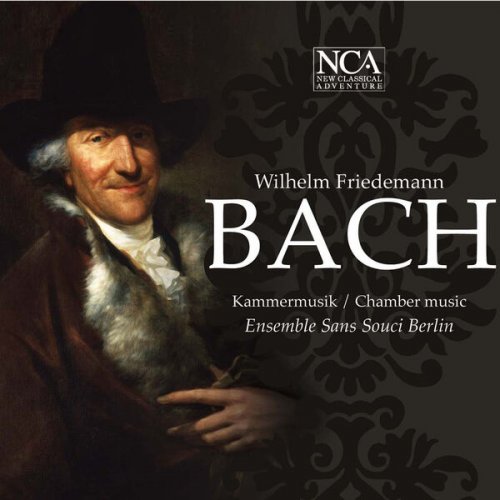
Artist: Ensemble Sans Souci Berlin, Christoph Huntgeburth
Title: W. F. Bach: Kammermusik
Year Of Release: 2011
Label: NCA
Genre: Classical
Quality: flac lossless (tracks)
Total Time: 01:18:27
Total Size: 388 mb
WebSite: Album Preview
TracklistTitle: W. F. Bach: Kammermusik
Year Of Release: 2011
Label: NCA
Genre: Classical
Quality: flac lossless (tracks)
Total Time: 01:18:27
Total Size: 388 mb
WebSite: Album Preview
01. Trio in D Major, F. 48: I. Allegro ma non troppo
02. Trio in D Major, F. 48: II. Largo
03. Trio in D Major, F. 48: III. Vivace
04. Fantasie in E Minor, F. 21
05. Duet in G Major, F. 61: I. Allegro
06. Duet in G Major, F. 61: II. Lamento
07. Duet in G Major, F. 61: III. Presto
08. 12 Polonaises, F. 12: VIII. Polonaise in E Minor
09. Flute Sonata in E Minor, IWB 58: I. Allegro ma non tanto
10. Flute Sonata in E Minor, IWB 58: II. Siciliano
11. Flute Sonata in E Minor, IWB 58: III. Vivace
12. 12 Polonaises, F. 12: VIII. E Major
13. Sonata in E Minor, F. 54: I. Allegro
14. Sonata in E Minor, F. 54: II. Larghetto
15. Sonata in E Minor, F. 54: III. Vivace
16. Fantasie in D Minor, F. 19
17. Trio in B-Flat Major, F. 50: I. Largo
18. Trio in B-Flat Major, F. 50: II. Allegro ma non troppo
19. Trio in B-Flat Major, F. 50: III. Vivace
The 300th anniversary of the birth of J.S. Bach's oldest son occurred in 2010, and this album was one of just a few observances of the event. Biographical data on Wilhelm Friedemann Bach is rather scanty, giving armchair musical psychoanalysts plenty of room for speculation on what it was like to be groomed for success by one of the greatest composers who ever lived. You can speculate yourself after hearing this program of music that varies between staying close to J.S. Bach's conservative style and sharply departing from it. The program is bookended by a pair of trio sonatas, recognizably products of the younger Bach's study of his father's trio sonatas for organ. They are dense works with thick figuration and an accomplished treatment of harmony. One is for a pair of flutes with continuo, the other for flute, violin, and continuo, and they're technically quite challenging. These and the other ensemble works on the album, which include an elegant pair of unaccompanied duos, were probably written for virtuoso players at the court of Dresden, the younger Bach's first employer. The progressive aspect of the album comes to the fore in the keyboard pieces, which annotator Philine Lautenschläger (no lute music is included, however) suggests is representative of Bach's skill as a keyboard improviser. This may be true especially of the two fantasias, probably inspired by similar compositions of the elder Bach. Most interesting, however, are the two polonaises (tracks 8 and 12), which are stylized versions of the allegedly Polish dance, with plenty of breaks in the tempo and other atmospheric details. They're distant ancestors of 19th century character-piece dances, and they don't sound like J.S. Bach or anybody else. This is a useful release for listeners interested in Bach's children, but the church sound is a major disincentive to the buyer; the engineers place you close enough to the players not only to hear them breathe, but to hear their lung conditions. The audience at the Saxon electoral court would have experienced nothing remotely like this.
![Kamal Vagabondo - Si Le Vent (2026) [Hi-Res]](https://img.israbox.com/img/2026-08/27/6ecah620l45epdeacn8bdb0i9.jpg "Kamal Vagabondo - Si Le Vent (2026) [Hi-Res]")
![The Brass Funkeys - BLOW HORN! (2026) [Hi-Res]](https://www.dibpic.com/uploads/posts/2026-08/1787641494_592x592bb.jpg "The Brass Funkeys - BLOW HORN! (2026) [Hi-Res]")
![Nicolas Meier World Group - Elysian Drift (2026) [Hi-Res]](https://www.dibpic.com/uploads/posts/2026-08/1787976441_fan7zzap9qfge_600.jpg "Nicolas Meier World Group - Elysian Drift (2026) [Hi-Res]")
![Joyce Cheung - Set Loose (2026) [Hi-Res]](https://www.dibpic.com/uploads/posts/2026-08/1787803966_pbl5fyeuhjjlm_600.jpg "Joyce Cheung - Set Loose (2026) [Hi-Res]")
![VA - The Art of HiFi Vol. 2: Soundstage (2023) [DSD256]](https://www.dibpic.com/uploads/posts/2026-08/1787843549_oct0034.jpg "VA - The Art of HiFi Vol. 2: Soundstage (2023) [DSD256]")