Pablo Ziegler & Roberta Gambarini - Blues Porteño (Love Letters From Buenos Aires) (2026) [Hi-Res]
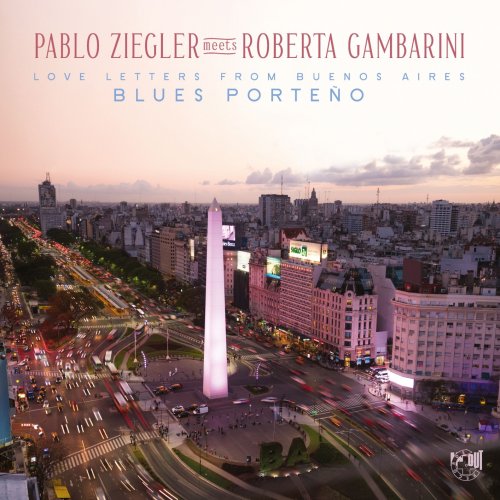
Artist: Pablo Ziegler, Roberta Gambarini
Title: Blues Porteño (Love Letters From Buenos Aires)
Year Of Release: 2026
Label: IN+OUT Records
Genre: Jazz, Latin Jazz, Tango
Quality: FLAC (tracks) / 24bit-48kHz FLAC (tracks)
Total Time: 54:16
Total Size: 288 / 602 MB
WebSite: Album Preview
Tracklist:Title: Blues Porteño (Love Letters From Buenos Aires)
Year Of Release: 2026
Label: IN+OUT Records
Genre: Jazz, Latin Jazz, Tango
Quality: FLAC (tracks) / 24bit-48kHz FLAC (tracks)
Total Time: 54:16
Total Size: 288 / 602 MB
WebSite: Album Preview
1. Once Again Milonga (4:52)
2. Gorrión De Hoy (5:36)
3. Radiotango (4:53)
4. Oblivion (4:39)
5. Por Amor A Buenos Aires (6:20)
6. Milonga En El Viento (6:14)
7. Muchacha De Boedo (6:57)
8. Murga Del Amanacer (5:16)
9. Blues Porteño (4:45)
10. Rojotango (4:50)
Blues Porteño unites Pablo Ziegler's New Tango and jazz vision with Roberta Gambarini's vocals in a tribute to Buenos Aires and tango's roots.
Blues Porteño is Pablo Ziegler's celebration of the enduring dialogue between New Tango and jazz. A classically trained pianist raised with a deep understanding of tango, Ziegler gained international recognition as a member of Astor Piazzolla's revolutionary quintet. While shaped by that experience, he gradually forged his own musical identity, blending tango, jazz, and classical influences into a distinctive style. For Blues Porteño, Ziegler collaborates with acclaimed jazz vocalist Roberta Gambarini. Rather than choosing a traditional tango singer, he sought a jazz artist who could bring a fresh perspective to the music. Gambarini's expressive voice, improvisational skills, and love of tango give the album its unmistakable jazz character. The title reflects Ziegler's belief that tango is the "blues" of Buenos Aires--a musical language through which the city tells its stories. Joined by longtime collaborators Hector Del Curto, Claudio Ragazzi, Pedro Giraudo, and Franco Pinna, Ziegler revisits key compositions from his catalog, introduces new material, and reimagines Piazzolla's classic Oblivion. Buenos Aires is a central presence throughout the album, inspiring songs that capture its beauty, atmosphere, and contradictions. Singing in Spanish, English, and French, Gambarini moves effortlessly between lyrical storytelling and instrumental-style vocal expression. Another recurring theme is milonga, the African-rooted predecessor of tango. Ziegler highlights the often-overlooked Black heritage of Argentine music and its importance in tango's evolution. The album also pays tribute to the tradition of tango canción, the vocal form that transformed tango in the twentieth century. As his first album dedicated entirely to Jazz Tango songs, Blues Porteño represents a new chapter in Ziegler's artistic journey--honoring tradition while expanding the possibilities of New Tango through jazz, creativity, and personal expression.
Blues Porteño is Pablo Ziegler's celebration of the enduring dialogue between New Tango and jazz. A classically trained pianist raised with a deep understanding of tango, Ziegler gained international recognition as a member of Astor Piazzolla's revolutionary quintet. While shaped by that experience, he gradually forged his own musical identity, blending tango, jazz, and classical influences into a distinctive style. For Blues Porteño, Ziegler collaborates with acclaimed jazz vocalist Roberta Gambarini. Rather than choosing a traditional tango singer, he sought a jazz artist who could bring a fresh perspective to the music. Gambarini's expressive voice, improvisational skills, and love of tango give the album its unmistakable jazz character. The title reflects Ziegler's belief that tango is the "blues" of Buenos Aires--a musical language through which the city tells its stories. Joined by longtime collaborators Hector Del Curto, Claudio Ragazzi, Pedro Giraudo, and Franco Pinna, Ziegler revisits key compositions from his catalog, introduces new material, and reimagines Piazzolla's classic Oblivion. Buenos Aires is a central presence throughout the album, inspiring songs that capture its beauty, atmosphere, and contradictions. Singing in Spanish, English, and French, Gambarini moves effortlessly between lyrical storytelling and instrumental-style vocal expression. Another recurring theme is milonga, the African-rooted predecessor of tango. Ziegler highlights the often-overlooked Black heritage of Argentine music and its importance in tango's evolution. The album also pays tribute to the tradition of tango canción, the vocal form that transformed tango in the twentieth century. As his first album dedicated entirely to Jazz Tango songs, Blues Porteño represents a new chapter in Ziegler's artistic journey--honoring tradition while expanding the possibilities of New Tango through jazz, creativity, and personal expression.
![Wolfgang Mitschke - Behind the Skyline (2026) [Hi-Res]](https://www.dibpic.com/uploads/posts/2026-10/1791293685_folder.jpg "Wolfgang Mitschke - Behind the Skyline (2026) [Hi-Res]")
![Mirko Guerrini, Hyperbaroq, Stephen Magnusson, Ilaria Crociani - Tripudiis Sonis Variis (2026) [Hi-Res]](https://img.israbox.com/img/2026-10/04/m180jdzodwdmyq4zdvp6iq8pk.jpg "Mirko Guerrini, Hyperbaroq, Stephen Magnusson, Ilaria Crociani - Tripudiis Sonis Variis (2026) [Hi-Res]")