Peter Hörr, Oliver Triendl & Orpheus Quartet - Conrad Ansorge: String Quartets 1 & 2 - Cello Sonata op. 24 (2026) [Hi-Res]
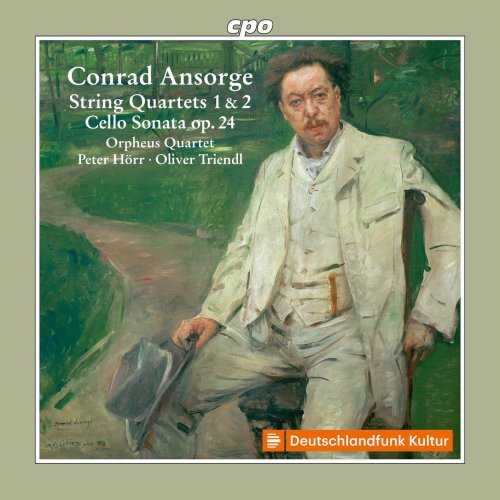
Artist: Peter Hörr, Oliver Triendl, Orpheus Quartet
Title: Conrad Ansorge: String Quartets 1 & 2 - Cello Sonata op. 24
Year Of Release: 2026
Label: CPO
Genre: Classical
Quality: FLAC (tracks) / 24bit-48kHz FLAC (tracks+booklet)
Total Time: 01:11:13
Total Size: 281 / 677 MB
WebSite: Album Preview
Tracklist:Title: Conrad Ansorge: String Quartets 1 & 2 - Cello Sonata op. 24
Year Of Release: 2026
Label: CPO
Genre: Classical
Quality: FLAC (tracks) / 24bit-48kHz FLAC (tracks+booklet)
Total Time: 01:11:13
Total Size: 281 / 677 MB
WebSite: Album Preview
1. Ansorge: String Quartet No. 1 in A flat major op. 13 “Vigilien”: Andante sostenuto ed espressivo (4:44)
2. Ansorge: String Quartet No. 1 in A flat major op. 13 “Vigilien”: Allegro non troppo ma energico (3:53)
3. Ansorge: String Quartet No. 1 in A flat major op. 13 “Vigilien”: Adagio ma non troppo (6:34)
4. Ansorge: String Quartet No. 1 in A flat major op. 13 “Vigilien”: Moderato maestoso (7:28)
5. Ansorge: String Quartet No. 2 in A major op. 20: Allegretto (5:53)
6. Ansorge: String Quartet No. 2 in A major op. 20: Non troppo Adagio (7:02)
7. Ansorge: String Quartet No. 2 in A major op. 20: Innig und zart (Allegretto) (4:48)
8. Ansorge: String Quartet No. 2 in A major op. 20: Maestoso (Breit, aber nicht schleppend) (7:30)
9. Ansorge: Cello Sonata in D minor op. 24: Andante quasi Recitativo – Quasi Allegro (12:00)
10. Ansorge: Cello Sonata in D minor op. 24: Poco Adagio, dolente (5:32)
11. Ansorge: Cello Sonata in D minor op. 24: Nicht schnell, aber leidenschaftlich (Allegretto non troppo, ma appassionato) (5:58)
Conrad Ansorge is one of those elusive figures in music history who cast a shadow across the biographies of prominent personalities without ever having come to the forefront of public consciousness themselves. We find his name among Franz Liszt’s last students, discover him as the teacher of Selim Palmgren and Wilhelm Furtwängler, and may even read that he was once described as the “metaphysician” of the piano—but if our interest in his own work is piqued, we come up almost empty-handed. A mere two or three pieces are currently available in the general catalog of recorded music, which is why this recording of the two string quartets and the cello sonata expands the available Ansorge repertoire by a full 100 percent. In doing so, we come to know an extraordinary rhetorician who undoubtedly draws inspiration from Beethoven’s late quartets: the expansive, emotionally charged recitatives, the complex counterpoint and heartfelt lyricism, the idiosyncratic structures, and the strange sonic effects create an irresistible pull—one to which we surrender all the more willingly as it invites us to return to these lasting impressions.