Jimin Oh-Havenith - Beethoven: Piano Sonatas Nos. 23, 30 & 32 (2020) [Hi-Res]
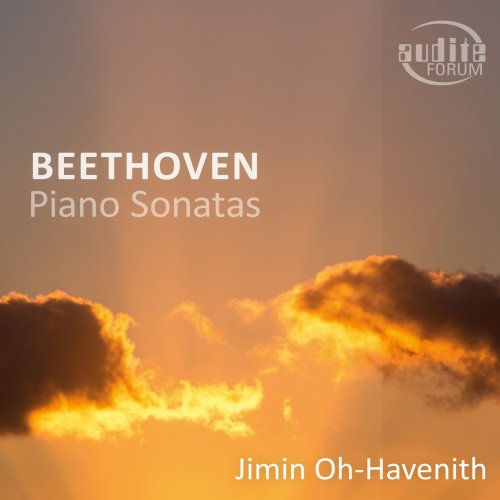
Artist: Jimin Oh-Havenith
Title: Beethoven: Piano Sonatas Nos. 23, 30 & 32
Year Of Release: 2020
Label: audite|forum
Genre: Classical
Quality: FLAC (tracks) / 24bit-96kHz FLAC (tracks)
Total Time: 01:16:24
Total Size: 226 MB / 1.30 GB
WebSite: Album Preview
Tracklist:Title: Beethoven: Piano Sonatas Nos. 23, 30 & 32
Year Of Release: 2020
Label: audite|forum
Genre: Classical
Quality: FLAC (tracks) / 24bit-96kHz FLAC (tracks)
Total Time: 01:16:24
Total Size: 226 MB / 1.30 GB
WebSite: Album Preview
01. Piano Sonata No. 23 in F Minor, Op. 57 'Appassionata': I. Allegro assai (11:04)
02. Piano Sonata No. 23 in F Minor, Op. 57 'Appassionata': II. Andante con moto (5:43)
03. Piano Sonata No. 23 in F Minor, Op. 57 'Appassionata': III. Allegro ma non troppo - Presto (8:36)
04. Piano Sonata No. 30 in E Major, Op. 109: I. Vivace ma non troppo, sempre legato - Adagio espressivo (3:48)
05. Piano Sonata No. 30 in E Major, Op. 109: II. Prestissimo (2:46)
06. Piano Sonata No. 30 in E Major, Op. 109: III. Gesangvoll, mit innigster Empfindung. Andante molto cantabile ed espressivo (2:24)
07. Piano Sonata No. 30 in E Major, Op. 109: III. Variation I. Molto espressivo (1:57)
08. Piano Sonata No. 30 in E Major, Op. 109: III. Variation II. Leggieramente (1:39)
09. Piano Sonata No. 30 in E Major, Op. 109: III. Variation III. Allegro vivace (0:26)
10. Piano Sonata No. 30 in E Major, Op. 109: III. Variation IV. Un poco meno andante ciò è un poco più adagio come il tema (2:44)
11. Piano Sonata No. 30 in E Major, Op. 109: III. Variation V. Allegro, ma non troppo (0:58)
12. Piano Sonata No. 30 in E Major, Op. 109: III. Variation VI. Tempo primo del tema (1:54)
13. Piano Sonata No. 30 in E Major, Op. 109: III. Cantabile (1:30)
14. Piano Sonata No. 32 in C Minor, Op. 111: I. Maestoso - Allegro con brio ed appassionato (10:06)
15. Piano Sonata No. 32 in C Minor, Op. 111: II. Arietta. Adagio molto semplice cantabile (20:52)
Beethoven: Klaviersonaten Nr. 23, 30 & 32 Jimin Oh-Havenith interprets three of Beethoven's most famous, beautiful, but also most demanding piano sonatas. Her carefully chosen tempi allow for a vivid and transparent presentation of the thematic structures and internal developments.
The poetic idea transitioning from Sturm und Drang to romanticism.This new recording by Jimin Oh-Havenith presents three of Beethoven's most famous, beautiful, but also most demanding piano sonatas. In addition to the dramatic F minor Sonata, Op. 57 ( Appassionata ), the pianist plays the late Sonatas in E major, Op. 109, and C minor, Op. 111, the last of the 32 piano sonatas. The exploration and crossing of boundaries can be seen as a central motif in Beethoven's compositions in general, and in his piano music in particular. While the variation movement in the Appassionata is flanked by rugged outer movements and the ending is a lively dance, Opp. 109 and 111 close with extended, expressive variation movements. In the finale of Op. 109 and in the simple, yet rapturously poignant Arietta of Op. 111 with the metamorphoses in its five variations, Beethoven enters uncharted territory. Here, Beethoven not only reaches expressive extremes, but also challenges his instrument: the keyboard range is stretched to the limit. The listener experiences the end of the C minor Sonata as a farewell to the world and to the genre of the sonata itself, but also as a beginning of something new and unknown.
The poetic idea transitioning from Sturm und Drang to romanticism.This new recording by Jimin Oh-Havenith presents three of Beethoven's most famous, beautiful, but also most demanding piano sonatas. In addition to the dramatic F minor Sonata, Op. 57 ( Appassionata ), the pianist plays the late Sonatas in E major, Op. 109, and C minor, Op. 111, the last of the 32 piano sonatas. The exploration and crossing of boundaries can be seen as a central motif in Beethoven's compositions in general, and in his piano music in particular. While the variation movement in the Appassionata is flanked by rugged outer movements and the ending is a lively dance, Opp. 109 and 111 close with extended, expressive variation movements. In the finale of Op. 109 and in the simple, yet rapturously poignant Arietta of Op. 111 with the metamorphoses in its five variations, Beethoven enters uncharted territory. Here, Beethoven not only reaches expressive extremes, but also challenges his instrument: the keyboard range is stretched to the limit. The listener experiences the end of the C minor Sonata as a farewell to the world and to the genre of the sonata itself, but also as a beginning of something new and unknown.
![Mirko Guerrini, Hyperbaroq, Stephen Magnusson, Ilaria Crociani - Tripudiis Sonis Variis (2026) [Hi-Res]](https://img.israbox.com/img/2026-10/04/m180jdzodwdmyq4zdvp6iq8pk.jpg "Mirko Guerrini, Hyperbaroq, Stephen Magnusson, Ilaria Crociani - Tripudiis Sonis Variis (2026) [Hi-Res]")

![Bokani Dyer - Bokani Dyer Trio - Traditions (2026) [Hi-Res]](https://www.dibpic.com/uploads/posts/2026-10/1790821774_odz7bl8fc11mx_600.jpg "Bokani Dyer - Bokani Dyer Trio - Traditions (2026) [Hi-Res]")