Soulive - Flowers (2026)
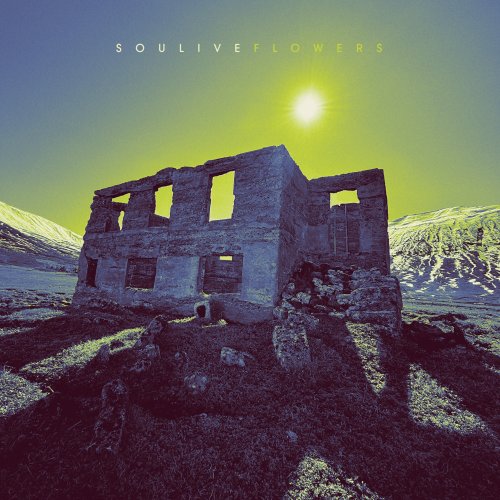
Artist: Soulive
Title: Flowers
Year Of Release: 2026
Label: Floki Studios
Genre: Funk, Soul, R&B
Quality: FLAC (tracks) / 320 kbps
Total Time: 35:52
Total Size: 198 / 88 MB
WebSite: Album Preview
Tracklist:Title: Flowers
Year Of Release: 2026
Label: Floki Studios
Genre: Funk, Soul, R&B
Quality: FLAC (tracks) / 320 kbps
Total Time: 35:52
Total Size: 198 / 88 MB
WebSite: Album Preview
01. Soulive - Xl (3:19)
02. Soulive - Baby Jupiter (2:44)
03. Soulive, Van Hunt - Flowers at Your Feet (4:21)
04. Soulive - 3 Kings (3:31)
05. Soulive - East Side (4:15)
06. Soulive - Basher (3:32)
07. Soulive - Butter Rock (3:03)
08. Soulive - Vines (4:19)
09. Soulive - Pikes Place (3:19)
10. Soulive - Window Weather (3:29)
For more than twenty-five years, the Woodstock, New York–formed trio Soulive have carried the flame of the Hammond-organ format for a new generation. Guitarist Eric Krasno, organist Neal Evans, and drummer-producer Alan Evans built their language on feel and economy — three voices locked in, sweat and telepathy with no wasted motion. Too lean for a jam band, too funky for straight-ahead jazz, Soulive blurred every border until categories fell away. The band has just released Flowers via Flóki Studios, their first full-length album in fifteen years.
Across hundreds of shows and a kinetic run of albums, Soulive became a bridge between worlds — jazz clubs, rock stages, hip-hop festivals, late-night DJ sets. Their first recordings — the self-pressed Get Down! (1999), the independent breakthrough Turn It Out (2000), and subsequent Blue Note releases Doin’ Something (2001), Next (2002), and Breakout (2005) — carried the pulse of 1960s soul-jazz into a new century without looking backward. Krasno’s radiant, melodic guitar, Neal’s frothy Hammond tone, and Alan’s unhurried pocket defined the band’s signature sound.
“We were never chasing anyone else’s thing,” Alan reflects today. “It was always just the three of us seeing where the songs took us.”
Soulive never broke up; they just went quiet. Krasno turned to songwriting and production. Neal to arranging and texture. Alan to engineering and sound. “There’s so much more that goes into a recording than the gear,” Alan says. “It’s about the environment — your place in space and time at that moment.”
That reconnection took form on Flowers, Soulive’s first full-length album in more than a decade. Tracked at Flóki Studios — a century-old former grocery store on Iceland’s north coast — the sessions pulled the trio out of routine and back into focus. Alan had worked there before with MonoNeon and Oteil Burbridge, drawn to the light and the solitude.
They arrived with fragments and grooves but wrote most of Flowers on the spot. “We’re not super precious about it, man,” Alan says. “If it felt good, we moved on.” They played less and listened more, letting decades of chemistry do the work. “The three of us just fall into place,” he says. “It’s like having a conversation that never ended.”
Across hundreds of shows and a kinetic run of albums, Soulive became a bridge between worlds — jazz clubs, rock stages, hip-hop festivals, late-night DJ sets. Their first recordings — the self-pressed Get Down! (1999), the independent breakthrough Turn It Out (2000), and subsequent Blue Note releases Doin’ Something (2001), Next (2002), and Breakout (2005) — carried the pulse of 1960s soul-jazz into a new century without looking backward. Krasno’s radiant, melodic guitar, Neal’s frothy Hammond tone, and Alan’s unhurried pocket defined the band’s signature sound.
“We were never chasing anyone else’s thing,” Alan reflects today. “It was always just the three of us seeing where the songs took us.”
Soulive never broke up; they just went quiet. Krasno turned to songwriting and production. Neal to arranging and texture. Alan to engineering and sound. “There’s so much more that goes into a recording than the gear,” Alan says. “It’s about the environment — your place in space and time at that moment.”
That reconnection took form on Flowers, Soulive’s first full-length album in more than a decade. Tracked at Flóki Studios — a century-old former grocery store on Iceland’s north coast — the sessions pulled the trio out of routine and back into focus. Alan had worked there before with MonoNeon and Oteil Burbridge, drawn to the light and the solitude.
They arrived with fragments and grooves but wrote most of Flowers on the spot. “We’re not super precious about it, man,” Alan says. “If it felt good, we moved on.” They played less and listened more, letting decades of chemistry do the work. “The three of us just fall into place,” he says. “It’s like having a conversation that never ended.”

![Mathias Heise & Pelle von Bülow - Repertoire (2026) [Hi-Res]](https://www.dibpic.com/uploads/posts/2026-08/1787761933_1.jpg "Mathias Heise & Pelle von Bülow - Repertoire (2026) [Hi-Res]")
![Adam Rose, Mountain Jazz Quartet - Holler Serenade (2026) [Hi-Res]](https://www.dibpic.com/uploads/posts/2026-08/1787640003_g047p1rsxuc8r_600.jpg "Adam Rose, Mountain Jazz Quartet - Holler Serenade (2026) [Hi-Res]")
![Tony Bennett - Saga All Stars: Jazz! (Selected Tracks 1954-1959) (2026) [Hi-Res]](https://img.israbox.com/img/2026-08/27/a7hmylo96sui0vk8lkh0zyk4f.jpg "Tony Bennett - Saga All Stars: Jazz! (Selected Tracks 1954-1959) (2026) [Hi-Res]")
![Joyce Cheung - Jazzical Collection (2026) [Hi-Res]](https://www.dibpic.com/uploads/posts/2026-08/1787804033_ickg8k8vigzea_600.jpg "Joyce Cheung - Jazzical Collection (2026) [Hi-Res]")
![Diego Figueiredo - Horse Blues (2026) [Hi-Res]](https://img.israbox.com/img/2026-08/27/vd30ixqwl41lb9x9mj2l0nh79.png "Diego Figueiredo - Horse Blues (2026) [Hi-Res]")
![Adam Bałdych - Endless (2026) [Hi-Res]](https://www.dibpic.com/uploads/posts/2026-08/1787664423_folder.jpg "Adam Bałdych - Endless (2026) [Hi-Res]")
![Cuadra Collective, Christian Cuadra - Väst (2026) [Hi-Res]](https://www.dibpic.com/uploads/posts/2026-08/1787745959_o026jqwpy6vj5_600.jpg "Cuadra Collective, Christian Cuadra - Väst (2026) [Hi-Res]")