Akiko Suwanai, NHK Symphony Orchestra, Paavo Jarvi - Mahler: Symphony No. 6 "Tragic" (2019) [DSD]
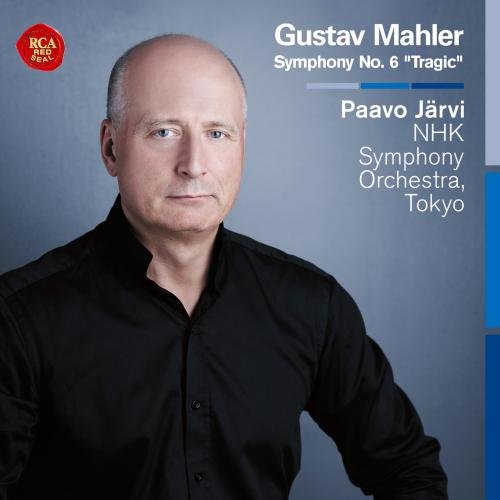
Artist: Akiko Suwanai, NHK Symphony Orchestra, Paavo Jarvi
Title: Mahler: Symphony No. 6 "Tragic"
Year Of Release: 2019
Label: Sony Music Labels Inc.
Genre: Classical
Quality: DSD64 +Booklet
Total Time: 01:20:25
Total Size: 3.17 gb
WebSite: Album Preview
TracklistTitle: Mahler: Symphony No. 6 "Tragic"
Year Of Release: 2019
Label: Sony Music Labels Inc.
Genre: Classical
Quality: DSD64 +Booklet
Total Time: 01:20:25
Total Size: 3.17 gb
WebSite: Album Preview
01. Symphony No. 6 in A Minor Tragic: I. Allegro energico, ma non troppo. Heftig, aber markig
02. Symphony No. 6 in A Minor Tragic: II. Scherzo. Wuchtig
03. Symphony No. 6 in A Minor Tragic: III. Andante moderato
04. Symphony No. 6 in A Minor Tragic: IV. Finale. Sostenuto - Allegro moderato - Allegro energico
It was Stravinsky who first brought international attention to Takemitsu’s music after he came across a recording of the Requiem on a visit to Japan in 1959. Its slow, yearning melodies lead into Mahler’s monumental ‘Tragic’ Symphony, known for the three sledgehammer blows in its final movement, which represent the blows of fate. The most traditional of Mahler’s symphonies, it draws listeners into its bleak yet irresistible momentum.
The Tokyo-based NHK Symphony Orchestra can trace its origins to 1926. With a change of name, it has been supported since 1951 by Nippon Hoso Kyokai (the Japan Broadcasting Corporation) and was out in full force for Maher 6 – of the 114 musicians listed all appear to be indigenous – and beforehand it was the strings that introduced Requiem (1957) by Tokyo-born Toru Takemitsu (1930-96). Short Requiem may be (just under ten minutes), but from the barest of sounds something solemn and emotionally agitated emerges, always exquisitely composed and somewhat Bartókian in expression. Whether refined or when becoming more angular, whatever was required, the NHK players, with chief conductor Paavo Järvi, had every expressive phrase and nuance mastered, not least concertmaster Fuminori Maro Shinozaki, whose solo contributions were ineffably divine (as they would also be in the Mahler).
![Masala Quartet - Stalking for Impressions (2026) [Hi-Res]](https://www.dibpic.com/uploads/posts/2026-09/1789813650_ft9el0ot7qsy0_600.jpg "Masala Quartet - Stalking for Impressions (2026) [Hi-Res]")
![Christos Barbas, Nabil Naïr - Fam (2026) [Hi-Res]](https://img.israbox.com/img/2026-09/17/x4xf24y0f2ujen7i6goxkoek6.jpg "Christos Barbas, Nabil Naïr - Fam (2026) [Hi-Res]")
![Sendecki & Spiegel - Simple Game (2026) [Hi-Res]](https://www.dibpic.com/uploads/posts/2026-09/1789481515_folder.jpg "Sendecki & Spiegel - Simple Game (2026) [Hi-Res]")
![Dick De Graaf - Con Alma (In memory of Rob van Kreeveld) (2026) [Hi-Res]](https://www.dibpic.com/uploads/posts/2026-09/1789489285_folder.jpg "Dick De Graaf - Con Alma (In memory of Rob van Kreeveld) (2026) [Hi-Res]")