Steven Isserlis - The Marquis de Corberon (300th Anniversary Collection) (2026) [Hi-Res]
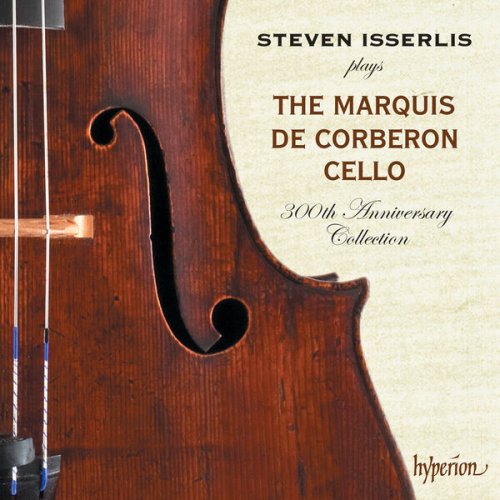
Artist: Steven Isserlis
Title: The Marquis de Corberon (300th Anniversary Collection)
Year Of Release: 2026
Label: Hyperion
Genre: Classical
Quality: flac lossless (tracks) / flac 24bits - 96.0kHz +Booklet
Total Time: 12:30:12
Total Size: 3.29 / 13.0 gb
WebSite: Album Preview
TracklistTitle: The Marquis de Corberon (300th Anniversary Collection)
Year Of Release: 2026
Label: Hyperion
Genre: Classical
Quality: flac lossless (tracks) / flac 24bits - 96.0kHz +Booklet
Total Time: 12:30:12
Total Size: 3.29 / 13.0 gb
WebSite: Album Preview
CD1
01. J.S. Bach: Sonata in G Major, BWV 1027: I. Adagio
02. J.S. Bach: Sonata in G Major, BWV 1027: II. Allegro ma non tanto
03. J.S. Bach: Sonata in G Major, BWV 1027: III. Andante
04. J.S. Bach: Sonata in G Major, BWV 1027: IV. Allegro moderato
05. D. Scarlatti: Sonata in D Minor, Kk. 90 (Transcr. Isserlis for Cello): I. Grave
06. D. Scarlatti: Sonata in D Minor, Kk. 90 (Transcr. Isserlis for Cello): II. Allegro
07. D. Scarlatti: Sonata in D Minor, Kk. 90 (Transcr. Isserlis for Cello): III. Largo – Allegro
08. J.S. Bach: Sonata in G Minor, BWV 1029: I. Vivace
09. J.S. Bach: Sonata in G Minor, BWV 1029: II. Adagio
10. J.S. Bach: Sonata in G Minor, BWV 1029: III. Allegro
11. Handel: Sonata for Viola da gamba in G Minor, HWV 364b: I. Andante larghetto
12. Handel: Sonata for Viola da gamba in G Minor, HWV 364b: II. Allegro
13. Handel: Sonata for Viola da gamba in G Minor, HWV 364b: III. Adagio
14. Handel: Sonata for Viola da gamba in G Minor, HWV 364b: IV. Allegro
15. J.S. Bach: Sonata in D Major, BWV 1028: I. Adagio
16. J.S. Bach: Sonata in D Major, BWV 1028: II. Allegro
17. J.S. Bach: Sonata in D Major, BWV 1028: III. Andante
18. J.S. Bach: Sonata in D Major, BWV 1028: IV. Allegro
19. J.S. Bach: Ich ruf' zu dir, Herr Jesu Christ, BWV 639 (Transcr. Isserlis/Egarr for Cello & Harpsichord)
CD2
01. Boccherini: Cello Concerto No. 6 in D Major, G. 479: I. Allegro
02. Boccherini: Cello Concerto No. 6 in D Major, G. 479: II. Adagio
03. Boccherini: Cello Concerto No. 6 in D Major, G. 479: III. Allegro
04. Boccherini: Cello Sonata in C Minor, G. 2: I. Allegro
05. Boccherini: Cello Sonata in C Minor, G. 2: II. Largo
06. Boccherini: Cello Sonata in C Minor, G. 2: III. Allegretto
07. Boccherini: String Quintet in D Minor, G. 280: I. Allegro
08. Boccherini: String Quintet in D Minor, G. 280: II. Andante sostenuto
09. Boccherini: String Quintet in D Minor, G. 280: III. Fuga. Allegro giusto
10. Boccherini: Cello Sonata in F Major, G. 9: I. Andantino
11. Boccherini: Cello Sonata in F Major, G. 9: II. Adagio assai
12. Boccherini: Cello Sonata in F Major, G. 9: III. Tempo di minuetto amoroso
13. Boccherini: Cello Concerto No. 2 in A Major, G. 475 The Frog: I. Allegro
14. Boccherini: Cello Concerto No. 2 in A Major, G. 475 The Frog: II. Adagio
15. Boccherini: Cello Concerto No. 2 in A Major, G. 475 The Frog: III. Rondo. Allegro
16. Boccherini: String Quintet in E Major, Op. 11/5, G. 275: III. Minuetto – Trio – Minuetto da capo
CD3
01. Haydn: Cello Concerto in C Major, Hob. VIIb:1: I. Moderato
02. Haydn: Cello Concerto in C Major, Hob. VIIb:1: II. Adagio
03. Haydn: Cello Concerto in C Major, Hob. VIIb:1: III. Finale. Allegro molto
04. Mozart: La finta giardiniera, K. 196: Cavatina. Geme la tortorella (Arr. Isserlis for Cello & Orchestra)
05. C.P.E. Bach: Cello Concerto in A Major, H. 439: I. Allegro
06. C.P.E. Bach: Cello Concerto in A Major, H. 439: II. Largo con sordini, mesto
07. C.P.E. Bach: Cello Concerto in A Major, H. 439: III. Allegro assai
08. Haydn: Cello Concerto in D Major, Hob. VIIb:2: I. Allegro moderato
09. Haydn: Cello Concerto in D Major, Hob. VIIb:2: II. Adagio
10. Haydn: Cello Concerto in D Major, Hob. VIIb:2: III. Rondo. Allegro
11. Boccherini: Cello Concerto No. 7 in G Major, G. 480: II. Adagio
CD4
01. Beethoven: Cello Sonata No. 1 in F Major, Op. 5 No. 1: Ia. Adagio sostenuto –
02. Beethoven: Cello Sonata No. 1 in F Major, Op. 5 No. 1: Ib. Allegro
03. Beethoven: Cello Sonata No. 1 in F Major, Op. 5 No. 1: II. Rondo. Allegro vivace
04. Beethoven: Cello Sonata No. 2 in G Minor, Op. 5 No. 2: I. Adagio sostenuto ed espressivo
05. Beethoven: Cello Sonata No. 2 in G Minor, Op. 5 No. 2: II. Allegro molto più tosto presto
06. Beethoven: Cello Sonata No. 2 in G Minor, Op. 5 No. 2: III. Rondo. Allegro
07. Beethoven: Cello Sonata No. 3 in A Major, Op. 69: I. Allegro, ma non tanto
08. Beethoven: Cello Sonata No. 3 in A Major, Op. 69: II. Scherzo. Allegro molto
09. Beethoven: Cello Sonata No. 3 in A Major, Op. 69: III. Adagio cantabile –
10. Beethoven: Cello Sonata No. 3 in A Major, Op. 69: IV. Allegro vivace
CD5
01. Beethoven: Cello Sonata No. 4 in C Major, Op. 102 No. 1: I. Andante –
02. Beethoven: Cello Sonata No. 4 in C Major, Op. 102 No. 1: II. Allegro vivace
03. Beethoven: Cello Sonata No. 4 in C Major, Op. 102 No. 1: III. Adagio – Tempo d'andante –
04. Beethoven: Cello Sonata No. 4 in C Major, Op. 102 No. 1: IV. Allegro vivace
05. Beethoven: Cello Sonata No. 5 in D Major, Op. 102 No. 2: I. Allegro con brio
06. Beethoven: Cello Sonata No. 5 in D Major, Op. 102 No. 2: II. Adagio con molto sentimento d'affetto
07. Beethoven: Cello Sonata No. 5 in D Major, Op. 102 No. 2: III. Allegro – Allegro fugato
08. Beethoven: 12 Variations for Cello and Piano on See the Conquering Hero Comes, WoO 45
09. Beethoven: 12 Variations for Cello and Piano on Ein Mädchen oder Weibchen, Op. 66
10. Beethoven: 7 Variations for Cello and Piano on Bei Männern, welche Liebe fühlen, WoO 46
11. Beethoven: Horn Sonata in F Major, Op. 17 (Version for Cello): I. Allegro moderato
12. Beethoven: Horn Sonata in F Major, Op. 17 (Version for Cello): II. Poco adagio, quasi andante
13. Beethoven: Horn Sonata in F Major, Op. 17 (Version for Cello): III. Rondo. Allegro moderato
CD6
01. Chopin: Introduction & Polonaise brillante in C Major, Op. 3: I. Introduction. Lento
02. Chopin: Introduction & Polonaise brillante in C Major, Op. 3: II. Alla Polacca. Allegro con spirito
03. Franchomme: Nocturne in C Minor, Op. 15 No. 1
04. Chopin: Cello Sonata in G Minor, Op. 65: I. Allegro moderato
05. Chopin: Cello Sonata in G Minor, Op. 65: II. Scherzo. Allegro con brio
06. Chopin: Cello Sonata in G Minor, Op. 65: III. Largo
07. Chopin: Cello Sonata in G Minor, Op. 65: IV. Finale. Allegro
08. Chopin: Nie ma czego trzeba, Op. 74 No. 13 (Arr. Isserlis for Cello & Piano)
09. Schubert: Arpeggione Sonata in A Minor, D. 821: I. Allegro moderato
10. Schubert: Arpeggione Sonata in A Minor, D. 821: II. Adagio –
11. Schubert: Arpeggione Sonata in A Minor, D. 821: III. Allegretto
12. Schubert: Nacht und Träume, D. 827 (Arr. Isserlis for Cello & Piano)
CD7
01. Grieg: Cello Sonata in A Minor, Op. 36: I. Allegro agitato
02. Grieg: Cello Sonata in A Minor, Op. 36: II. Andante molto tranquillo
03. Grieg: Cello Sonata in A Minor, Op. 36: III. Allegro molto e marcato
04. Hough: Sonata for Cello and Piano Left Hand Les adieux: I. Moderato mesto –
05. Hough: Sonata for Cello and Piano Left Hand Les adieux: II. Allegretto placido (Im Legendenton)
06. Hough: Sonata for Cello and Piano Left Hand Les adieux: III. Adagio sereno
07. Mendelssohn: Cello Sonata No. 2 in D Major, Op. 58: I. Allegro assai vivace
08. Mendelssohn: Cello Sonata No. 2 in D Major, Op. 58: II. Allegretto scherzando
09. Mendelssohn: Cello Sonata No. 2 in D Major, Op. 58: III. Adagio
10. Mendelssohn: Cello Sonata No. 2 in D Major, Op. 58: IV. Molto allegro e vivace
CD8
01. Bruch: Kol Nidrei, Op. 47
02. R. Strauss: Cello Sonata in F Major, Op. 6 (1881 Original Version): I. Allegro con brio
03. R. Strauss: Cello Sonata in F Major, Op. 6 (1881 Original Version): II. Larghetto
04. R. Strauss: Cello Sonata in F Major, Op. 6 (1881 Original Version): III. Finale. Allegro vivace
05. Dvořák: 4 Romantic Pieces, Op. 75 (Transcr. Isserlis): No. 1, Allegro moderato
06. Dvořák: 4 Romantic Pieces, Op. 75 (Transcr. Isserlis): No. 2, Allegro maestoso
07. Dvořák: 4 Romantic Pieces, Op. 75 (Transcr. Isserlis): No. 3, Allegro appassionato
08. Dvořák: 4 Romantic Pieces, Op. 75 (Transcr. Isserlis): No. 4, Larghetto
09. Le Beau: Cello Sonata in D Major, Op. 17: I. Allegro molto
10. Le Beau: Cello Sonata in D Major, Op. 17: II. Andante tranquillo
11. Le Beau: Cello Sonata in D Major, Op. 17: III. Allegro vivace
12. E.D. Wagner: Schir Zijon, Op. 44: I. Kol Nidrei
13. Nathan: Oh! Weep for Those (Arr. Isserlis)
CD9
01. Dvořák: Cello Concerto in B Minor, Op. 104, B. 191: I. Allegro
02. Dvořák: Cello Concerto in B Minor, Op. 104, B. 191: II. Adagio ma non troppo
03. Dvořák: Cello Concerto in B Minor, Op. 104, B. 191: III. Finale. Allegro moderato
04. Dvořák: Lasst mich allein, Op. 82 No. 1, B. 157/1 (Orch. Leopold)
05. Dvořák: Cello Concerto in B Minor, Op. 104: III. Allegro moderato. Original Ending (Excerpt)
06. Dvořák: Cello Concerto in A Major, B. 10 (Rev. and Orch. Raphael): I. Andante – Allegro non troppo
07. Dvořák: Cello Concerto in A Major, B. 10 (Rev. and Orch. Raphael): II. Andante cantabile
08. Dvořák: Cello Concerto in A Major, B. 10 (Rev. and Orch. Raphael): III. Allegro risoluto
CD10
01. Tavener: Preces and Responses (Arr. Isserlis for 8 Cellos)
02. Tavener: The Death of Ivan Ilyich
03. Tavener: Mahámátar
04. Tavener: Popule meus
05. Tavener: 3 Shakespeare Sonnets: Sonnet LXXI. No Longer Mourn for Me (Arr. Isserlis for 8 Cellos)
It is a curious fact that the man who gave his name to the Marquis de Corberon was not a cellist, nor even a professional musician. And unlike his cello namesake, whose tercentenary we are celebrating this year, the unfortunate Marquis did not live to see even a paltry half-century: he was guillotined during one of the most violent phases of the French Revolution, the Reign of Terror, on 29 floréal (18 May) 1794.
Pierre-Philibert-Catherine de Bourrée (born 1746), the first Marquis de Corberon, was a soldier, a member of the Gardes françaises (not a diplomat as is sometimes reported: that was his younger brother, Marie Daniel, who was posted to the Russian court of Catherine the Great). But he was also an enthusiastic amateur viola player, at the centre of musical life in Paris in the last years of the Ancien Régime. He was one of the founding members in 1781 of the masonic Loge de l’Olympique de la Parfaite Estime, which gave twelve concerts a year to an audience of subscribers, several of which took place in the Tuileries Palace. The Loge commissioned Haydn’s ‘Paris’ Symphonies (Nos 82-87) which they performed in the presence of Queen Marie Antoinette; Pierre-Philibert played in the first desk of violas. Rather touchingly, after he was arrested in 1793, the Marquis continued to play and entertain in very different surroundings (albeit now apparently on the violin rather than viola). Claire (later Duchesse) de Duras, a fellow prisoner at Chantilly and fortunate enough to survive the Revolution, recalled in her memoirs: ‘What is almost impossible to understand, unless you witnessed it, is that you could hear the prisoners playing instruments and singing in chorus … while, apart from the guillotine, we were threatened with perishing by fire and water … We strolled on the third floor on the lead terrace; Mademoiselle de Pons played the piano accompanied by the violin of Monsieur de Corberon, an officer in the French Guards who was guillotined, and pleasantly held the attention of the strollers.’
What happened to the cello after the Marquis, who is presumed to be one of its first owners, was guillotined in 1794? This is something of a mystery and no clear picture emerges. According to one source, Pierre-Philibert was the owner of not one but seven Stradivari (including a viola of 1717 now belonging to the Portuguese state), but this has not been verified. There are extensive lists of instruments taken by the Revolutionaries, but this cello does not feature among them. An inventory for the sale of the family estate in December 1794 mentions ‘a harpsichord with its music stand valued at one hundred livres’ and ‘three cases and four violins valued together at twenty-four livres’—but again no cello. Perhaps it was somehow smuggled out? His seventeen-year-old son and heir Armand (1777-1794) also perished by the guillotine and it was the surviving son Daniel-Jean-Charles (1780 -1868) who inherited the title. Daniel was later the dedicatee of the Trois melodies pour le violoncelle avec accompagnement d’orgue expressif by Alexandre-Pierre-François Boëly (1785-1858). Could the cello have somehow made its way into Daniel’s hands and been the instrument for which the Trois melodies were written? We may never know the answer.
The next certain attribution of the Marquis de Corberon is to the French cellist Jules-Léopold Loeb (1852-1933), soloist at the Orchestre de l’Opéra de Paris and later cello professor at the Paris Conservatoire. Interestingly, given Steven Isserlis’s well-known affinity with the music of Gabriel Fauré, Loeb was the dedicatee of the Élégie and gave the first performance of it with the composer at the piano at the Société nationale de musique in December 1883. He also created the cello parts of Saint-Saëns’s Piano Trio No 2 in 1882 and the revised version of Fauré’s Piano Quartet No 1 two years later. A contemporary wrote of the ‘beautiful sonority’ of his playing and ‘the elegance of his style’; it is very possible that the instrument on which he played at those premieres was the Marquis de Corberon.
The cello then passed to the German cellist Hugo Becker (1863-1941), described by Hans von Bülow, who played trios with him and Joseph Joachim, as the only cellist ‘who plays with virility’ (although the famous Russian cellist Gregor Piatigorsky describes the sound rather less flatteringly in his Memoirs). Becker sold it in 1907 to a Mr Chapman, for his daughter Elizabeth.
In 1960 the cello was bequeathed to the Royal Academy of Music, who offered the use of the instrument to the Canadian cellist Zara Nelsova (1918-2002) for her lifetime. It is possible that this was always the intention. Audrey Melville, the previous owner, had served on a committee which had helped Nelsova as a child, and they met in London years later. In an interview Nelsova related that in 1960 she had received a letter (actually written in 1953 but to be delivered posthumously) in which Melville indicated her wishes for Nelsova’s future involvement with the cello.
It seems fitting that the Marquis de Corberon should now be played by Zara’s own friend, Steven Isserlis. As she once said: ‘All cellists adore each other … We all know how difficult the instrument is, how much we’ve gone through to master it. This knowledge and appreciation makes us very close.’
Steven Isserlis — The Marquis de Corberon (300th Anniversary Collection) (2026) flac.rar — 3.3 GB
Steven Isserlis — The Marquis de Corberon (300th Anniversary Collection) (2026) [Hi-Res].part1.rar — 4.5 GB
Steven Isserlis — The Marquis de Corberon (300th Anniversary Collection) (2026) [Hi-Res].part2.rar — 4.5 GB
Steven Isserlis — The Marquis de Corberon (300th Anniversary Collection) (2026) [Hi-Res].part3.rar — 4.1 GB