Brussels Philharmonic & Kazushi Ono - Scriabin: Symphony 2 (2024) [Hi-Res]
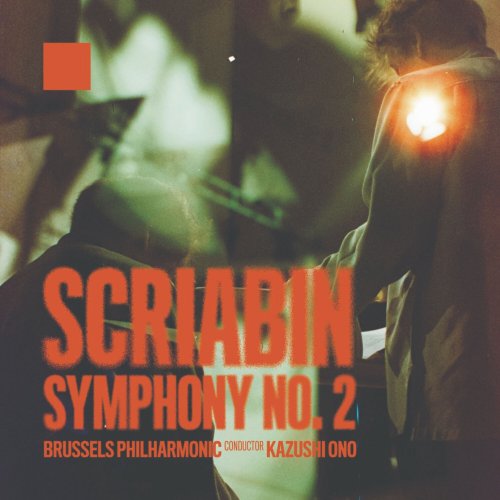
Artist: Brussels Philharmonic, Kazushi Ono
Title: Scriabin: Symphony 2
Year Of Release: 2024
Label: Evil Penguin Classic
Genre: Classical
Quality: FLAC (tracks) / 24bit-96kHz FLAC (tracks)
Total Time: 45:23
Total Size: 203 / 826 MB
WebSite: Album Preview
Tracklist:Title: Scriabin: Symphony 2
Year Of Release: 2024
Label: Evil Penguin Classic
Genre: Classical
Quality: FLAC (tracks) / 24bit-96kHz FLAC (tracks)
Total Time: 45:23
Total Size: 203 / 826 MB
WebSite: Album Preview
1. Symphony No. 2 in C minor, Op. 29: I. Andante (6:05)
2. Symphony No. 2 in C minor, Op. 29: II. Allegro (9:55)
3. Symphony No. 2 in C minor, Op. 29: III. Andante (15:22)
4. Symphony No. 2 in C minor, Op. 29: IV. Tempestoso (5:33)
5. Symphony No. 2 in C minor, Op. 29: V. Maestoso (8:29)
The first volume in a Scriabin series with Brussels Philharmonic and Kazushi Ono.
"For me, Scriabin holds a central and unique role among composers. He is the first composer to engage deeply with mysticism, exploring its nuances through his music and offering us profound answers." - Kazushi Ono
Can a composer like Alexander Scriabin be associated with any tradition at all, given the uniqueness of his musical language? Initially focusing on piano compositions, Scriabin later expanded to larger orchestral works, crafting five symphonies between 1899 and 1910. A noticeable evolution in composition unfolds, as Scriabin transitions from a late Romantic style to a more modernistic approach, drawing inspiration from symbolist poetry and philosophical figures. Envisioning himself as a musical messiah aiming to change the world, his Second Symphony provides a glimpse into this eccentric vision.
"For me, Scriabin holds a central and unique role among composers. He is the first composer to engage deeply with mysticism, exploring its nuances through his music and offering us profound answers." - Kazushi Ono
Can a composer like Alexander Scriabin be associated with any tradition at all, given the uniqueness of his musical language? Initially focusing on piano compositions, Scriabin later expanded to larger orchestral works, crafting five symphonies between 1899 and 1910. A noticeable evolution in composition unfolds, as Scriabin transitions from a late Romantic style to a more modernistic approach, drawing inspiration from symbolist poetry and philosophical figures. Envisioning himself as a musical messiah aiming to change the world, his Second Symphony provides a glimpse into this eccentric vision.
![Anette von Eichel - Halo (2026) [Hi-Res]](https://img.israbox.com/img/2026-09/24/64xj03s78fg8rvrvwzl0qb79f.jpg "Anette von Eichel - Halo (2026) [Hi-Res]")
![Margaret Singana - Tribal Fence (2026) [Hi-Res]](https://www.dibpic.com/uploads/posts/2026-09/1790315409_cover.jpg "Margaret Singana - Tribal Fence (2026) [Hi-Res]")
![Benny Sings - 22 Durnham Dew (2026) [Hi-Res]](https://img.israbox.com/img/2026-09/24/xn1s8glnmdzs5crjew0iblu3o.jpg "Benny Sings - 22 Durnham Dew (2026) [Hi-Res]")
![Pipi Piazzolla - Visiona (2026) [Hi-Res]](https://www.dibpic.com/uploads/posts/2026-09/1790011066_cover.jpg "Pipi Piazzolla - Visiona (2026) [Hi-Res]")