Sonny Terry, Brownie Mc Ghee & Lightnin' Hopkins - Bluesville Presents (2024)
- 08 Aug, 09:54
- change text size:
Facebook
Twitter
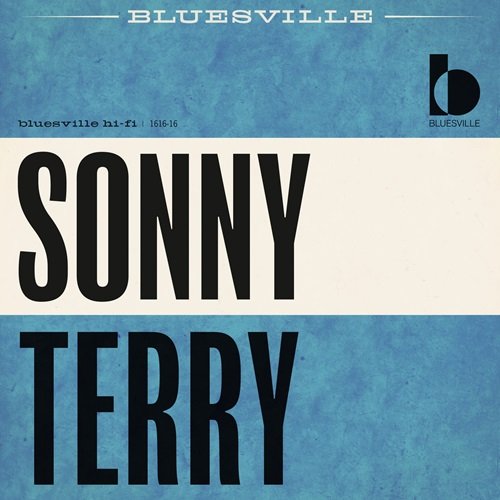
Artist: Sonny Terry, Brownie Mc Ghee, Lightnin' Hopkins
Title: Bluesville Presents
Year Of Release: 2024
Label: UMG Recordings
Genre: Blues
Quality: Mp3 320 / Flac (tracks)
Total Time: 53:22
Total Size: 131/323 Mb
WebSite: Album Preview
Tracklist:Title: Bluesville Presents
Year Of Release: 2024
Label: UMG Recordings
Genre: Blues
Quality: Mp3 320 / Flac (tracks)
Total Time: 53:22
Total Size: 131/323 Mb
WebSite: Album Preview
01. Sonny Terry - Tater Pie 2:37
02. Sonny Terry, Lightnin' Hopkins - Rocky Mountain 4:58
03. Sonny Terry, Brownie McGhee - Sonny's Squall 3:44
04. Sonny Terry - Telephone Blues 3:33
05. Sonny Terry, Brownie McGhee - Midnight Special 4:05
06. Sonny Terry, Lightnin' Hopkins - So Sorry To Leave You 4:21
07. Sonny Terry - One Monkey Don't Stop The Show 3:11
08. Sonny Terry, Lightnin' Hopkins - Hard To Love A Woman 4:01
09. Sonny Terry, Brownie McGhee - I Love You Baby 2:11
10. Sonny Terry, Lightnin' Hopkins - Conversation Blues 3:51
11. Sonny Terry - Sonny's Coming 2:55
12. Sonny Terry, Brownie McGhee - Cornbread And Peas 2:40
13. Sonny Terry - High Powered Woman 2:57
14. Sonny Terry, Lightnin' Hopkins - Lightnin's Stroke 4:55
15. Sonny Terry, Brownie McGhee - Louise 3:23

Sonny Terry:
Harmonica player Sonny Terry was one of the initial bluesmen who crossed over into areas not normally associated with the genre before he came along. Along with his partner, guitarist Brownie McGhee, Terry played on numerous folk recordings with the likes of Woody Guthrie, developed an acting career showcased on television and Broadway, and never compromised his unique high-pitched penetrating harmonica style called whoopin'.
Sonny Terry was born Saunders Terrell on October 24, 1911, in Greensboro, Georgia. He lost his sight by the time he was 16 in two separate accidents. His father played harmonica in local functions around town and taught Terry at an early age. Realizing his eyesight would keep him from pursuing a profession in farming, Terry decided instead to be a blues singer. He began traveling to nearby Raleigh and Durham, North Carolina, performing on street corners for tips. In 1934, he befriended the popular guitarist Blind Boy Fuller. Fuller convinced Terry to move to Durham, where the two immediately gained a strong local following. By 1937, they were offered an opportunity to go to New York to record for the Vocalion label. A year later, Terry would be back in New York taking part in John Hammond's legendary Spirituals to Swing concert, where he performed one of his memorable tunes, "Mountain Blues." Upon returning to Durham, Terry continued playing regularly with Fuller and also met his future partner, guitarist Brownie McGhee, who would accompany Terry off and on for the next two decades. McGhee was initially sent to look after Terry by Blind Boy's manager, J.B. Long. Long figured McGhee might get a chance to play some of the same shows as Terry. A friendship developed between the two men and following Fuller's death in 1941, Terry and McGhee moved to New York. The change proved fruitful as they immediately found steady work, playing concerts both as a duo and solo. Terry became an in-demand session player who started showing up regularly on the records of folk luminaries including Lead Belly, Woody Guthrie, and Pete Seeger. An acting role was also initiated at this time, in the long-running Broadway production of Finian's Rainbow in 1946. By the mid-'50s, Terry and McGhee began broadening their collective horizons and traveled extensively outside of New York. They released a multitude of recordings for labels like Folkways, Savoy, and Fantasy that crossed the boundaries of race, becoming well-known in folk and blues circles performing for Black and white audiences. It was also in the mid-50s that Terry and McGhee accepted roles on Broadway, joining the cast of Cat on a Hot Tin Roof, exposing them to an even broader audience. In the early '60s, the duo performed at numerous folk and blues festivals around the world, while Terry found time to work with singer Harry Belafonte and in television commercials. Terry was constantly traveling throughout the '70s, stopping only long enough to write his instructional book The Harp Styles of Sonny Terry. By the mid-'70s, the strain of being on the road developed into personal problems between McGhee and Terry. Unfortunately, they resigned their long partnership, divided by the bitterness of constant touring. Terry was still being discovered by a younger blues generation via the Johnny Winter-produced album Whoopin' for the Alligator label, featuring Winter and Willie Dixon. Winter had produced a comeback album for Muddy Waters (Hard Again) that helped rejuvenate his career, and he was attempting the same with Terry. By the '80s, Terry's age was catching up with him. He quit recording and only accepted sporadic live appearances. Terry passed away in 1986, the year he was inducted into the Blues Foundations Hall of Fame.
Brownie Mc Ghee:
Brownie McGhee's death in 1996 was an enormous loss in the blues field. Although he had been semi-retired and suffering from stomach cancer, the guitarist was still the leading Piedmont-style bluesman on the planet, venerated worldwide for his prolific activities both on his own and with his longtime partner, blind harpist Sonny Terry. Together, McGhee and Terry worked for decades in an acoustic folk-blues bag, singing ancient ditties like "John Henry" and "Pick a Bale of Cotton" for appreciative audiences worldwide. But McGhee was capable of a great deal more. Throughout the immediate postwar era, he cut electric blues and R&B on the New York scene, even enjoying a huge R&B hit in 1948 with "My Fault" for Savoy (Hal "Cornbread" Singer handled tenor sax duties on the 78).
Walter Brown McGhee grew up in Kingsport, Tennessee. He contracted polio at the age of four, which left him with a serious limp and plenty of time away from school to practice the guitar chords that he'd learned from his father, Duff McGhee. Brownie's younger brother, Granville McGhee, was also a talented guitarist who later hit big with the romping "Drinkin' Wine Spo-Dee-O-Dee"; he earned his nickname, "Stick," by pushing his disabled sibling around in a small cart propelled by a stick.
A 1937 operation sponsored by the March of Dimes restored most of McGhee's mobility. Off he went as soon as he recovered, traveling and playing throughout the Southeast. His jaunts brought him into contact with washboard player George "Oh Red" (or "Bull City Red") Washington in 1940, who in turn introduced McGhee to talent scout J.B. Long. Long got him a recording contract with OKeh/Columbia in 1940; his debut session in Chicago produced a dozen tracks over two days.
Long's principal blues artist, Blind Boy Fuller, died in 1941, precipitating Okeh issuance of some of McGhee's early efforts under the sobriquet of Blind Boy Fuller No. 2. McGhee cut a moving tribute song, "Death of Blind Boy Fuller," shortly afterward. McGhee's third marathon session for OKeh in 1941 paired him for the first time on shellac with whooping harpist Terry for "Workingman's Blues."
The pair resettled in New York in 1942. They quickly got connected with the city's burgeoning folk music circuit, working with Woody Guthrie, Pete Seeger, and Leadbelly. After the end of World War II, McGhee began to record most prolifically, both with and without Terry, for a myriad of R&B labels: Savoy (where he cut "Robbie Doby Boogie" in 1948 and "New Baseball Boogie" the next year), Alert, London, Derby, Sittin' in With, and its Jax subsidiary in 1952, Jackson, Bobby Robinson's Red Robin logo (1953), Dot, and Harlem, before crossing over to the folk audience during the late '50s with Terry at his side. One of McGhee's last dates for Savoy in 1958 produced the remarkably contemporary "Living with the Blues," with Roy Gaines and Carl Lynch blasting away on lead guitars and a sound light years removed from the staid folk world.
McGhee and Terry were among the first blues artists to tour Europe during the '50s, and they ventured overseas often after that. Their plethora of late-'50s and early-'60s albums for Folkways, Choice, World Pacific, Bluesville, and Fantasy presented the duo in acoustic folk trappings only, their Piedmont-style musical interplay a constant (if gradually more predictable) delight. McGhee didn't limit his talents to concert settings. He appeared on Broadway for three years in a production of playwright Tennessee Williams' Cat on a Hot Tin Roof in 1955, and later put in a stint in the Langston Hughes play Simply Heaven. Films (Angel Heart, Buck and the Preacher) and an episode of the TV sitcom Family Ties also benefited from his dignified presence. The wheels finally came off the partnership of McGhee and Terry during the mid-'70s. Toward the end, they preferred not to share a stage with one another (Terry would play with another guitarist, then McGhee would do a solo), let alone communicate. One of McGhee's final concert appearances came at the 1995 Chicago Blues Festival; his voice was a tad less robust than usual, but no less moving, and his rich, full-bodied acoustic guitar work cut through the cool evening air with alacrity. His like won't pass this way again.
Lightnin' Hopkins:
Sam Hopkins was a Texas country bluesman of the highest caliber whose career began in the 1920s and stretched all the way into the 1980s. Along the way, Hopkins watched the genre change remarkably, but he never appreciably altered his mournful Lone Star sound, which translated onto both acoustic and electric guitar. Hopkins' nimble dexterity made intricate boogie riffs seem easy, and his fascinating penchant for improvising lyrics to fit whatever situation might arise made him a beloved blues troubadour.
Hopkins' brothers John Henry and Joel were also talented bluesmen, but it was Sam who became a star. In 1920, he met the legendary Blind Lemon Jefferson at a social function, and even got a chance to play with him. Later, Hopkins served as Jefferson's guide. In his teens, Hopkins began working with another pre-war great, singer Texas Alexander, who was his cousin. A mid-'30s stretch in Houston's County Prison Farm for the young guitarist interrupted their partnership for a time, but when he was freed, Hopkins hooked back up with the older bluesman.
The pair was dishing out their lowdown brand of blues in Houston's Third Ward in 1946 when talent scout Lola Anne Cullum came across them. She had already engineered a pact with Los Angeles-based Aladdin Records for another of her charges, pianist Amos Milburn, and Cullum saw the same sort of opportunity within Hopkins' dusty country blues. Alexander wasn't part of the deal; instead, Cullum paired Hopkins with pianist Wilson "Thunder" Smith, sensibly re-christened the guitarist "Lightnin'," and presto! Hopkins was very soon an Aladdin recording artist.
"Katie May," cut on November 9, 1946, in L.A. with Smith lending a hand on the 88s, was Lightnin' Hopkins' first regional seller of note. He recorded prolifically for Aladdin in both L.A. and Houston into 1948, scoring a national R&B hit for the firm with his "Shotgun Blues." "Short Haired Woman," "Abilene," and "Big Mama Jump," among many Aladdin gems, were evocative Texas blues rooted in an earlier era.
A load of other labels recorded the wily Hopkins after that, both in a solo context and with a small rhythm section: Modern/RPM (his uncompromising "Tim Moore's Farm" was an R&B hit in 1949); Gold Star (where he hit with "T-Model Blues" that same year); Sittin' in With ("Give Me Central 209" and "Coffee Blues" were national chart entries in 1952) and its Jax subsidiary; the major labels Mercury and Decca; and, in 1954, a remarkable batch of sides for Herald where Hopkins played blistering electric guitar on a series of blasting rockers ("Lightnin's Boogie," "Lightnin's Special," and the amazing "Hopkins' Sky Hop") in front of drummer Ben Turner and bassist Donald Cooks (who must have had bleeding fingers, so torrid were some of the tempos).
But Hopkins' style was apparently too rustic and old-fashioned for the new generation of rock & roll enthusiasts (they should have checked out "Hopkins' Sky Hop"). He was back on the Houston scene by 1959, largely forgotten. Fortunately, folklorist Mack McCormick rediscovered the guitarist, who was dusted off and presented as a folk-blues artist; a role that Hopkins was born to play. Pioneering musicologist Sam Charters produced Hopkins in a solo context for Folkways Records that same year, cutting an entire LP, Lightnin' Hopkins, in Hopkins' tiny apartment (on a borrowed guitar). The results helped introduced his music to an entirely new audience.
Lightnin' Hopkins went from gigging at back-alley gin joints to starring at collegiate coffeehouses, appearing on TV programs, and touring Europe to boot. His once-flagging recording career went right through the roof, with albums for World Pacific; Vee-Jay; Bluesville; Bobby Robinson's Fire label (where he cut his classic "Mojo Hand" in 1960); Candid; Arhoolie; Prestige; Verve; and, in 1965, the first of several LPs for Stan Lewis' Shreveport-based Jewel logo.
Hopkins generally demanded full payment before he'd deign to sit down and record, and seldom indulged a producer's desire for more than one take of any song. His singular sense of country time befuddled more than a few unseasoned musicians; from the 1960s on, his solo work is usually preferable to band-backed material.
Filmmaker Les Blank captured the Texas troubadour's informal lifestyle most vividly in his acclaimed 1967 documentary, The Blues Accordin' to Lightnin' Hopkins. As one of the last great country bluesmen, Hopkins was a fascinating figure who bridged the gap between rural and urban styles.
Harmonica player Sonny Terry was one of the initial bluesmen who crossed over into areas not normally associated with the genre before he came along. Along with his partner, guitarist Brownie McGhee, Terry played on numerous folk recordings with the likes of Woody Guthrie, developed an acting career showcased on television and Broadway, and never compromised his unique high-pitched penetrating harmonica style called whoopin'.
Sonny Terry was born Saunders Terrell on October 24, 1911, in Greensboro, Georgia. He lost his sight by the time he was 16 in two separate accidents. His father played harmonica in local functions around town and taught Terry at an early age. Realizing his eyesight would keep him from pursuing a profession in farming, Terry decided instead to be a blues singer. He began traveling to nearby Raleigh and Durham, North Carolina, performing on street corners for tips. In 1934, he befriended the popular guitarist Blind Boy Fuller. Fuller convinced Terry to move to Durham, where the two immediately gained a strong local following. By 1937, they were offered an opportunity to go to New York to record for the Vocalion label. A year later, Terry would be back in New York taking part in John Hammond's legendary Spirituals to Swing concert, where he performed one of his memorable tunes, "Mountain Blues." Upon returning to Durham, Terry continued playing regularly with Fuller and also met his future partner, guitarist Brownie McGhee, who would accompany Terry off and on for the next two decades. McGhee was initially sent to look after Terry by Blind Boy's manager, J.B. Long. Long figured McGhee might get a chance to play some of the same shows as Terry. A friendship developed between the two men and following Fuller's death in 1941, Terry and McGhee moved to New York. The change proved fruitful as they immediately found steady work, playing concerts both as a duo and solo. Terry became an in-demand session player who started showing up regularly on the records of folk luminaries including Lead Belly, Woody Guthrie, and Pete Seeger. An acting role was also initiated at this time, in the long-running Broadway production of Finian's Rainbow in 1946. By the mid-'50s, Terry and McGhee began broadening their collective horizons and traveled extensively outside of New York. They released a multitude of recordings for labels like Folkways, Savoy, and Fantasy that crossed the boundaries of race, becoming well-known in folk and blues circles performing for Black and white audiences. It was also in the mid-50s that Terry and McGhee accepted roles on Broadway, joining the cast of Cat on a Hot Tin Roof, exposing them to an even broader audience. In the early '60s, the duo performed at numerous folk and blues festivals around the world, while Terry found time to work with singer Harry Belafonte and in television commercials. Terry was constantly traveling throughout the '70s, stopping only long enough to write his instructional book The Harp Styles of Sonny Terry. By the mid-'70s, the strain of being on the road developed into personal problems between McGhee and Terry. Unfortunately, they resigned their long partnership, divided by the bitterness of constant touring. Terry was still being discovered by a younger blues generation via the Johnny Winter-produced album Whoopin' for the Alligator label, featuring Winter and Willie Dixon. Winter had produced a comeback album for Muddy Waters (Hard Again) that helped rejuvenate his career, and he was attempting the same with Terry. By the '80s, Terry's age was catching up with him. He quit recording and only accepted sporadic live appearances. Terry passed away in 1986, the year he was inducted into the Blues Foundations Hall of Fame.
Brownie Mc Ghee:
Brownie McGhee's death in 1996 was an enormous loss in the blues field. Although he had been semi-retired and suffering from stomach cancer, the guitarist was still the leading Piedmont-style bluesman on the planet, venerated worldwide for his prolific activities both on his own and with his longtime partner, blind harpist Sonny Terry. Together, McGhee and Terry worked for decades in an acoustic folk-blues bag, singing ancient ditties like "John Henry" and "Pick a Bale of Cotton" for appreciative audiences worldwide. But McGhee was capable of a great deal more. Throughout the immediate postwar era, he cut electric blues and R&B on the New York scene, even enjoying a huge R&B hit in 1948 with "My Fault" for Savoy (Hal "Cornbread" Singer handled tenor sax duties on the 78).
Walter Brown McGhee grew up in Kingsport, Tennessee. He contracted polio at the age of four, which left him with a serious limp and plenty of time away from school to practice the guitar chords that he'd learned from his father, Duff McGhee. Brownie's younger brother, Granville McGhee, was also a talented guitarist who later hit big with the romping "Drinkin' Wine Spo-Dee-O-Dee"; he earned his nickname, "Stick," by pushing his disabled sibling around in a small cart propelled by a stick.
A 1937 operation sponsored by the March of Dimes restored most of McGhee's mobility. Off he went as soon as he recovered, traveling and playing throughout the Southeast. His jaunts brought him into contact with washboard player George "Oh Red" (or "Bull City Red") Washington in 1940, who in turn introduced McGhee to talent scout J.B. Long. Long got him a recording contract with OKeh/Columbia in 1940; his debut session in Chicago produced a dozen tracks over two days.
Long's principal blues artist, Blind Boy Fuller, died in 1941, precipitating Okeh issuance of some of McGhee's early efforts under the sobriquet of Blind Boy Fuller No. 2. McGhee cut a moving tribute song, "Death of Blind Boy Fuller," shortly afterward. McGhee's third marathon session for OKeh in 1941 paired him for the first time on shellac with whooping harpist Terry for "Workingman's Blues."
The pair resettled in New York in 1942. They quickly got connected with the city's burgeoning folk music circuit, working with Woody Guthrie, Pete Seeger, and Leadbelly. After the end of World War II, McGhee began to record most prolifically, both with and without Terry, for a myriad of R&B labels: Savoy (where he cut "Robbie Doby Boogie" in 1948 and "New Baseball Boogie" the next year), Alert, London, Derby, Sittin' in With, and its Jax subsidiary in 1952, Jackson, Bobby Robinson's Red Robin logo (1953), Dot, and Harlem, before crossing over to the folk audience during the late '50s with Terry at his side. One of McGhee's last dates for Savoy in 1958 produced the remarkably contemporary "Living with the Blues," with Roy Gaines and Carl Lynch blasting away on lead guitars and a sound light years removed from the staid folk world.
McGhee and Terry were among the first blues artists to tour Europe during the '50s, and they ventured overseas often after that. Their plethora of late-'50s and early-'60s albums for Folkways, Choice, World Pacific, Bluesville, and Fantasy presented the duo in acoustic folk trappings only, their Piedmont-style musical interplay a constant (if gradually more predictable) delight. McGhee didn't limit his talents to concert settings. He appeared on Broadway for three years in a production of playwright Tennessee Williams' Cat on a Hot Tin Roof in 1955, and later put in a stint in the Langston Hughes play Simply Heaven. Films (Angel Heart, Buck and the Preacher) and an episode of the TV sitcom Family Ties also benefited from his dignified presence. The wheels finally came off the partnership of McGhee and Terry during the mid-'70s. Toward the end, they preferred not to share a stage with one another (Terry would play with another guitarist, then McGhee would do a solo), let alone communicate. One of McGhee's final concert appearances came at the 1995 Chicago Blues Festival; his voice was a tad less robust than usual, but no less moving, and his rich, full-bodied acoustic guitar work cut through the cool evening air with alacrity. His like won't pass this way again.
Lightnin' Hopkins:
Sam Hopkins was a Texas country bluesman of the highest caliber whose career began in the 1920s and stretched all the way into the 1980s. Along the way, Hopkins watched the genre change remarkably, but he never appreciably altered his mournful Lone Star sound, which translated onto both acoustic and electric guitar. Hopkins' nimble dexterity made intricate boogie riffs seem easy, and his fascinating penchant for improvising lyrics to fit whatever situation might arise made him a beloved blues troubadour.
Hopkins' brothers John Henry and Joel were also talented bluesmen, but it was Sam who became a star. In 1920, he met the legendary Blind Lemon Jefferson at a social function, and even got a chance to play with him. Later, Hopkins served as Jefferson's guide. In his teens, Hopkins began working with another pre-war great, singer Texas Alexander, who was his cousin. A mid-'30s stretch in Houston's County Prison Farm for the young guitarist interrupted their partnership for a time, but when he was freed, Hopkins hooked back up with the older bluesman.
The pair was dishing out their lowdown brand of blues in Houston's Third Ward in 1946 when talent scout Lola Anne Cullum came across them. She had already engineered a pact with Los Angeles-based Aladdin Records for another of her charges, pianist Amos Milburn, and Cullum saw the same sort of opportunity within Hopkins' dusty country blues. Alexander wasn't part of the deal; instead, Cullum paired Hopkins with pianist Wilson "Thunder" Smith, sensibly re-christened the guitarist "Lightnin'," and presto! Hopkins was very soon an Aladdin recording artist.
"Katie May," cut on November 9, 1946, in L.A. with Smith lending a hand on the 88s, was Lightnin' Hopkins' first regional seller of note. He recorded prolifically for Aladdin in both L.A. and Houston into 1948, scoring a national R&B hit for the firm with his "Shotgun Blues." "Short Haired Woman," "Abilene," and "Big Mama Jump," among many Aladdin gems, were evocative Texas blues rooted in an earlier era.
A load of other labels recorded the wily Hopkins after that, both in a solo context and with a small rhythm section: Modern/RPM (his uncompromising "Tim Moore's Farm" was an R&B hit in 1949); Gold Star (where he hit with "T-Model Blues" that same year); Sittin' in With ("Give Me Central 209" and "Coffee Blues" were national chart entries in 1952) and its Jax subsidiary; the major labels Mercury and Decca; and, in 1954, a remarkable batch of sides for Herald where Hopkins played blistering electric guitar on a series of blasting rockers ("Lightnin's Boogie," "Lightnin's Special," and the amazing "Hopkins' Sky Hop") in front of drummer Ben Turner and bassist Donald Cooks (who must have had bleeding fingers, so torrid were some of the tempos).
But Hopkins' style was apparently too rustic and old-fashioned for the new generation of rock & roll enthusiasts (they should have checked out "Hopkins' Sky Hop"). He was back on the Houston scene by 1959, largely forgotten. Fortunately, folklorist Mack McCormick rediscovered the guitarist, who was dusted off and presented as a folk-blues artist; a role that Hopkins was born to play. Pioneering musicologist Sam Charters produced Hopkins in a solo context for Folkways Records that same year, cutting an entire LP, Lightnin' Hopkins, in Hopkins' tiny apartment (on a borrowed guitar). The results helped introduced his music to an entirely new audience.
Lightnin' Hopkins went from gigging at back-alley gin joints to starring at collegiate coffeehouses, appearing on TV programs, and touring Europe to boot. His once-flagging recording career went right through the roof, with albums for World Pacific; Vee-Jay; Bluesville; Bobby Robinson's Fire label (where he cut his classic "Mojo Hand" in 1960); Candid; Arhoolie; Prestige; Verve; and, in 1965, the first of several LPs for Stan Lewis' Shreveport-based Jewel logo.
Hopkins generally demanded full payment before he'd deign to sit down and record, and seldom indulged a producer's desire for more than one take of any song. His singular sense of country time befuddled more than a few unseasoned musicians; from the 1960s on, his solo work is usually preferable to band-backed material.
Filmmaker Les Blank captured the Texas troubadour's informal lifestyle most vividly in his acclaimed 1967 documentary, The Blues Accordin' to Lightnin' Hopkins. As one of the last great country bluesmen, Hopkins was a fascinating figure who bridged the gap between rural and urban styles.
![Sebastian Zawadzki - Cornea (2026) [Hi-Res]](https://img.israbox.com/img/2026-08/16/uqe7vmstc0v24on8lrm7hakxi.jpg "Sebastian Zawadzki - Cornea (2026) [Hi-Res]")
![Count Basie & His Orchestra - Basie, One More Time (Remastered Edition) (2025) [Hi-Res]](https://www.dibpic.com/uploads/posts/2026-08/1786619342_cbom500.jpg "Count Basie & His Orchestra - Basie, One More Time (Remastered Edition) (2025) [Hi-Res]")
![Sergio Cossu, Fausto Beccalossi - Fausto e Serse (2026) [Hi-Res]](https://img.israbox.com/img/2026-08/16/rubvrejmtxnke7fkxn1i0gb8d.jpg "Sergio Cossu, Fausto Beccalossi - Fausto e Serse (2026) [Hi-Res]")

![Lena Horne - Timeless Music Collection (Remastered) (2026) [Hi-Res]](https://www.dibpic.com/uploads/posts/2026-08/1786618856_lhtc500.jpg "Lena Horne - Timeless Music Collection (Remastered) (2026) [Hi-Res]")
![Prism Quartet - Generate Music (2026) [Hi-Res]](https://img.israbox.com/img/2026-08/16/tevc7s1ny2nlyl4am0mdp34ov.jpg "Prism Quartet - Generate Music (2026) [Hi-Res]")
![The Rumble - Ain't No Dying (2026) [Hi-Res]](https://img.israbox.com/img/2026-08/13/h4ht1gr5ljbvzlvswzx4m4vsp.jpg "The Rumble - Ain't No Dying (2026) [Hi-Res]")